Spring 2013
> Message from the Director General of the Canadian War Museum and Vice-President, Canadian Museum of Civilization Corporation
> Art of the First World War
> Treasures from the Empress of Ireland
> Making Connections: What Inspires Our Donors
Message from the Director General of the Canadian War Museum and Vice-President, Canadian Museum of Civilization Corporation

James Whitham, Director General of the Canadian War Museum and Vice-President, Canadian Museum of Civilization Corporation
This issue of Kudos! highlights a critical part of what the Museums do, yet one largely invisible to visitors: conservation and restoration. Visitors experience compelling, evocative artifacts but not the thorough, meticulous process required to conserve and sometimes restore those artifacts. I’m sure you’ll find the glimpses into the work of our Collection Management experts revealing and interesting.
Artifacts bring people and places from the past vividly before us again. I’ve always had a special attachment to the artifacts at the Canadian War Museum, and to the stories of courage and sacrifice they tell. It’s why I’ve made my career here. It’s also why I’m honoured to have recently been appointed Director General.
I joined the War Museum in 1994 as an industrial conservator, restoring and maintaining the museum’s largest artifacts: aircraft, tanks, transport vehicles and airplanes. Working with these artifacts for 15 years, I discovered that each one has a personality of its own and needs to be treated differently. Later, as Director of Collections, responsible for the national military history collection, I was exposed to many fascinating and moving stories about veterans and their families and communities — stories evoked by artifacts.
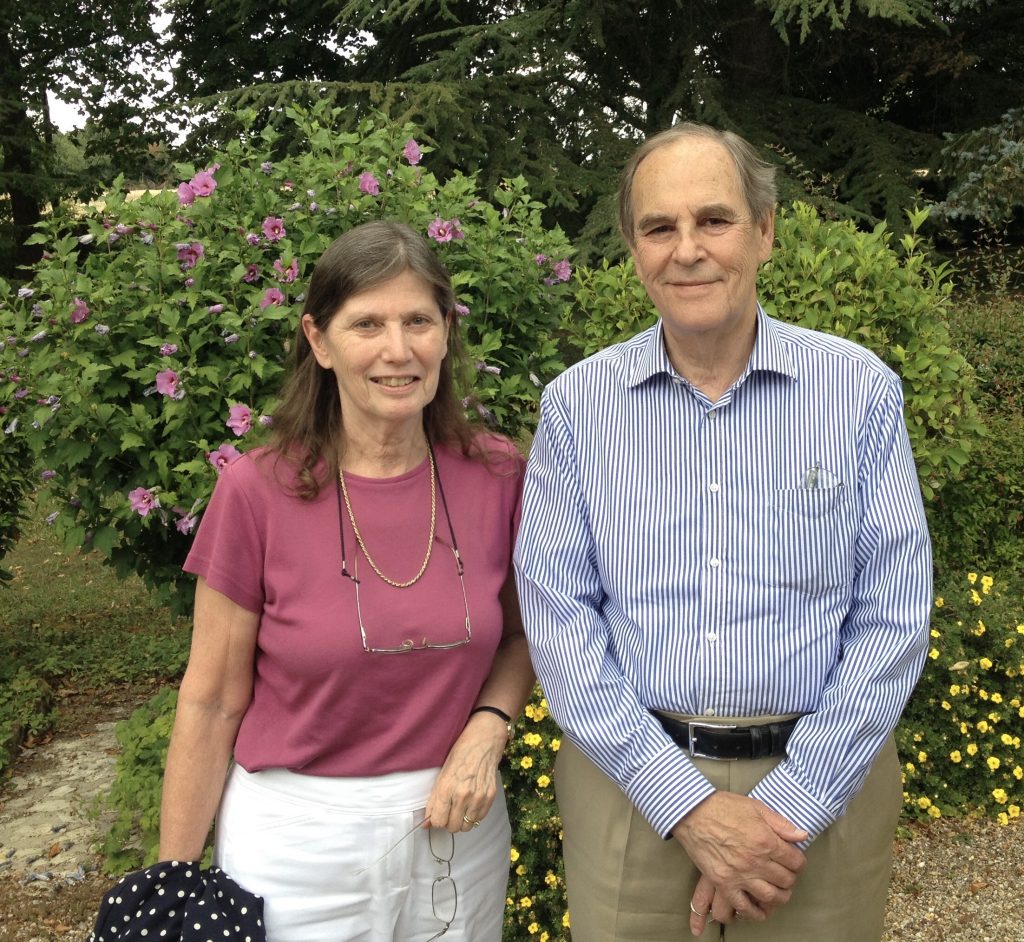
My new position takes me out of the artifact vaults to meet with a wide range of Canadians. In conversations with veterans and their families, heads of military museums, artifact collectors, museum visitors, donors and sponsors, I see how we touch people by preserving and showcasing the artifacts and telling the stories of their fathers, mothers, grandfathers, grandmothers, brothers and sisters. We are the custodians of a legacy that belongs to all Canadians.
I want to thank you, our donors and sponsors, for helping bring Canada’s military history to life for Canadians. Your contributions make a real difference. I’m sure that you are, as I am, very excited about the upcoming centenary of the First World War. We are planning a wide range of exhibitions and programs. Our goal is to reach as many Canadians as possible, and we welcome all Canadians to contribute as donors, sponsors or volunteers.
James Whitham
Art of the First World War

The Artist’s Home at Bottom Wood, about Halfway Between Mametz and Contalmaison
Sketched by William Thurston Topham
Beaverbrook Collection of War Art
CWM 19710261-0732 © Canadian War Museum
Clouds of shell fire smoke drifting across a battlefield. The staring, terrified face of a soldier rushing at night through a trench. A German observation plane caught at night in the brilliant beams of six searchlights. A soldier relaxing with a book outside his dugout.
These diverse First World War scenes were captured in compelling drawings and sketches by soldiers or official war artists almost a century ago. In the summer of 2014, these works and dozens of others will be displayed, many for the first time, at the Canadian War Museum in an exhibition commemorating the 100th anniversary of the outbreak of war. The exhibition will allow visitors to compare soldier sketches done in the trenches with the large studio paintings of official war artists, as well as with the official artists’ preliminary sketches. Almost all of the works are from the Museum’s Beaverbrook Collection of War Art, which includes close to 13,000 paintings, drawings, posters and sculptures depicting the Canadian war experience since 1760.
“We’re excited about this show because the public hasn’t seen most of these works on paper,” says Meredith Maclean, the Museum’s Collections Manager, Art and Memorials. ”Many were done under very difficult circumstances and conditions to quickly capture an emotion or an impression. They have a remarkable immediacy and intimacy.”
The Museum’s Collection Management team is now assessing conservation and display requirements for the sketches and drawings, which are fragile compared to oil paintings. Some have been in storage for decades; all require some degree of conservation before they can be exhibited.
Protecting a National Legacy
Conservation of the drawings and sketches is a complex challenge. Most are mounted on storage mats that need to be replaced to avoid damage to the works from acidity. Before being acquired by the museum, some works were mounted with heavy glue on homemade matting and conservators must decide whether to remount these works or conserve the original supports. The works themselves are generally in superb condition — a testament to the value of preventative conservation.
Displaying the works is also a challenge. The exhibition team wants visitors to experience the works as intimately as possible, as if they were looking over the artist’s shoulder into his sketchbook. But exposure to light can damage works on paper, which must be protected by ultraviolet-blocking Plexiglas.
Depicting a New Kind of War
Organized by themes, the exhibition will explore how soldier and official artists responded to life in the trenches and to new and devastating technologies such as tanks, aircraft and modern machine guns. Many of the soldier sketches, meant to be shown to other soldiers, capture the details of military life — the tedium and routine, the discomfort, and sometimes the terror. The works of the official artists are most often quick impressions, occasionally with detailed notes on the paper, meant to be later worked up into paintings. Both kinds of artists drew on and extended a symbolic visual language — including ruins, dead trees, sunsets and sunrises — that originated with European Romantic landscape painters.
Legacy of a Great Canadian
The exhibition offers a glimpse into the extraordinary richness of the Beaverbrook Collection of War Art, the second largest war art collection in the world, after that of the Imperial War Museum in London. Recent exhibitions built around the collection include A Brush with War: Military Art from Korea to Afghanistan, featuring close to 70 works, and The Navy: A Century in Art, featuring just over 40.
Another 2014 exhibition commemorating the First World War will present Beaverbrook Collection art from A.Y. Jackson, perhaps the best-known member of the Group of Seven, alongside works from German artist Otto Dix on loan from 20 institutions mostly in Germany. “Visitors will see the critical role that war art played in the formation of two major artists,” says Dr. Laura Brandon, Historian at the War Museum, “and also how their painting reflects distinct national identities.”
The Beaverbrook Collection is named after an extraordinary man, Canadian-born Lord Beaverbrook, who became a powerful British press baron, politician and philanthropist. Lord Beaverbrook founded the Canadian War Memorials Fund in November 1916, eventually hiring 116 artists to paint some 900 scenes of Canada at war. Over time, this collection was supplemented with war art from the Second World War and the post-war period, right up to Canada’s engagement in Afghanistan. The Beaverbrook Foundation chose the Canadian War Museum to be stewards of this extraordinary war art collection and continues to be one of the Museum’s most generous donors.
Your donation will help us conserve First World War art. For more information, call 1-800-256-6031.
Treasures from the Empress of Ireland
Its sinking on May 29, 1914 on the St. Lawrence River near Rimouski, Quebec, was the worst-ever Canadian maritime disaster, with 1,012 lives lost, comparable to the sinking of the RMS Titanic in 1912. Yet few Canadians have ever heard of the RMS Empress of Ireland, an ocean liner used primarily to transport European immigrants up the St. Lawrence toward the promised land of the Canadian West.

Pocket watch recovered from the wreck of the Empress of Ireland
IMG2012-0373-0121-Dm © Canadian Museum of Civilization

Hand mirror recovered from the wreck of the Empress of Ireland
IMG2012-0373-0123-Dm © Canadian Museum of Civilization
Struck at night in dense fog by the Storstad a Norwegian coal-carrier, the Empress sank within 15 minutes. Opening in May 2014, to commemorate the 100th anniversary of this tragedy, an exhibition at the Canadian Museum of Civilization will vividly evoke the drama and terror of that night in 1914. The exhibition will feature dozens of artifacts salvaged from the ship’s wreck, and now part of the Museum’s collection. Over the coming year, these and other related artifacts will be examined, restored and made ready for exhibition by the Museum’s team of conservators.
Art Meets Science

Fog bell from the Empress of Ireland
Photo Frank Wimart, IMG2012-0281-0002-Dm
© Canadian Museum of Civilization
The Empress of Ireland collection, recently acquired through the donor-supported National Collection Fund, includes navigational instruments, personal items such as jewelry and a silver pocket watch, as well as china, silverware and the pièce de résistance, the ship’s 200-kilogram fog bell. Museum curator Dr. John Willis calls the collection “the single most important 20th century acquisition that we’ve made to date.”
“We’re at the beginning of the process of registering and photographing the artifacts and assessing them for conservation treatment and storage needs,” explains conservator Amanda Gould. She describes a conservator’s work space as “a melding of an artist’s studio and a science lab. We use organic solvents and various kinds of chemicals so we need protective equipment, but we also need a craftsperson’s tools to work with the artifacts. Each is different, so you have to have empathy for the materials and its maker’s intent. That’s what guides you.”
The Exhibition
The Empress of Ireland collection was acquired from a private collector who, also collected hundreds of documents associated with the Empress, its passengers or the ship’s owner, the Canadian Pacific Steamship Company. For Amanda Gould, some of the most moving pieces in the collection relate to Florence Barbour, an eight-year-old passenger who lost her mother and sister (her father had died earlier in a mining accident) in the wreck. “We have her hand-written memoir and absolutely beautiful studio portraits of Florence and her family.” Florence was saved by another passenger, her uncle Robert W. Crellin.
As well as telling the stories of the crew and the individual passengers, the exhibition will offer a window into early 20th century Canadian immigration. The RMS Empress of Ireland and her sister ship the RMS Empress of Britain transported hundreds of thousands of European immigrants from Liverpool, England to Canada. According to some estimates, as many as one million present-day Canadians may have ancestors who came to this country on one of the ships.
The sinking of the Empress was front-page news around the world but within a few months, with the start of the First World War, it faded quickly from the national memory.
To learn how donating to the National Collection Fund helps protect Canada’s heritage, please call the Development Department at 1-800-256-6031 or www.civilization.ca/donate and www.warmuseum.ca/donate.
Making Connections: What Inspires Our Donors

Mrs. Maureen Barlow with her parents and brother, 1943
© Mrs. Maureen Barlow
Every family has them — old photographs and letters, documents such as diplomas, marriage and birth certificates, perhaps a pair or two of baby shoes. These cherished mementos tell our family stories, evoking the shared experiences that have shaped our lives.
The Canadian Museum of Civilization and the Canadian War Museum preserve similar treasures that collectively bring to life the story of a nation — a story of shared struggles, triumphs, drama, joys and sorrows. Every year, thousands of Canadians make donations to help the Museums tell the nation’s story to more Canadians, in more ways.
Often, donors are inspired by a personal connection. For Mrs. Maureen Barlow of Pickering, Ontario, the spur was a visit in 2011 to the War Museum. “It was very inspiring and made me think of my dad,” she explains. “He served overseas from January 1943 to March 1946. It was a very difficult time for my mother with two babies. My father came back a changed man, which affected our family a great deal. I’m sure this happened to many families. However, I am very proud of him and his three brothers who served to help win the war for freedom. I donated to the War Museum because it is important that people never forget what happened during the First and Second World Wars, so that it won’t happen again.”
What does your donation support?
Pat Shapiro, the Canadian Museum of Civilization Corporation’s Annual Giving Officer, recently made a donation to mark the 90th birthday of her uncle, a retired colonel. “It’s a way of honouring his long service in the military,” she says. “Donations help ensure that we don’t forget about all of those who served their country. For example, donors help support the program that last year brought more than 100,000 students to visit the museums.”
Donations also support online education programs, the purchase and restoration of artifacts, the planning of exhibitions presented at the Museums and across the country, as well as special projects such as the First World War Centenary Project, which will make publicly accessible digital records of key First World War archival documents, photographs, trench newspapers and sound recordings.
Mrs. Barlow, whose father died in 2002 and whose mother is 102*, sums up her reasons for donating with a simple statement: “Without the War Museum, people would forget.”
*Mrs. Barlow’s mother recently passed away. Our condolences.
To learn how your donation can make a real difference, click on the Give Now button at the bottom of the home pages on the Museums’ website www.warmuseum.ca and www.civilization.ca.