War pilgrimages: Travel and remembrance as self-transformation
The Canadian War Museum’s collections hold a lot of material related to wartime experiences. We address the wide-reaching social, political and personal aspects of armed conflict. Our role as an institution of public memory is to remember and reflect. Museum historians also reflect on the nature of remembering. There is a history of how both veterans and society at large memorialize war.
In a recent article, historian Michael Petrou explores war pilgrimages. This refers to the practice of visiting military sites for personal or commemorative reasons. The Museum’s collections offer insight into these deeply personal journeys of mourning and memory.
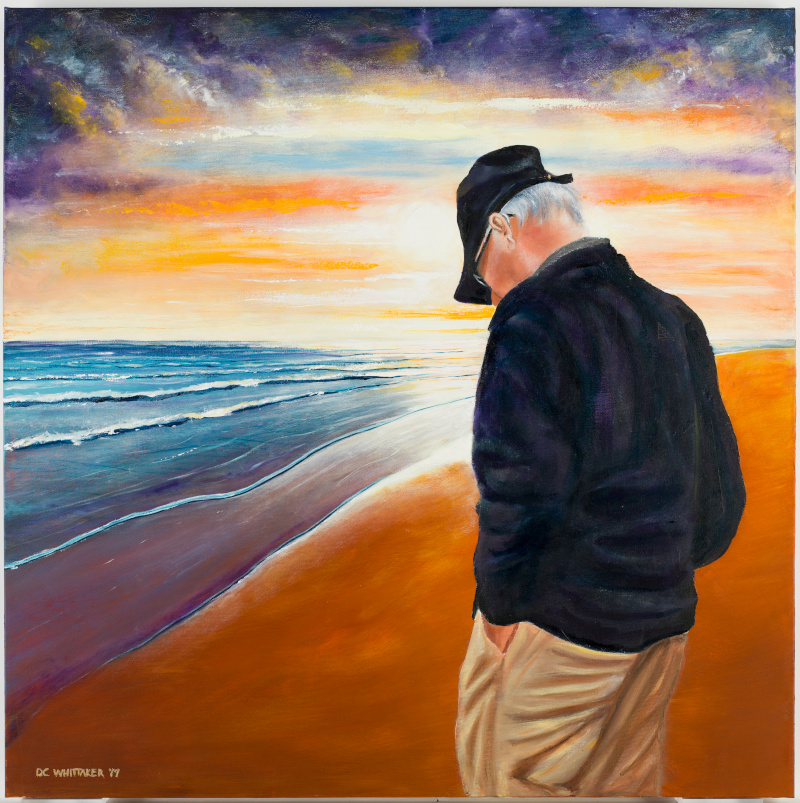
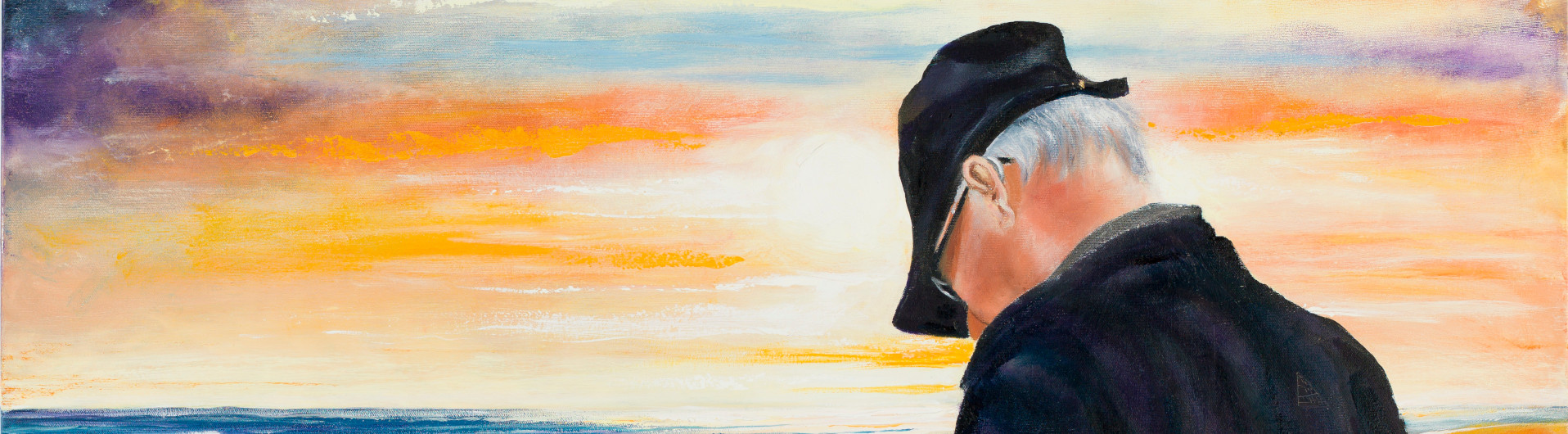
The Soldier Returns by David Whittaker.
Beaverbrook Collection of War Art, Canadian War Museum, 20220010-001
The remembrance of war itself has a history. The sites of significant military events have not always been seen as important. Attitudes toward visiting them have only sometimes been memorial and reverential. Battlefields were first described as sacred places of remembrance in the mid-1800s. This was different from just 50 years earlier. Then, the war dead were often buried in mass graves and ignored. The graves of the 1899–1902 Anglo-Boer War received more care and attention than those of the 1815 Battle of Waterloo, for example.
The traumatic impact of conflicts such as the United States Civil War and the First World War affected attitudes to wartime sites. And dramatic growth in tourism and travel in the mid-20th century allowed more people to visit these places. Some went as curious holidaymakers. But a growing contingent went because of personal connections to heroism and loss. In 1920, the Times reported that battlefield tours were often called “pilgrimages.”
Over the years, various locations have become sites of memorial pilgrimage for Canadians. These include Vimy Ridge and Juno Beach. More recent conflicts, such as the Korean War or Canada’s many peacekeeping missions, lack prominent pilgrimage sites. Yet veterans and relatives often revisit those far-flung countries, even decades later.
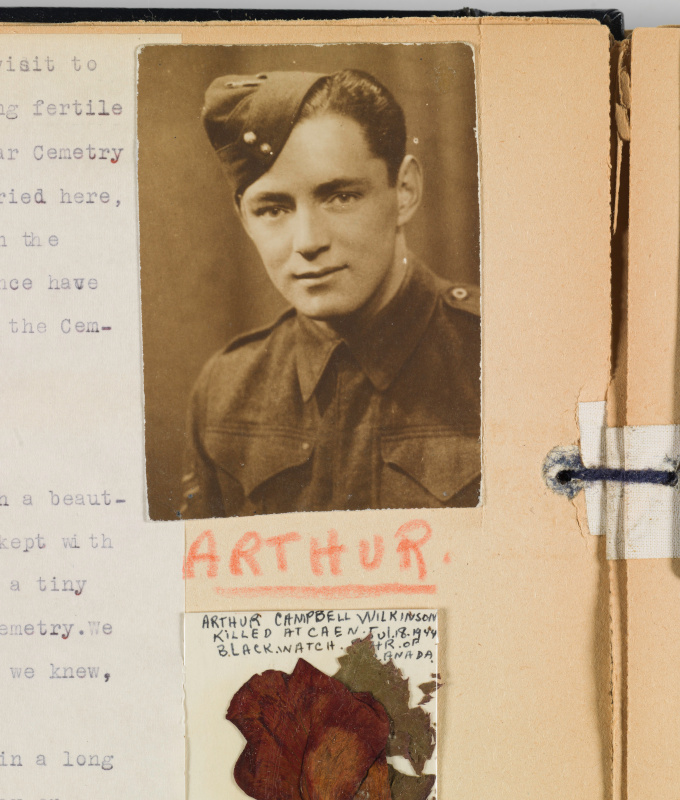
Arthur Wilkinson was killed in action in Normandy in 1944. His parents travelled to Europe in 1953 to visit people who knew him, the site where he died, and his grave. They documented their pilgrimage in diaries and a scrapbook.
George Metcalf Archival Collection, Canadian War Museum, 19830600–007
In many pilgrimages, people are as much the object of the visit as the sites themselves. Intergenerational encounters can be deeply meaningful elements of revisiting a site of service. So can seeing a formerly war-torn community or landscape transformed into peacetime affluence.
Revisiting a site of violence can be transformative for the traveller. A pilgrimage is an outer voyage that does inner work, such as remembering, reconciling or mourning.
Many items in the collection of the Canadian War Museum attest to these emotional journeys. Artwork, letters, scrapbooks, artifacts, and oral histories all reflect the complex experience of revisiting sites of personal and collective trauma.
To hear some of those stories and to learn more about this fascinating topic, read Michael Petrou’s article “‘It Was Like a Dream’: War Pilgrimages in the Canadian War Museum’s Collections” in Canadian Military History, volume 33, issue 1 (2024).

Steve McCullough
Dr. Steve McCullough is the Digital Content Strategist at the Canadian Museum of History and the Canadian War Museum. His work in digital storytelling involves compassionate and evidence-based efforts to address history, meaning and identity in our fragmented and polarizing, but also vibrant and interconnected, online environment.