Introduction
Prior to the creation of a Canadian navy, Britain’s Royal Navy was responsible for the military defence of Canada’s waters. This changed in 1910 when the federal government passed legislation creating the Naval Service of Canada, which became the Royal Canadian Navy (RCN) in 1911. Development and growth was initially slow and so the RCN had a limited role during the First World War. However, the Second World War created challenges and opportunities that stimulated the RCN to expand and become the fifth largest navy in the world by 1945, with approximately 1,140 vessels. By the end of the war, over 105,000 men and women had served with the RCN. Canadian and Allied merchant ships and their crews were also a vital part of the Allied war effort, transporting personnel, munitions, weapons, and food across the world’s oceans.
This guide will illustrate the process of researching an individual’s service, from the essential starting point of service documents to supporting resources for detail and further discovery.
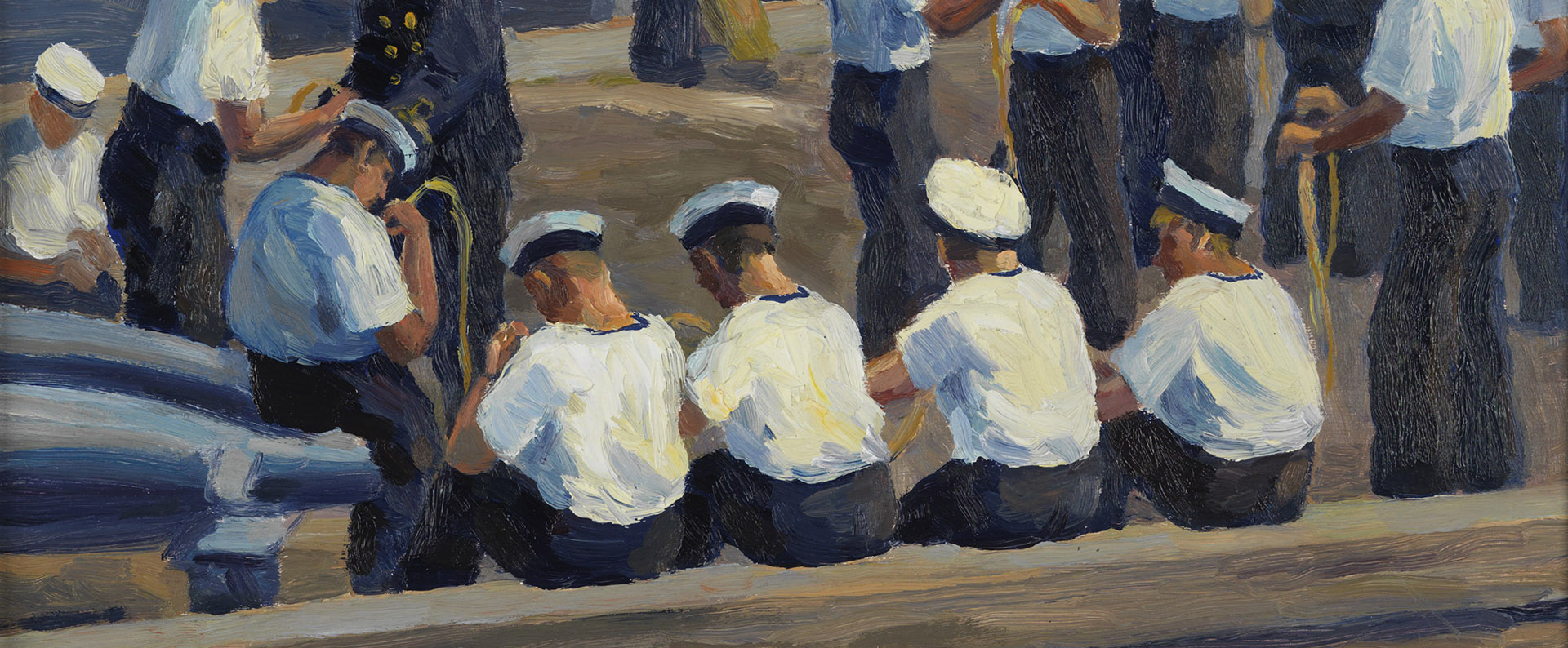
Image at top of page:
Rowley Murphy
Seamen on Jetty Being Instructed on Bends and Hitches
Beaverbrook Collection of War Art
Canadian War Museum
CWM 19710261-2401
Helpful hint
See LAC’s Military Abbreviations used in Service Files page.
First World War, 1914–1919
The Royal Canadian Navy (RCN) was established with a Naval Reserve Force, a Naval Volunteer Force, and a Naval College. In 1916, Canada offered to supply sailors to the Royal Navy and an Overseas Division was created, which soon increased the strength of the RCN from several hundred to about 1,000 men. In total, approximately 8,800 men served in the RCN and the Reserves during the war. All of Canada’s naval personnel records for the First World War are held by Library and Archives Canada (LAC).
Service Files of the Royal Canadian Navy, 1910–1941 — Ledger Sheets: The Navy maintained employment information on officers, sailors, and cadets who served in the RCN, and the Volunteer Reserve. Each sheet included a summary of the individual’s personal information including date and place of birth, next-of-kin, and physical description. Service information included date and period of engagement, postings to ships and shore establishments, rating (or rank for commissioned officers), medical reports, honours and awards, and discharge or date of death.
A searchable index to the service ledgers is available online through LAC’s Military history portal.
Personnel Files of the Royal Naval Canadian Volunteer Reserve, 1914–1919: These service files are searchable by surname at LAC under Online Research > Archives Search. The files include various forms and correspondence that document service during the war and may also contain information on family, medals, prize money, discharge, and other matters that often post-date the war. Some forms may have been completed by a sailor’s dependent, such as the separation allowance for a mother or wife.
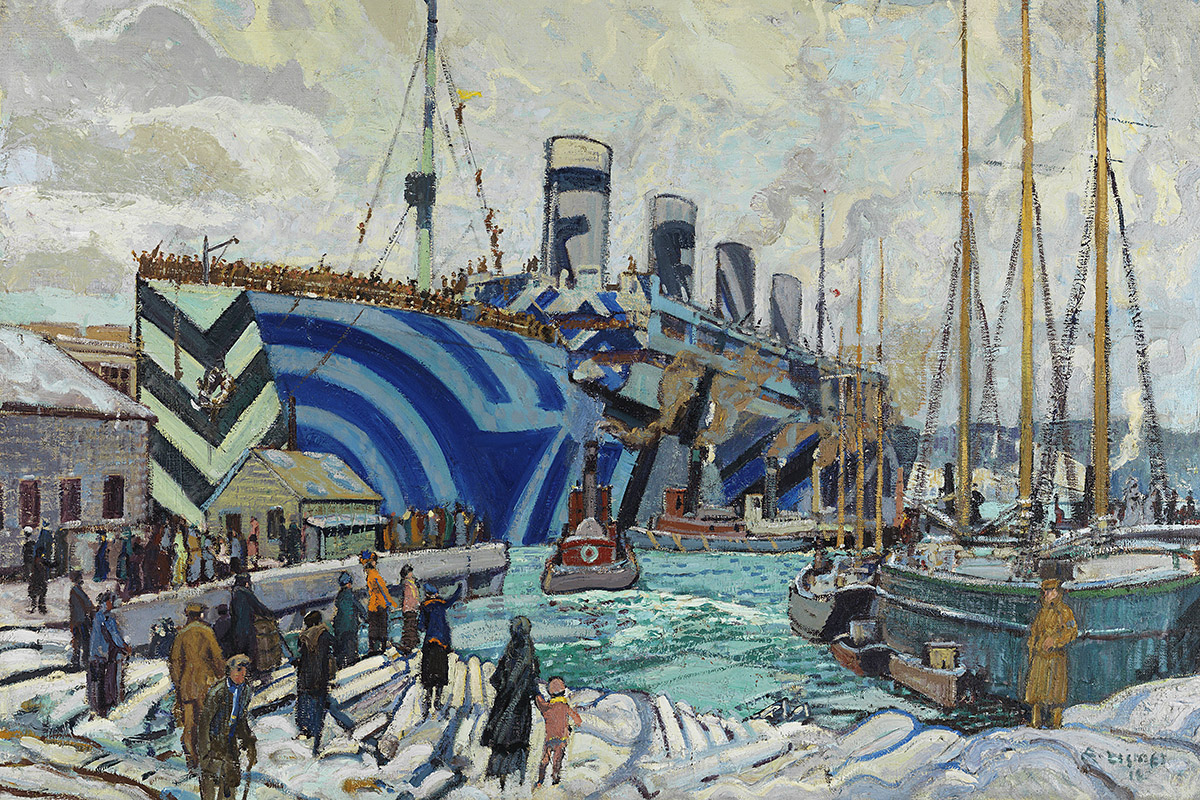
Arthur Lismer
Olympic with Returned Soldiers
Beaverbrook Collection of War Art
Canadian War Museum
CWM 19710261-0343
Limits of documentation
Wartime records were created and kept for specific purposes, with contemporary ideas of importance. For example, ethnic origin was not recorded and a hometown might only be inferred through the address of next of kin, who may only be identified as Mrs. [husband’s name]. The language of administrative documentation was almost always English, regardless of the preferred language of the service person. In addition, some underage and overage soldiers gave a second name, while some names were misspelled in the administrative process.
Second World War, 1939–1945
Following the outbreak of the Second World War in September 1939 the RCN expanded rapidly and played a significant role in the Battle of the Atlantic, convoy escort, and support. By 1945, over 96,000 men and 7,000 women had served in the RCN.
Merchant Navy (or Merchant Marine) ships were the lifeline between North America and Britain, transporting men and supplies for the fighting forces and food for the United Kingdom. The harsh conditions of the North Atlantic plus ever-present enemy U-boats made the shipment of needed supplies made for a dangerous and deadly occupation. Approximately 12,000 men and women served in the Merchant Navy between 1939 and 1945.
Service files for those who served with the RCN and the two Reserves during the war are held by Library and Archives Canada (LAC). All post-1919 service files are subject to privacy legislation; see LAC’s Requests for Military Service Files page for the rules and procedures when accessing non-open records. Records of those who died in service between 1939 and 1947 are available without restriction.
Second World War service records contain considerable detail relating to an individual’s personal and family information. Files also include various forms and correspondence relating to their pre-war occupational history, medical history and treatment if wounded or ill, medals, last pay, final discharge and estate documents for those who died during service. These documents contain information on rating (or rank), occupation, family, education, training, medals and awards, and postings to ships or shore establishments.
Crew members of Merchant Navy signed an Article of Agreement with the master of a vessel instead of enlisting with the RCN. This means that there are no service files for those who served in the Merchant Navy. However, search ‘Merchant Navy’ in LAC’s homepage search bar to discover resources such as ships logs, crew lists, and Articles of Agreement.
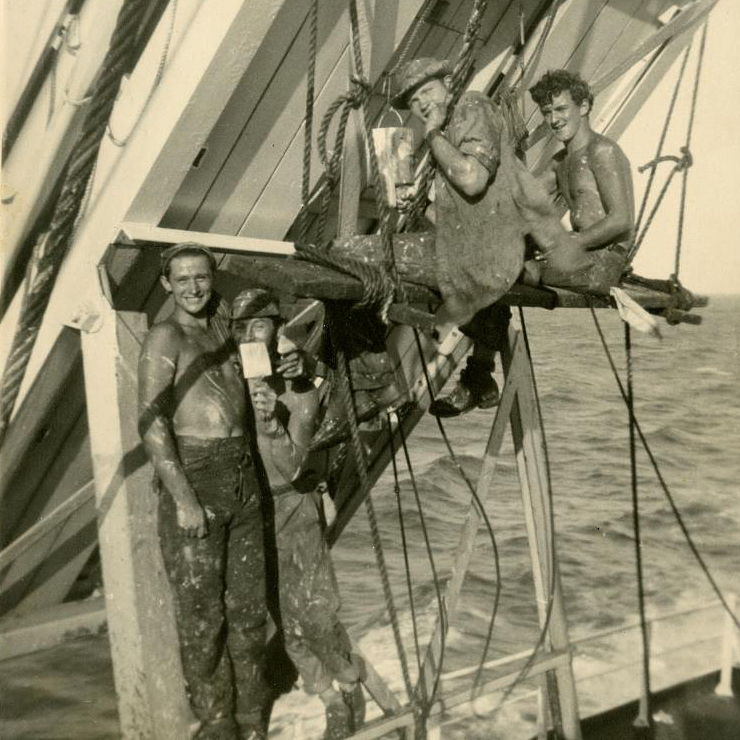
Four young seamen painting a life raft of the SS Temegami while it sails the Indian Ocean
George Metcalf Archival Collection
Canadian War Museum
CWM 20010110-002
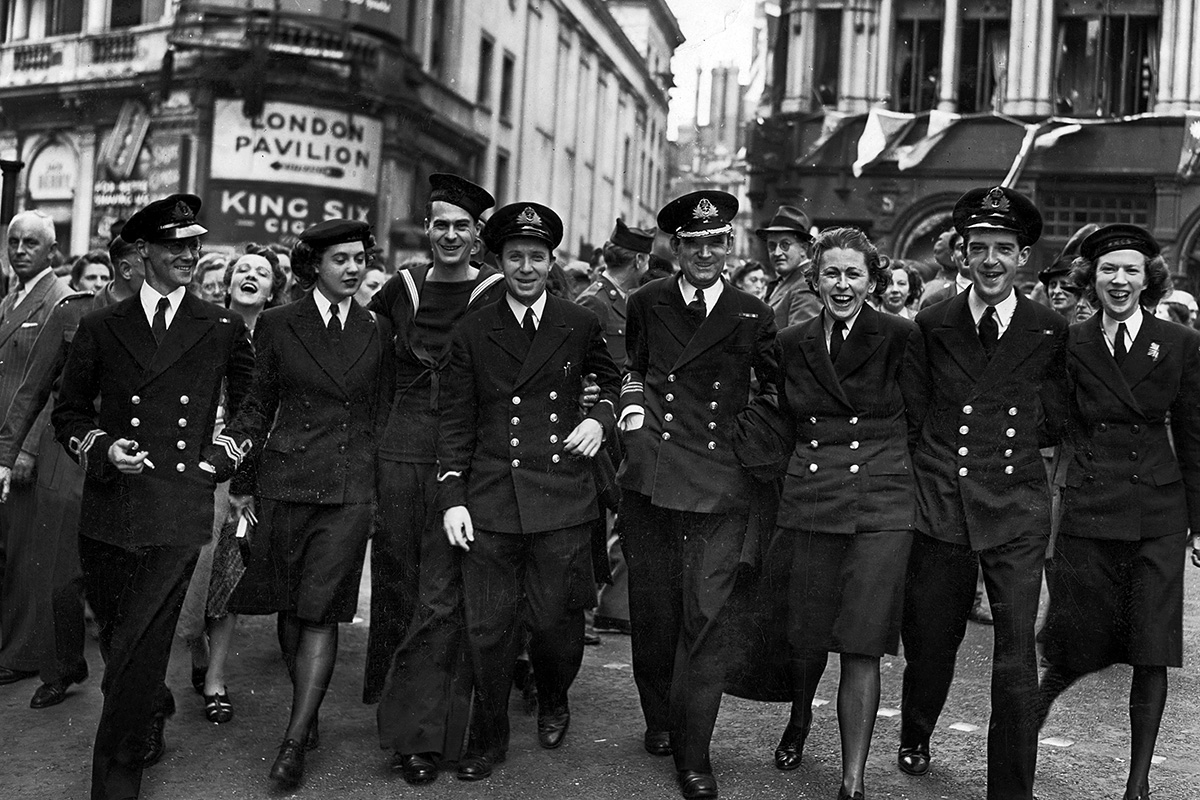
A group of Canadian naval personnel, including members of the Women’s Royal Canadian Naval Service, celebrating V-E Day near Piccadilly Circus in London, England
George Metcalf Archival Collection
Canadian War Museum
CWM 19790488-010_2
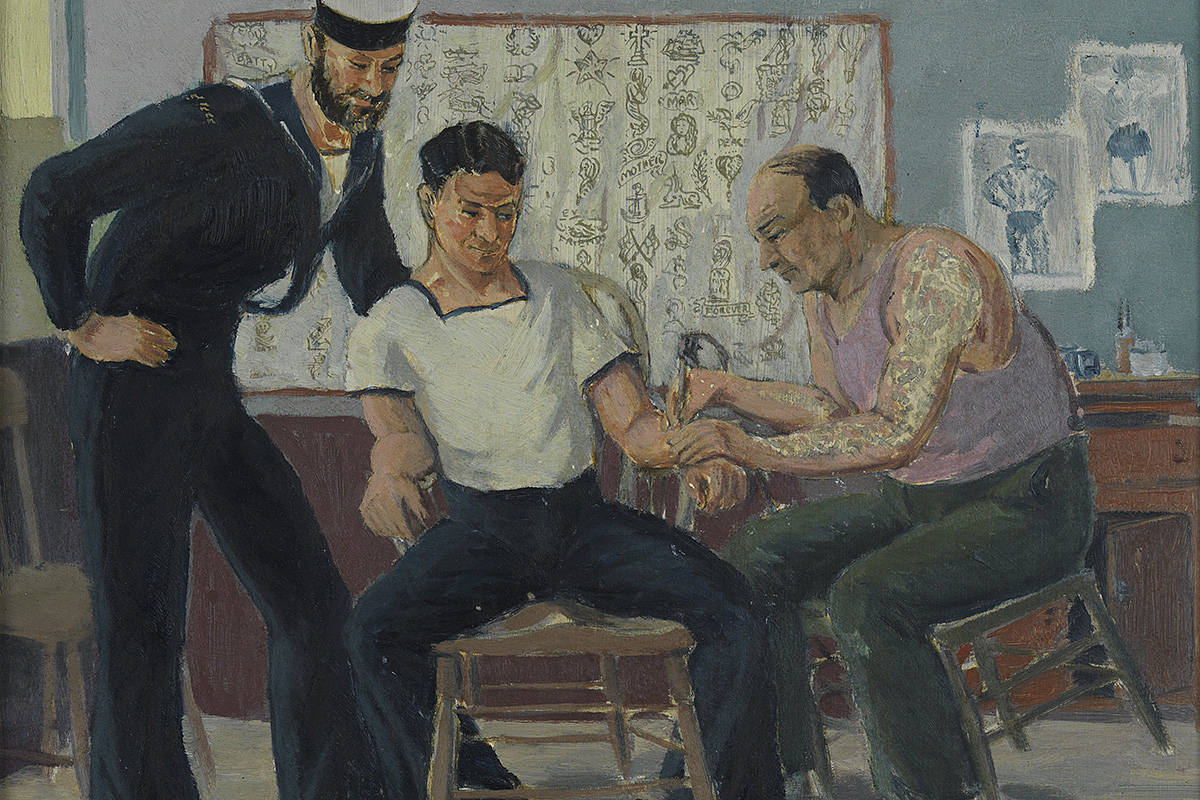
Donald Mackay
Tatooing
Beaverbrook Collection of War Art
Canadian War Museum
CWM 19710261-4259
Veterans Affairs Canada also keeps some information on those that served with the Merchant Navy. The information may include a sailor’s name, birthplace, age, rank or occupation, next of kin, and a summary of correspondence. Some records also have the individual’s Application for Merchant Seaman’s Identity Certificate, which includes a photograph and fingerprints. As service information is subject to privacy legislation, an Access To Information and Privacy (ATIP) request must be sent to Veterans Affairs Canada > Other Inquiries > ATIP.
Museum Resources
The Military History Research Centre (MHRC) at the Canadian War Museum is the location of the Hartland Molson Library and the George Metcalf Archival Collection, both of which can be searched online through the MHRC catalogue. Consulting a ship’s history, if one exists, can yield much of the event and experience detail not recorded in service files. The Navy List was published monthly throughout both wars, and includes the name, rank and seniority of officers as well as a list of all Canadian ships, shore establishments, and officers assigned to them. The library also offers items relating to uniforms, equipment, training manuals, and specific books related to many aspects of service. The museum’s archives are predominantly personal in nature and can add an intimate perspective to the official documentation held by LAC.
Tip: Search by ship, shore establishment, hospital, or any other detail from a service file to discover histories, newsletters, diaries, personal photo albums, etc.
Try these search terms: Royal Canadian Navy, Merchant Marine*, vessel*, 1914–1919, 1939–1945
During the MHRC hours of operation the library is open to browse and archival consultation appointments can be booked. To request archival material, contact mhrc-crhm@warmuseum.ca with your name, preferred date(s), and the catalogue control and call number for each item requested. Most library material is also available throughout Canada by interlibrary loan. Research copies or high-resolution images can also be ordered.
The artifact collections of the Canadian War Museum, from cap badges to tanks, can be searched online through the artifact catalogue. This catalogue is the access point for the war art held by the museum, over 13,000 pieces, including depictions of individuals, ships, battles, hospitals, etc. The museum’s website also offers resources including online exhibitions and a text-searchable collection of over 140,000 Second World War newspaper clippings.
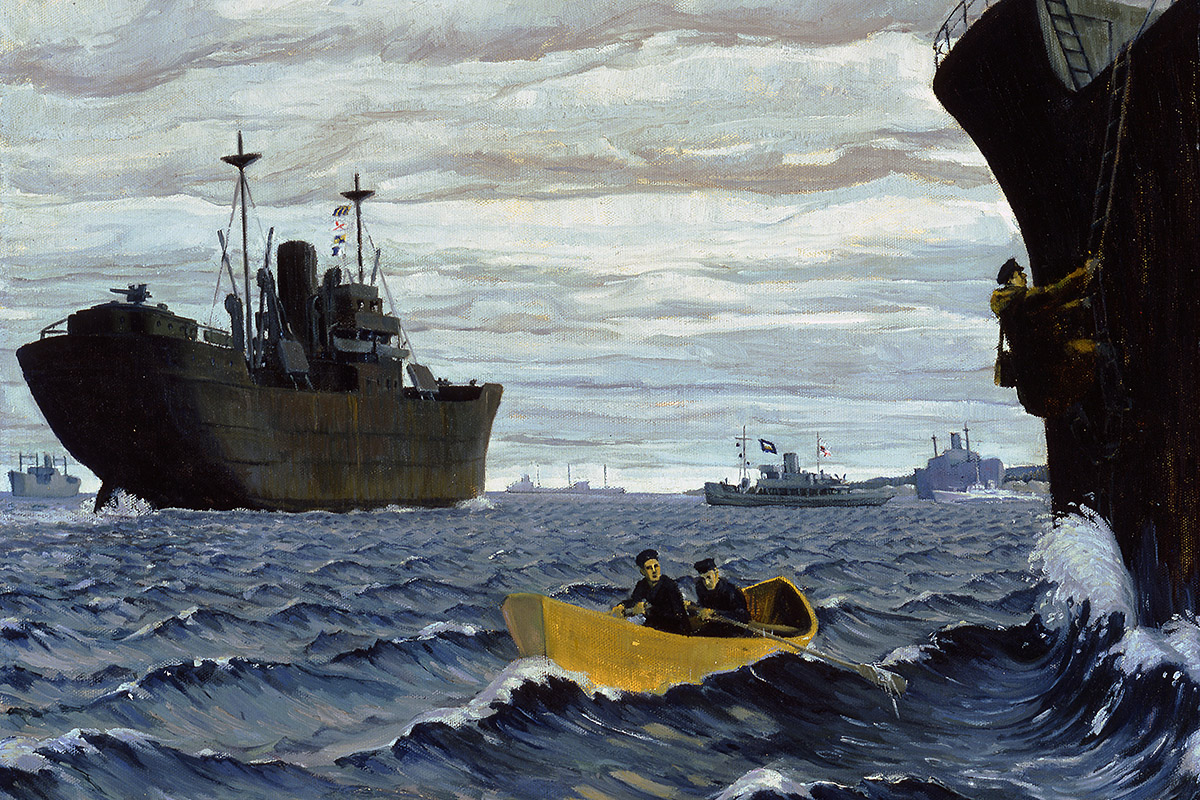
Donald Mackay
Examination Officer Boarding Merchant Ship
Beaverbrook Collection of War Art
Canadian War Museum
CWM 19710261-4218
Service Medals, Decorations of Honour, and Awards
Military medals were awarded according to specific criteria and convey particular meanings. Pins and badges could also serve similar functions. Service (or campaign) medals recognized time and place of service, meritorious service decorations were awarded for exemplary acts, and valour (or gallantry) decorations were awarded for demonstrated courage. Non-military “welcome home” medals were also popular. See The meaning of medals webpage to discover the people and stories behind medals held by the Canadian War Museum. Medals and Decorations by Veterans Affairs offers profiles of most medals and ribbons, and searching medal* or honour* in the MHRC catalogue yields in-depth published resources.
For the First World War, service medals may include the 1914 Star, 1914–1915 Star, the British War Medal, and the Victory Medal. For the Second World War, members of the RCN may have received the 1939–1945 Star, one or more Stars for service in the Atlantic, Arctic, Africa, Pacific, Burma, Italy, or France and Germany, the Defence Medal, the Canadian Volunteer Service Medal (CVSM), and the War Medal 1939–1945. Valour awards for both wars include the Victoria Cross (VC), the Distinguished Service Cross (DSC), the Distinguished Service Order (DSO), the Distinguished Service Medal (DSM), the Military Cross (mc), and Mentioned in Dispatches (mid). Merchant seamen were eligible for the same service and valour decorations, as well as the Mercantile Marine War Medal. Bars on the ribbon typically indicate that the medal was awarded more than once.
War Dead
The Canadian Virtual War Memorial by Veterans Affairs Canada is a searchable database of Canada’s war dead. In addition to providing a standardized profile, it also invites the public to attach photos, newspaper clippings, and other materials in commemoration. Burial and commemorative information is also available through the Commonwealth War Graves Commission, the organization responsible for First and Second World War graves and monuments. Veterans Affairs Canada also maintains the searchable Merchant Navy War Dead Registry. At LAC, documentation for specific time periods includes the Circumstances of Death and War Graves Registers, and Veterans Death Cards.
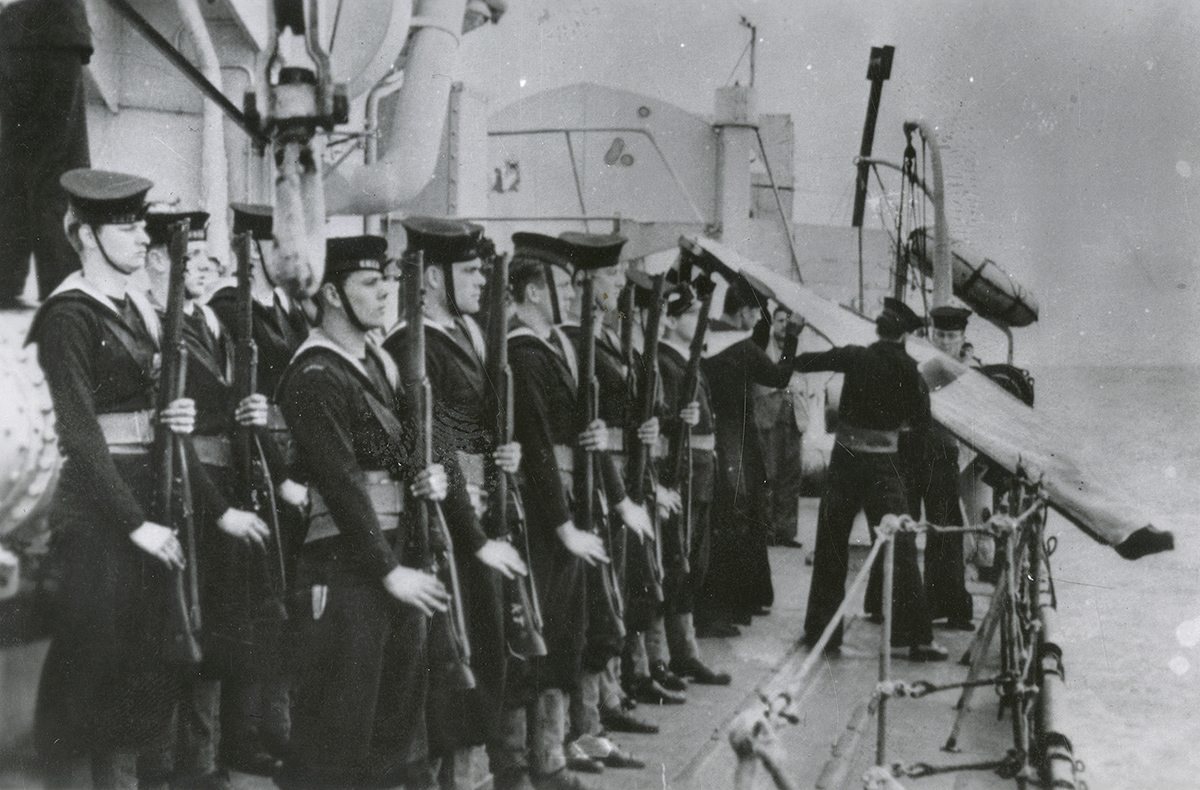
HMCS Assiniboine burial at sea of Ordinary Seaman Kenneth William Watson
George Metcalf Archival Collection
Canadian War Museum
CWM 20000224-028_7
Other Useful Records at LAC
Guide to Sources relating to Canadian Naval Vessels: A comprehensive list of archival records relating to every RCN vessel.
Military Medals, Honours and Awards, 1812–1969: An index to military honours and awards, with citation cards.
Suggested Reading
- Johnson, William et al. The Seabound Coast: The Official History of the Royal Canadian Navy, 1867–1939 (Dundurn, 2010)
- Douglas, W.A.B. and Roger Sarty, Michael Whitby. V.2, pt.1 No Higher Purpose: The Official Operational History of the Royal Canadian Navy in the Second World War, 1939–1943 (Vanwell, 2002)
- Douglas, W.A.B. et. al., V.2, pt.2 A blue water navy: the official operational history of the Royal Canadian Navy in the Second World War, 1943–1945 (Vanwell, 2006)
- D’Aoust, Robert. Ultimate Sacrifice: To those who made the ultimate sacrifice in the Royal Canadian Navy, the Royal Canadian Naval Reserve and the Royal Canadian Naval Volunteer Reserve, 1939–1947, 4 volumes (The Author, 2013)
- Macpherson, Ken and Ron Barrie. The Ships and Canada’s Naval Forces, 1910–2002. 3rd edition (Vanwell, 2002). Includes an image and technical specifications for all Canadian ships.
Key Vocabulary
Reserve: An organization of trained officers and service people available to strengthen the regular Navy during wartime.
Royal Canadian Navy Reserve: Officers and men with experience at sea, often from previous experience with the merchant marine, and who received some naval training.
Royal Canadian Navy Volunteer Reserve: Officers and men with no previous professional sea experience who volunteered for training, and to serve during the war.
Service file: Documentation relating to an individual’s wartime service from enlistment or enrolment to discharge, including personal information, training, health, postings, and service.
Service number: This was intended to be a unique identifying number, prefixed with a letter in the Navy. For example, officers were assigned “O”, and sailors with the Volunteer Reserve were assigned “V”.
Have a research question?
Check out our Frequently Asked Questions (FAQs) or contact us directly. MHRC staff can provide answers and help with your research.
With thanks to guest contributor Glenn Wright, former archivist at LAC.