Counterinsurgency in Kandahar: Canada in Afghanistan, 2007–2010
After the pitched fighting in the summer and fall of 2006, the Canadian task force in Kandahar faced a change in tactics. The confrontation pivoted from conventional battles to a dangerous pattern of unpredictable guerilla warfare.
Brigadier-General David Fraser recalls, “It was a shift. The Taliban after that didn’t attack us like they did before, which was in direct gunfire. They went to the insurgency — IEDs. That was the big change. It became more dangerous for all of us.”
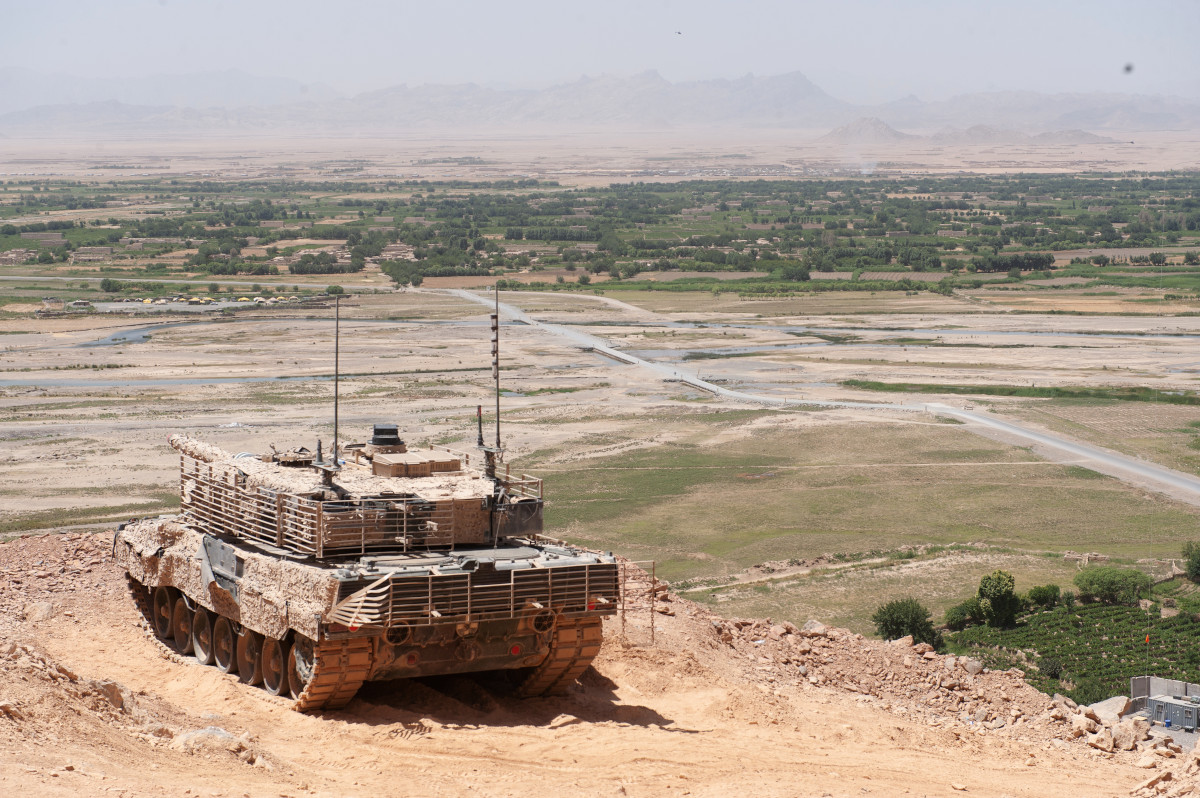
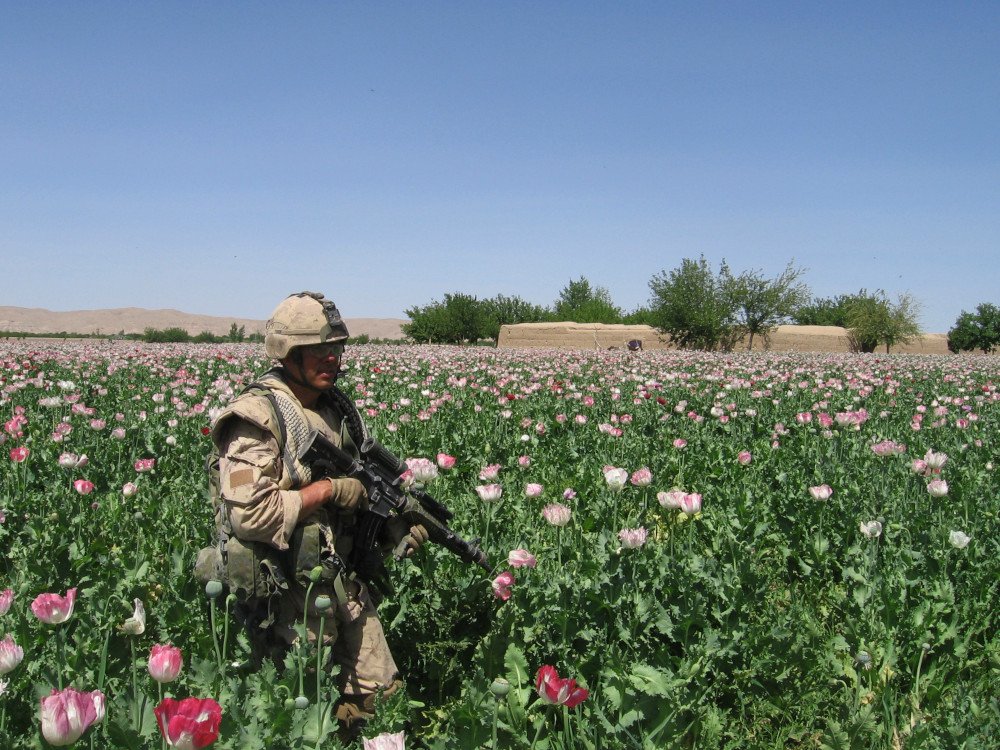
Canadian troops were operating in hostile territory. Kandahar had difficult geography and a complex web of social and political relationships. And the enemy’s use of improvised explosive devices (IEDs) and insurgency tactics demanded continual vigilance and caution.
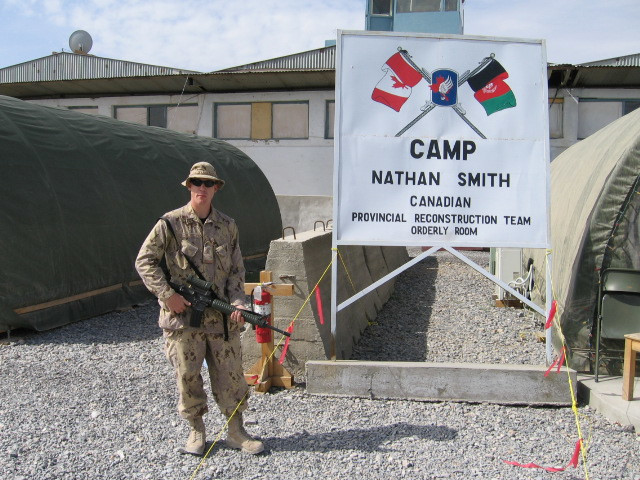
Corporal Andrew James “Boomer” Eykelenboom at Camp Nathan Smith, February 2006. This was Canada’s Provincial Reconstruction Team base in Kandahar City. Boomer was killed by a suicide bomber six months later in Spin Boldak, near the Pakistan border.
Photo: Canadian War Museum, Boomer’s Pics, 20070194-002.
The IED threat
Insurgents built explosive devices using a variety of materials. They designed them for different targets and purposes. IEDs could penetrate armour or they could discharge a blast of anti-personnel shrapnel. They came in all sizes and shapes and could be set up and hidden in mere minutes. IEDs were often set to trigger in stages, for instance to target people arriving to help the victims of an initial explosion.
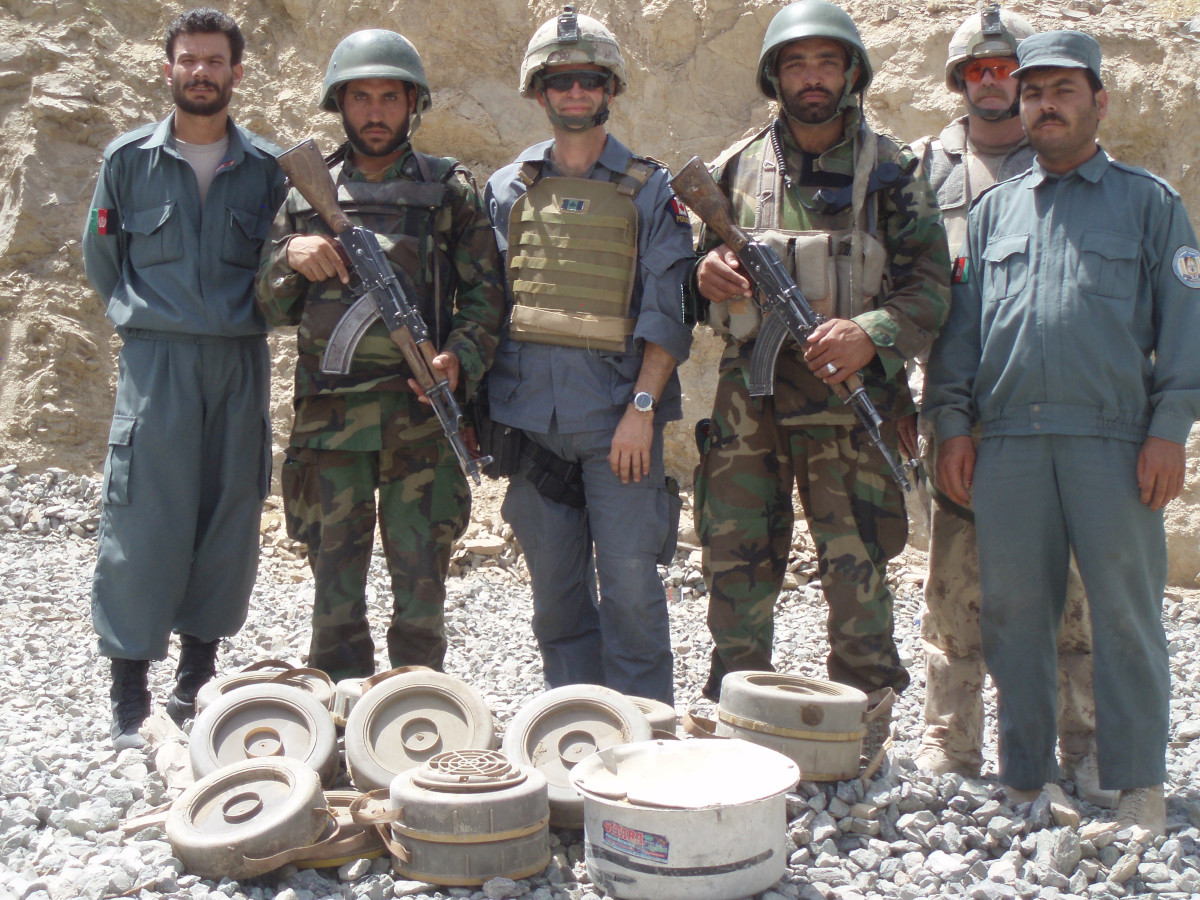
Canadian soldiers and an RCMP constable pose with Afghan soldiers and police near recovered IEDs in July 2008.
Photo: Corporal David Strachan, Canadian War Museum, 20090037-009- P7021538
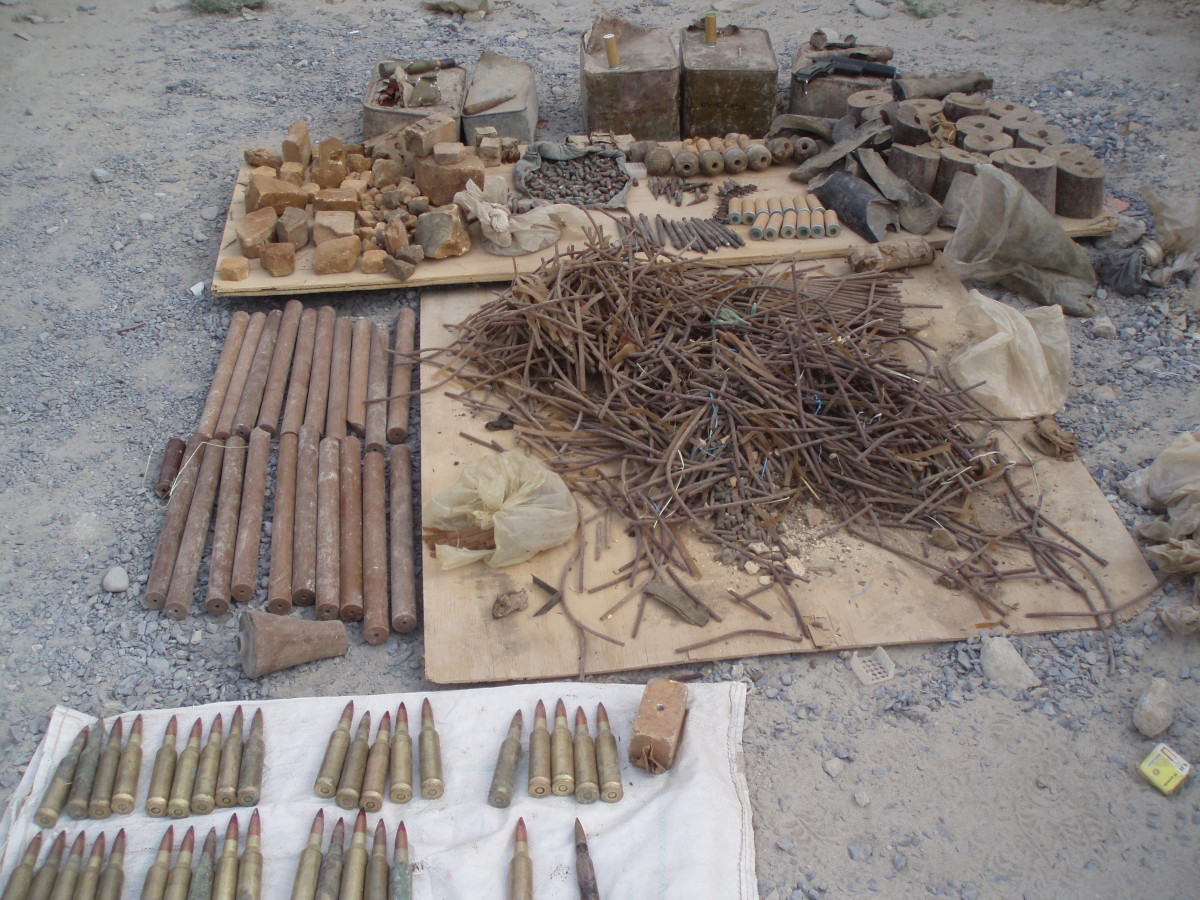
IEDs could be made from a wide range of raw materials and munitions.
Photo: Corporal David Strachan, Canadian War Museum, 20090037-009- P7081572
Easter Sunday, 2007, showed how deadly they could be. Hotel Company, 2nd Battalion, The Royal Canadian Regiment, was returning to Kandahar from Helmand. They had to cross a karez, an underground irrigation system involving widely spaced holes in the ground.
They passed through using a route they had taken before. But this time, the Taliban had mined it with an IED packed with high explosives. One of the company’s Light Armoured Vehicles (LAVs) rolled over the trigger plate. The blast penetrated its passenger compartment. Six soldiers were killed instantly, and two others were wounded.
The LAV was a trusted and well-armoured vehicle. It was much more protective than the Iltis jeeps that Canadians had used in Kabul earlier in the war. And yet a well-placed IED was able to punch through it to deadly effect.
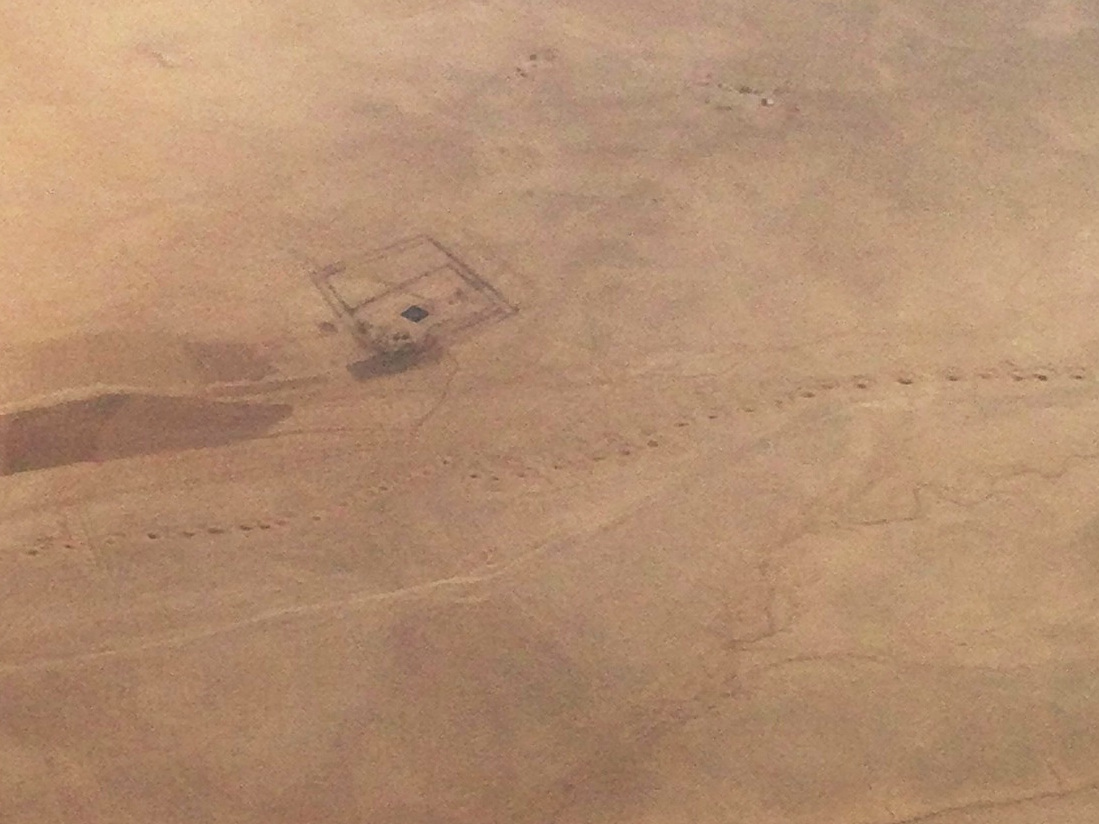
Aerial view of a karez in Afghanistan, 2013. It looks like a line of dots on the landscape. These underground irrigation systems made navigation difficult and created choke points where insurgents could easily plant bombs.
Photo: Andrew Wiseman / Flickr, CC BY-NC 2.0
IEDs were also used to target soldiers on foot. On June 1, 2008, Warrant Officer Chuck Cote was maneuvering with Canadian and Afghan National Army soldiers to rescue a wounded soldier. Their movement set off a hidden IED.
Cote says, “After that I was 10 feet in the air. The blast went through my side and up through my face and blinded me and went underneath my ballistics. I basically, you know, woke up blind against a wall, a far wall.”
The explosion temporarily blinded him. It also severed the legs of Major Mark Campbell. Cote was paired with yet another wounded soldier, Anthony Price. “I said, listen, I can walk, you know, he can’t . . . prop him up with me and he can just be my eyes.” Together, along with the grievously wounded Campbell, they managed to reach an evacuation point.
Campbell also survived his injuries. Upon release from the military, he became an outspoken advocate for the wounded and a sharp critic of the government’s lack of support for veterans.
Ever-present danger
Being “behind the wire” at Kandahar Airfield or the many bases dotting the countryside was no guarantee of safety. On October 22, 2009, Corporal Hilliard Kahpeaysewat was stationed in Spin Boldak, near the Pakistan border. It was his birthday, and he had called home to his mother in Saskatchewan.
He recalls, “At the same time, below, the guy comes crawling — and he had an IED. He was coming to the gate. And it went off while I’m talking to my mom. Hell breaks loose. I could hear my mom: ‘Come home now. What was that? Oh my God.’ I put her through a lot of trauma just by making that phone call.”
Hilly terrain, maze-like structures, and winding roads made it difficult to confidently control the area. It was easy for insurgents to operate unseen.
Master Corporal Ryan Flavelle spent his first two months in Kandahar patrolling the roads connecting Kandahar City to more far-flung outposts. He says, “you could drive up and down that road till the cows come home. But as soon as you made a turn, you lost your ability to control that section of road.” He points out, “They need two minutes to emplace an IED, if that.”
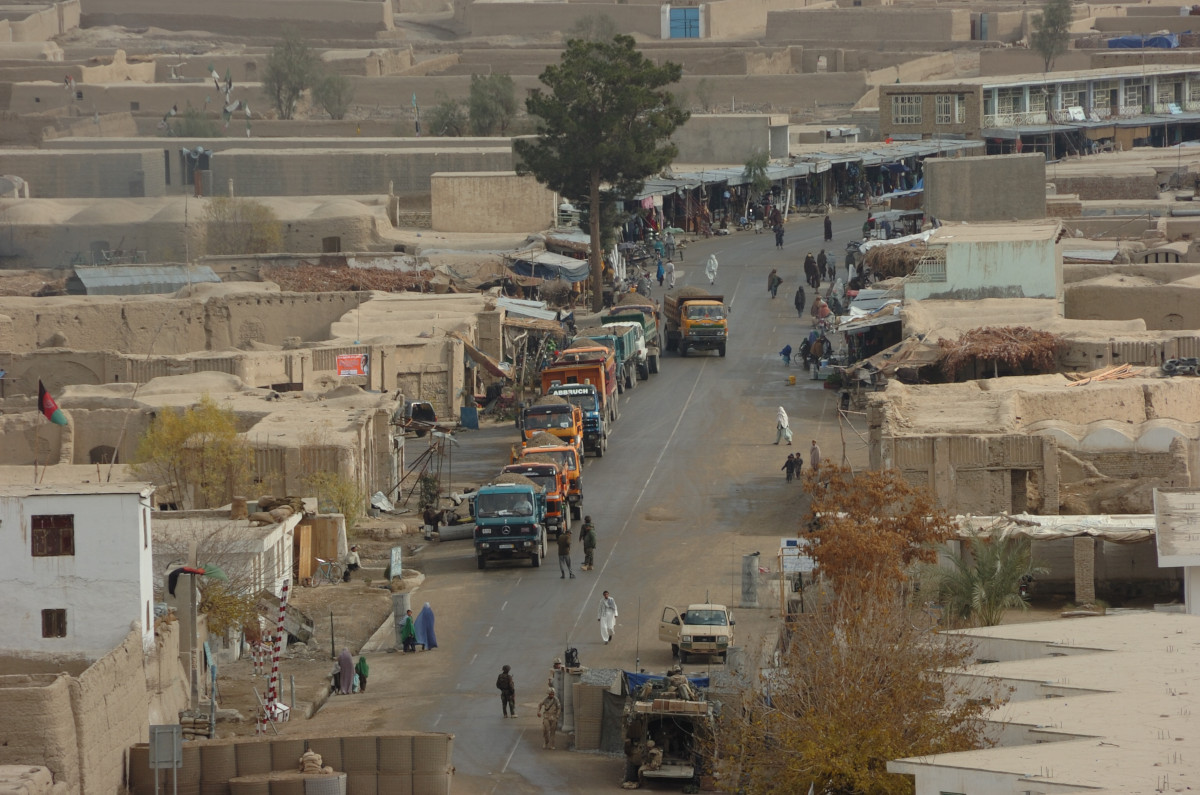
The main street of Bazaar-i-Panjwai. The many turns and irregular structures found in Kandahar and its surrounding towns and villages created poor visibility and increased the risk of IED strikes.
Photo: Sergeant Dennis Power, Army News-Shilo. © All rights reserved. AS2006-0857d reproduced with the permission of DND/CAF (2026).
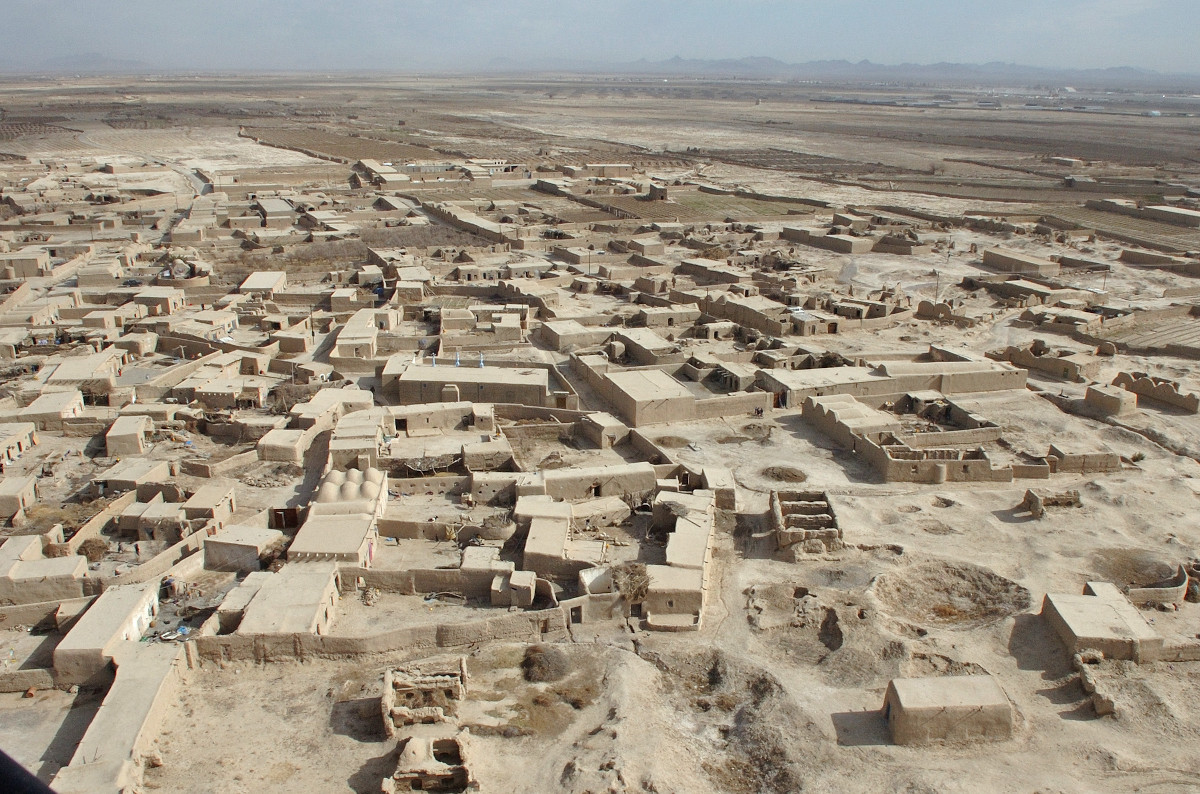
An aerial photo of a village near Kandahar Airfield, showing the maze of passageways and courtyards typical of villages in the region.
Photo: Sergeant Dennis Power, Army News-Shilo. © All rights reserved. AS2007-0340a reproduced with the permission of DND/CAF (2026).
Physical and psychological toll
Soldiers travelling any distance had to deal with physically demanding terrain. Both towns and agricultural areas have abundant walls, irrigation ditches, and other obstacles.
And the guerrilla nature of insurgency meant that danger could lie anywhere. The enemy seemed to be both everywhere and nowhere. Operating in Kandahar Province was both physically difficult and psychologically taxing.
Major Eleanor Taylor deployed to Panjwaii district in 2010, commanding troops at patrol base Sperwan Ghar. She recalls, “The training that we received before going into Afghanistan was remarkable. And there were times during that training experience that I felt, this is way overdone. There’s no way these kinds of things are all going to happen.”
But, she says, “What I experienced was that they happened not only in that way, but with more complexity and often in a more rapid pace.”
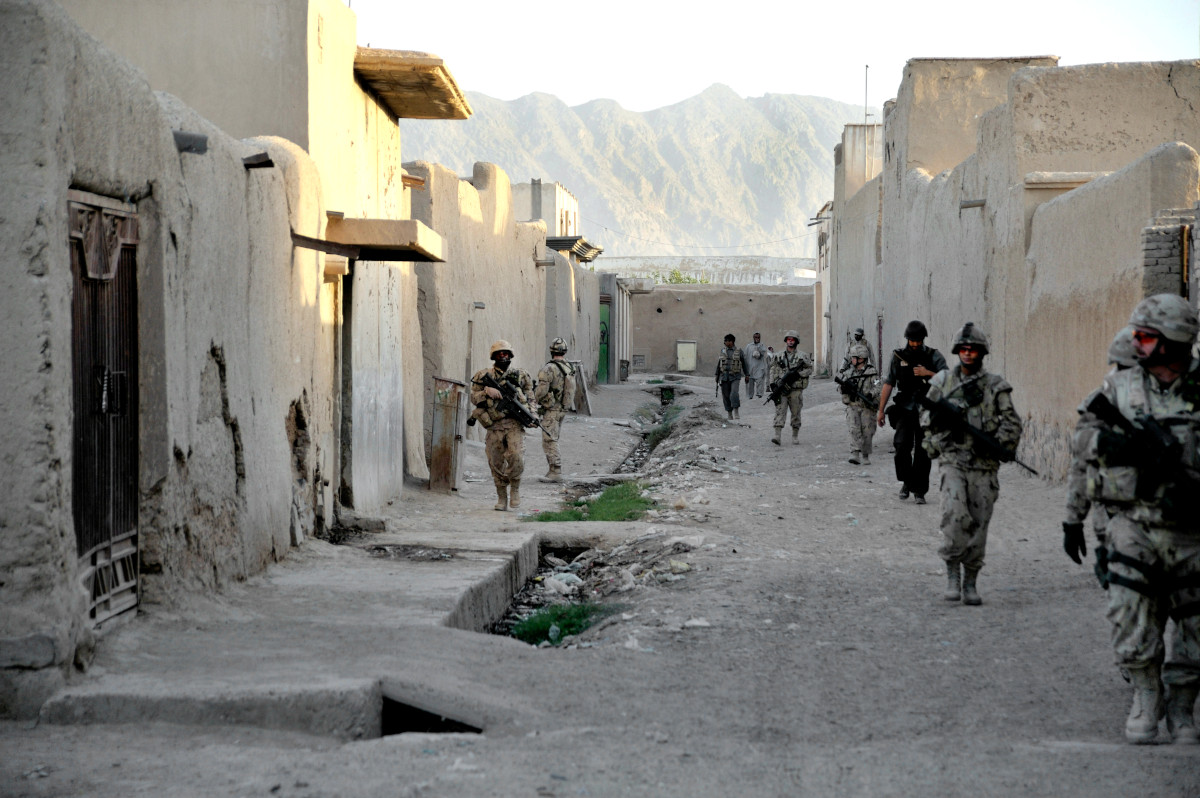
Canadian soldiers patrolling Kandahar City, June 2009. Navigating dense urban settings on foot demanded constant vigilance.
Photo: Sergeant Paz Quillé, Canadian Forces Combat Camera. © All rights reserved. IS2009-1017-07 reproduced with the permission of DND/CAF (2026).
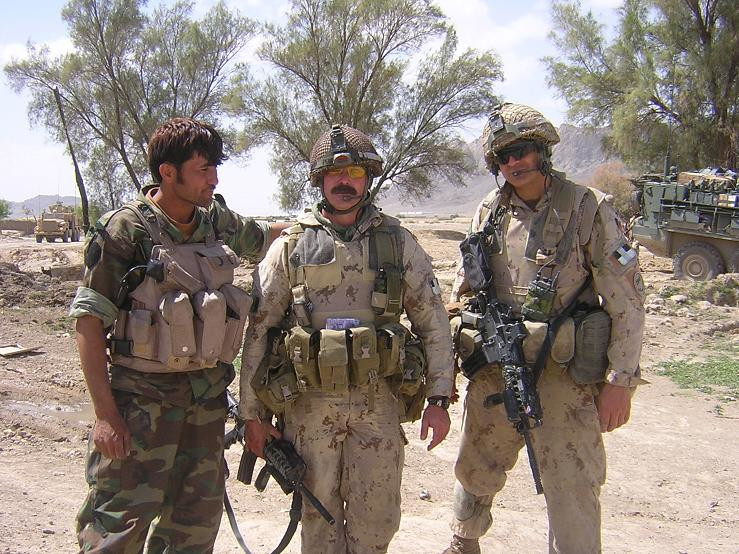
Sergeant-Major “John” of the Afghan National Army, Warrant Officer Chuck Cote, and Captain Slade Lerch, shortly after fighting through an ambush near Nakhonay, Panjwaii district, in spring 2008.
Photo: Chuck Cote, supplied
Threats and risks to local communities
The Taliban didn’t just target Canadian and NATO soldiers. Local Afghans working with westerners were routinely subjected to violence. The Taliban delivered so-called “night letters” under cover of darkness.
One such letter can be seen in the Canadian War Museum’s Gallery 4.
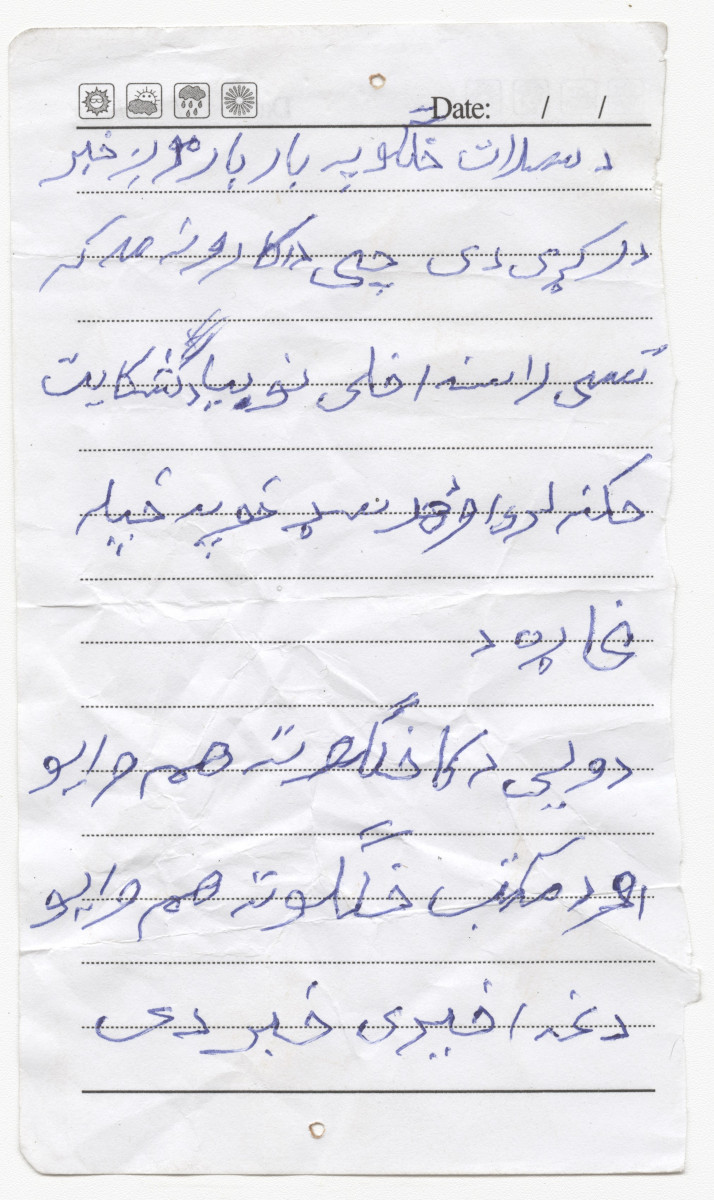
A Taliban threat, reading approximately “This is for the people of Salavat. We have told you repeatedly to stop. This is your last warning.”
Canadian War Museum, 2017011-018
The Taliban also carried out a series of targeted assassinations of local leaders throughout Afghanistan.
The Provincial Reconstruction Team’s original principles combined defence, diplomacy and development. Meaningful social and economic change was necessary alongside the combat effort. The Taliban’s terror campaign was understandably effective at impeding coalition efforts to work with local communities.
Locals also suffered directly from IED explosions. As Master Corporal Dennis LeBlanc points out, “Every time there would be an IED strike, well there’s civilians everywhere. The shop owners, children playing on the road, like, you know, they get caught up.” The Afghan military and police also took high casualties from Taliban IEDs and ambushes.
The Role 3 Multinational Medical Unit
Both military and civilian casualties were cared for at the NATO Role 3 Multinational Medical Unit, or field hospital, in Kandahar. “Role 3” is a NATO classification for specialized facilities capable of treating complex injuries.
The Role 3 was administered by the Canadian task force from 2006 to 2009. It was one of the world’s busiest trauma centres and achieved one of the highest ever survival rates for victims of war. In 2012, NATO recognized the Canadians’ level of care with its highest medical recognition, the Dominique-Jean Larrey Award.
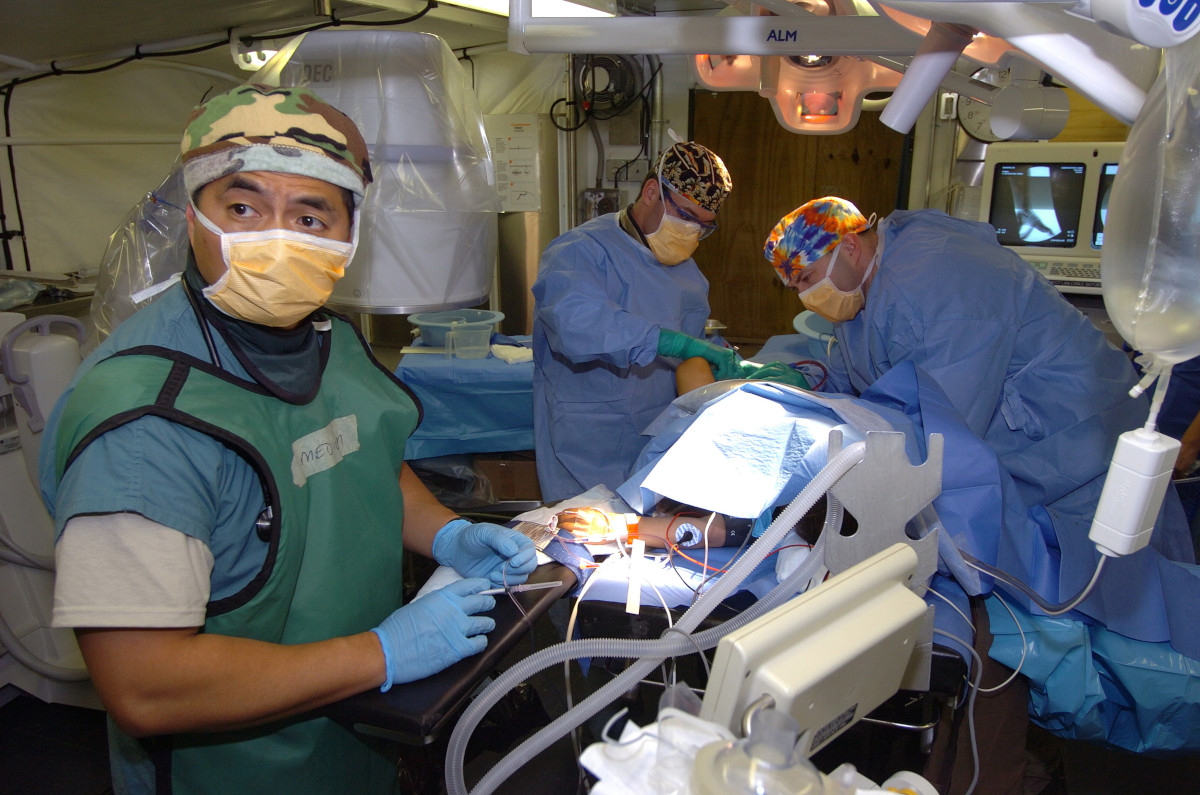
Major Joe Po, an anesthesiologist at the Role 3 hospital, monitors a young patient undergoing surgery for shrapnel wounds, January 2007.
Photo: Sergeant Dennis Power, Army News-Shilo. © All rights reserved. AS2007-0286a reproduced with the permission of DND/CAF (2026).
NATO casualties were stabilized and evacuated out of the country. Captain Cecilia Ho was a critical care Nursing Officer from September 2008 to May 2009. She recalls that, “They’re stable, off they go. So, the NATO soldiers don’t stay in the hospital very long.” But she notes, “Because we can’t evacuate the Afghan members, we have to take care of them.” Nearly three-quarters of the patients treated in the Role 3 hospital were Afghans.
Personnel pitched in however they could. Ho says, “Here in Canada, if you are ICU nurse, you are always the ICU nurse. If you’re a recovery nurse, you’re a recovery nurse. But over there, you’re it. If they’re overwhelmed with like 25 patients, you go out and help them. So, you could be all in one day.”
Remarkably, 98 percent of the wounded soldiers who reached the Role 3 survived.
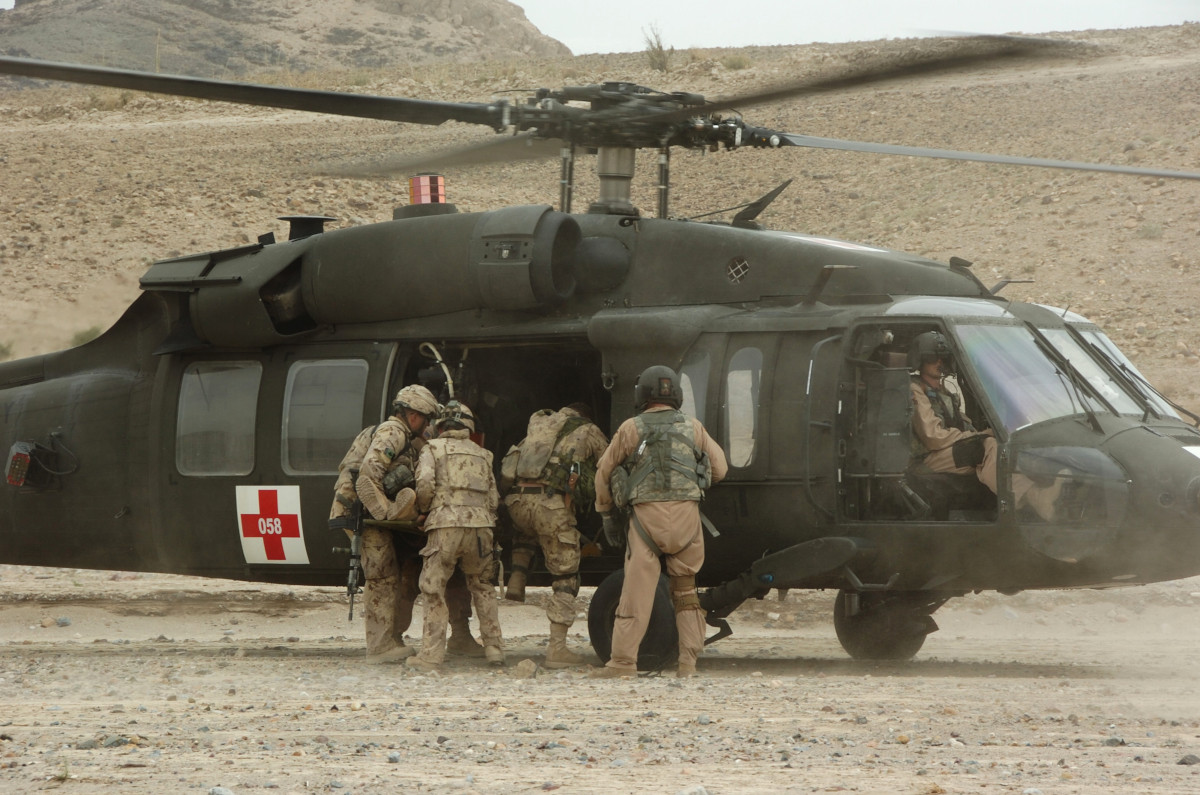
A Canadian soldier is evacuated to the Role 3 hospital after being injured in a suicide bomb attack north of Kandahar City.
Photo: Sgt. Carole Morissette. © All rights reserved. AR2006-H016-0033a reproduced with the permission of DND/CAF (2026).
Ramp ceremonies: Farewell to the fallen
Of course, not everyone could be saved. Over the course of the war, 158 Canadian soldiers were killed in action or succumbed to their injuries.
Almost all of Canada’s war dead returned home after a solemn ritual at Kandahar Airfield. Their fellow soldiers and allies gathered to pay respect. Flag-draped coffins were carried across the tarmac and up the ramp into the RCAF transport aircraft that would take them home.
These “ramp ceremonies” were moving occasions to gather and to grieve. But the war did not stop. Canadian soldiers said their farewells and then returned to the relentless grind of countering the mounting Taliban insurgency.
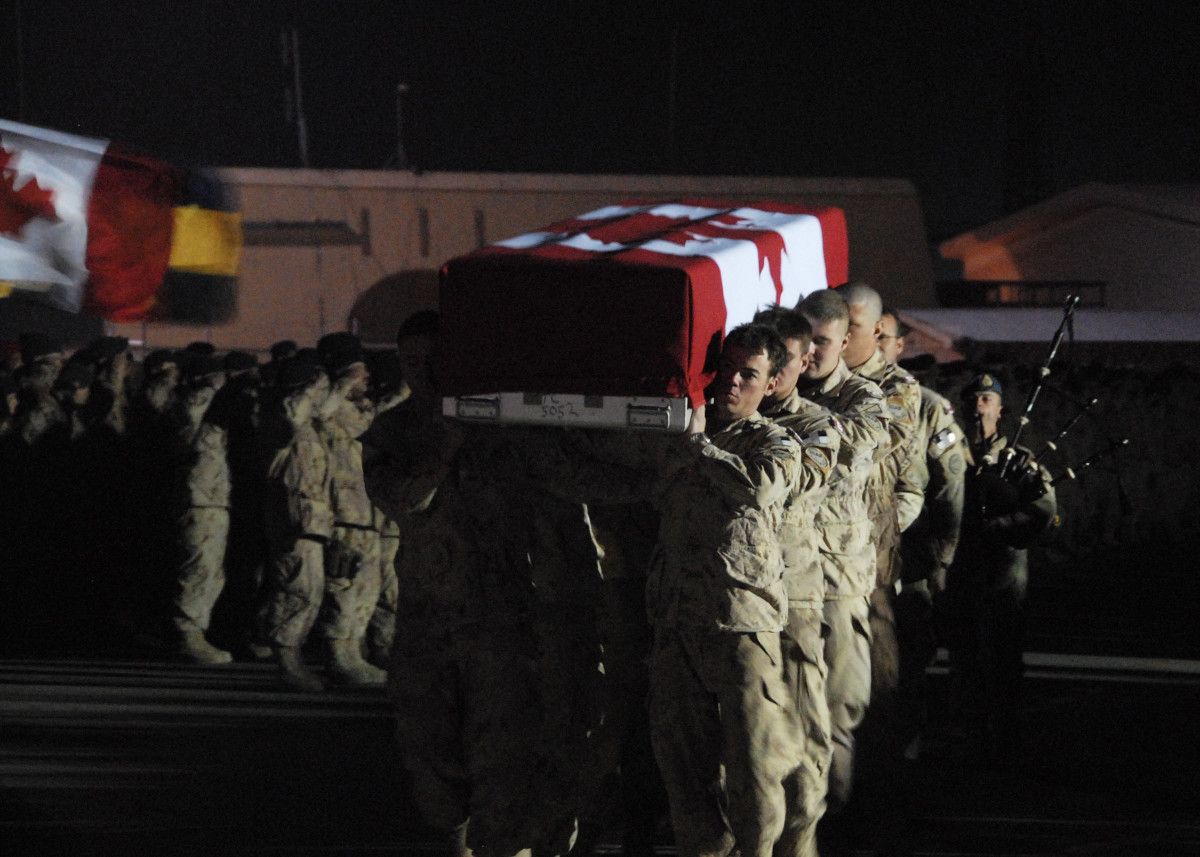
Canadian soldiers carry the remains of Trooper Brian Good during a ramp ceremony at Kandahar Airfield on January 8, 2009.
Photo: U.S. Navy Petty Officer 2nd Class Aramis X. Ramirez, ISAF / Flickr, CC BY 2.0
By 2010, the Canadian mission was preparing to shift away from combat. Instead, Canadians would focus on training Afghan military and security forces. Their time dealing with IEDs and insurgency in Kandahar would soon draw to a close.
Listen to episode six of our podcast The Long War: Canada in Afghanistan to hear more about Canada’s counterinsurgency mission in Kandahar.
Subscribe to The Long War wherever you get your podcasts.
Steve McCullough
Dr. Steve McCullough is the Digital Content Strategist at the Canadian Museum of History and the Canadian War Museum. His work in digital storytelling involves compassionate and evidence-based efforts to address history, meaning and identity in our fragmented and polarizing, but also vibrant and interconnected, online environment.
Andrew Burtch
Dr. Andrew Burtch has been the Historian, Post-1945 at the Canadian War Museum since 2006. He is the curator of Gallery 4: From the Cold War to the Present, which examines Canada’s response to conflicts from the beginning of the Cold War to the present day. His main areas of research include Cold War history, nuclear civil defence, United Nations peacekeeping missions, the Korean War, war and memory, and oral history.
Read full bio of Andrew Burtch