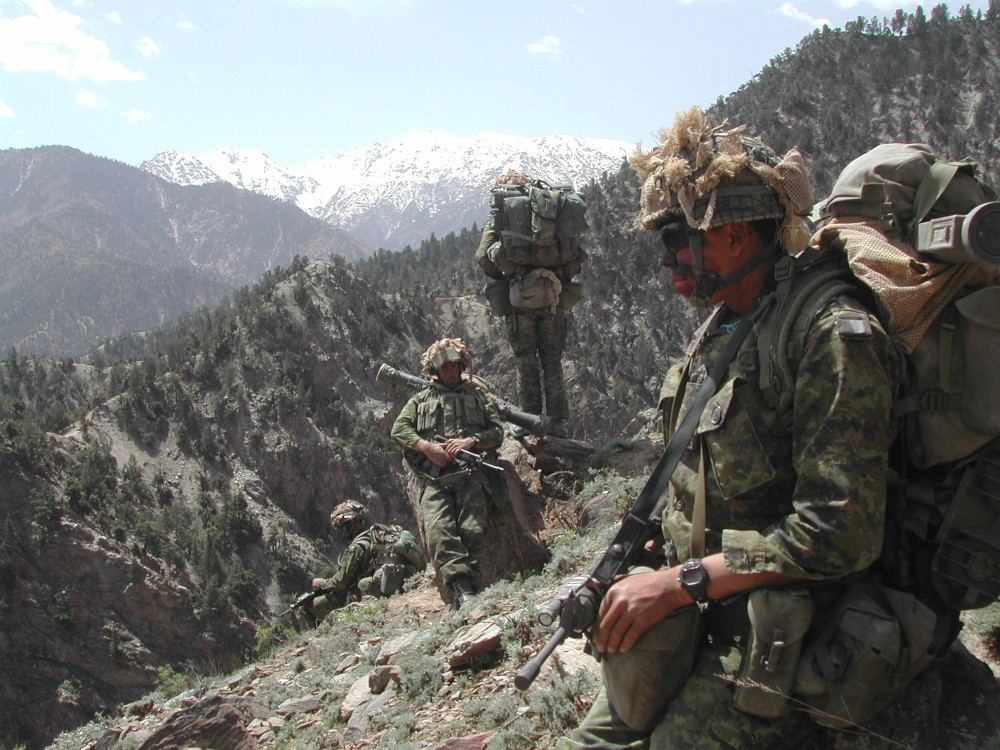
Combat and diplomacy: Canada in Afghanistan, 2003–2006
Tom Mykytiuk recalls flying into Afghanistan in 2003: “The C-130 flies in and makes a very steep, steep dive to protect the aircraft from any air defense missiles or any stingers or anything that could threaten it.”
On landing after these evasive maneuvers, new arrivals were plunged into a dramatic environment of heat and dust. Mykytiuk says, “Once you get off the airplane, essentially, you can smell that enduring scent and taste of dust. You know, dust in your cup, dust on your skin, dust in your teeth.”
Canada was returning to Afghanistan as part of the now NATO-led International Security Assistance Force (ISAF). The initial mandate of ISAF was to secure Kabul and support the provisional government led by Hamid Karzai.
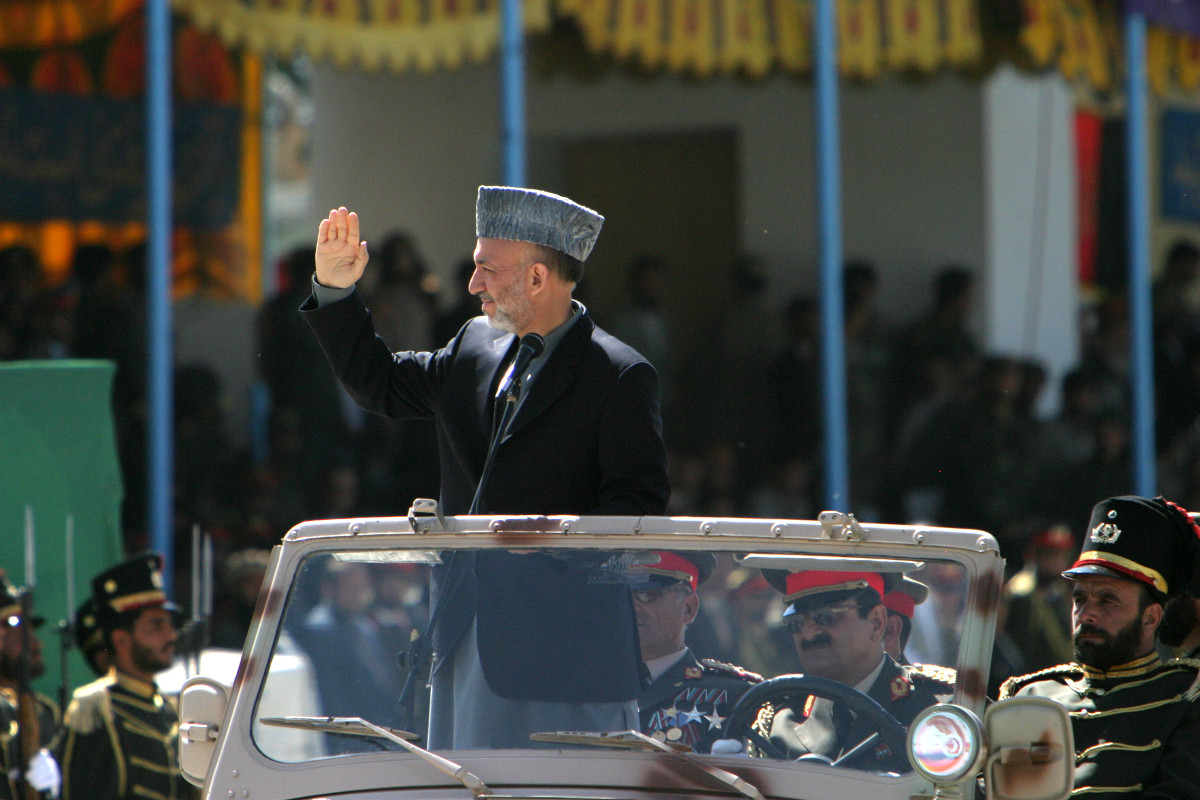
Interim President Hamid Karzai waves during a procession celebrating Mujahideen Victory Day, April 28, 2004.
Photo: George Metcalf Archival Collection, Canadian War Museum, CWM 20080028-001_3746a. © Stephen Thorne (2004), The Canadian Press
Stabilizing Kabul
The Canadian forces were based in Camp Julien. Shannon Glenney served there with the Canadian Forces Personnel Support Agency. She recalls, “Camp Julien was a camp located in the southwest corner of Kabul between the wrecks of two beautiful buildings — the King’s Palace and the Queen’s Palace.”
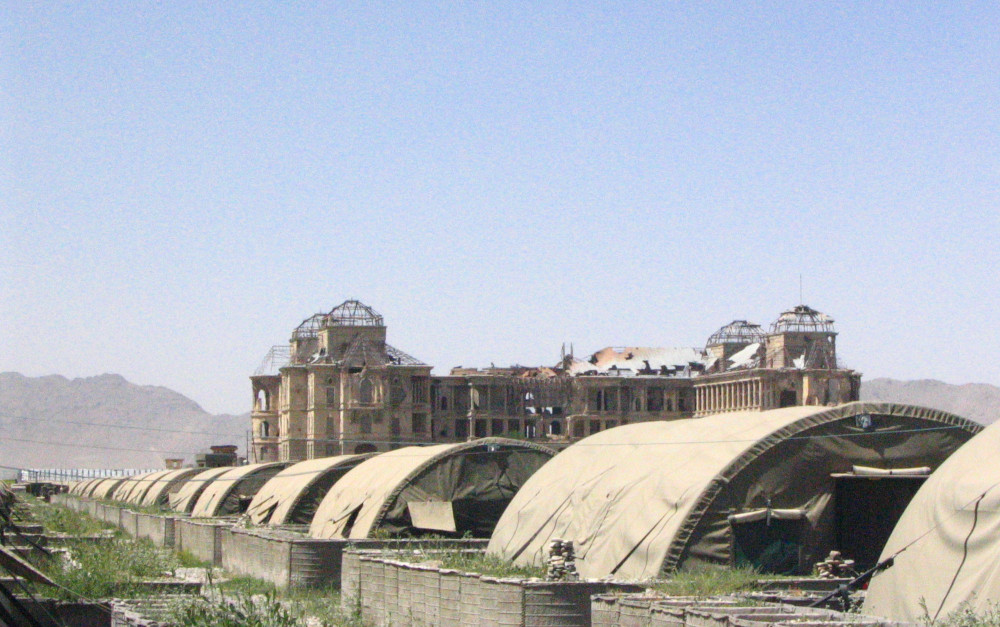
Camp Julien, with Darul Aman Palace in the background. The Palace was built in the 1920s and badly damaged during the civil war of the 1990s.
Photo: Courtney Walker / Flickr, CC BY 2.0, https://www.flickr.com/photos/trec_lit/38613670
Kabul was a sprawling city of almost 3 million people. It was informally governed by a patchwork of groups and allegiances reflecting the legacy of the 1990s civil war. As such, there was a constant risk of political upheaval and violent conflict.
This was a complex and risky environment for coalition forces. Sarah Heer deployed to Kabul in 2003 as a Captain with the 2nd Regiment, Royal Canadian Horse Artillery. She says, “Kabul was a pretty intense area. We received daily ‘int reps’ on different insurgents and different threats that we had to look out for. So, you know, you always had to be careful.”
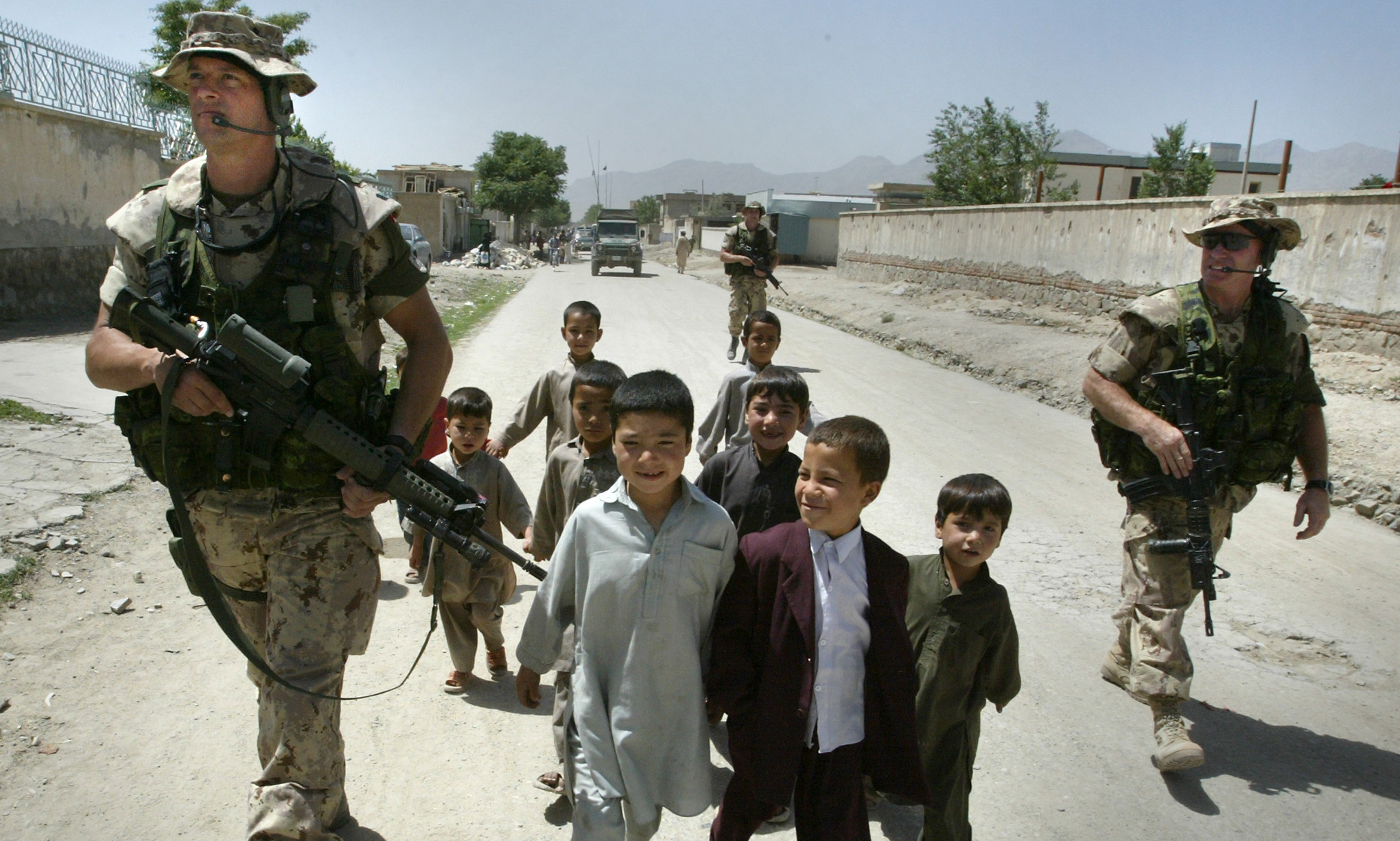
Soldiers from the Royal 22e Regiment patrolling in Kabul, May 2004. Troops on foot were vulnerable but could easily interact with local communities.
Photo: George Metcalf Archival Collection, Canadian War Museum, CWM 20080028-001_F72G5136a. © Stephen Thorne (2004), The Canadian Press.
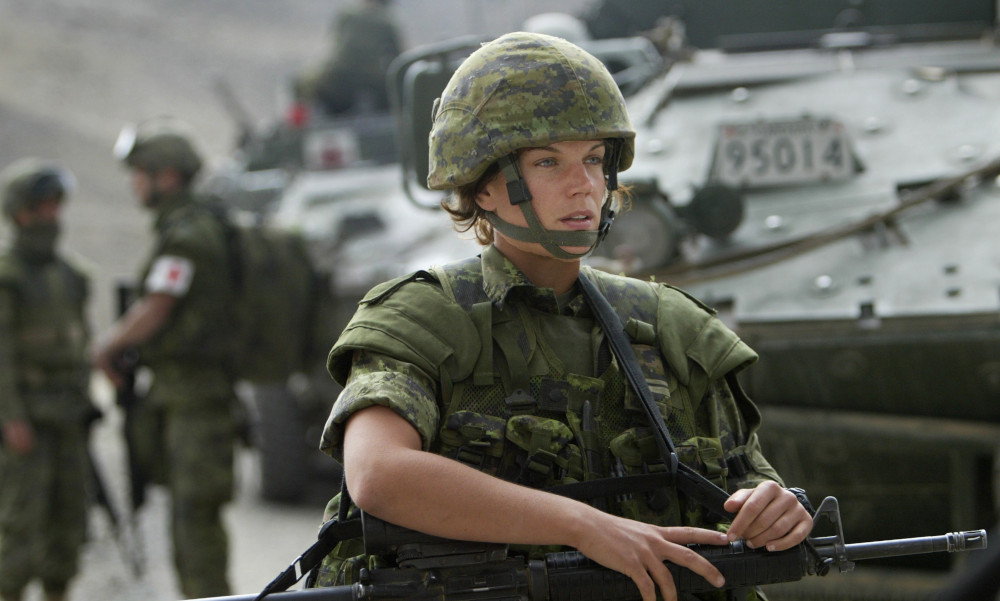
Soldiers from the Royal 22e Regiment patrolling in Kabul, April 2004. Armoured vehicles offered better protection but made relationship-building more difficult.
Photo: George Metcalf Archival Collection, Canadian War Museum, CWM 20080028-001_F72G1198a. © Stephen Thorne (2004), The Canadian Press.
Canadian troops were patrolling in and around Kabul and building relationships with the local community. Mykytiuk says, “We had a lot of contact with people during the day, when we would do patrols through some of the bazaars and stop in some of the local industries.”
In the chaos following the fall of the Taliban, the task of stabilization was complex. It meant having the right conversations with the right people as much as exchanging fire with a scattered but resilient enemy.
Jowz Valley mine strike
On October 2, 2003, a Canadian patrol left Camp Julien in two Iltis jeeps. They were on a routine patrol into the nearby hills. But a TM-57 anti-tank mine had been placed along their route. Two soldiers were killed instantly and three others were wounded.
These casualties were a shock to the Canadian contingent. They also underscored aspects of the war in Afghanistan that would persist throughout the conflict. Enemy action would be unpredictable and clandestine. Threats would be hard to identify and mitigate. And striking a balance between the demands of diplomacy and warfighting would prove enduringly difficult.
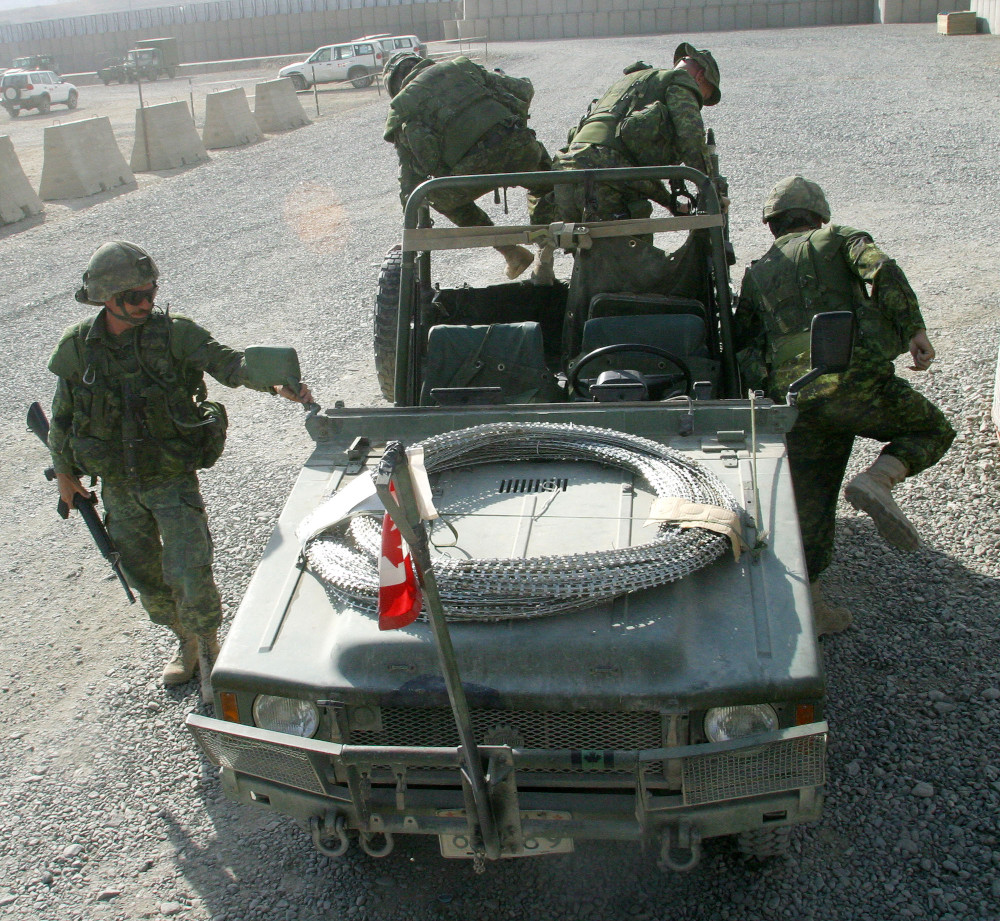
Canadian paratroopers dismount from an Iltis vehicle. The Iltis is open on the sides and top and was designed for speed and maneuverability rather than protection.
Photo: George Metcalf Archival Collection, Canadian War Museum, CWM 20080028-008_Thorne170. © Stephen Thorne (2003), The Canadian Press.
A new constitution and elections
Canadian soldiers provided security as Afghans and the international coalition worked to establish new democratic structures and processes in Afghanistan.
The Loya Jirga of December 2003 was an important milestone in the evolving post-invasion political situation. A Loya Jirga (or “grand council”) is a traditional Pashtun meeting of leaders to settle disputes and make major decisions.
More than 500 delegates attended, including regional warlords, former Northern Alliance commanders, and other former combatants. The Taliban were not at the table. The delegates’ goal was to review and approve a new constitution for Afghanistan. That constitution was ratified in January 2004.
The new year brought with it the promise of progress — but also a chilling new danger. On January 27, a Canadian patrol was targeted by a suicide bomber. The blast killed Corporal Jamie Murphy and injured three other Canadians.
This was the first time Canadians had been targeted by a suicide attack, which had rarely been part of conflict in Afghanistan. This would change in the years ahead.
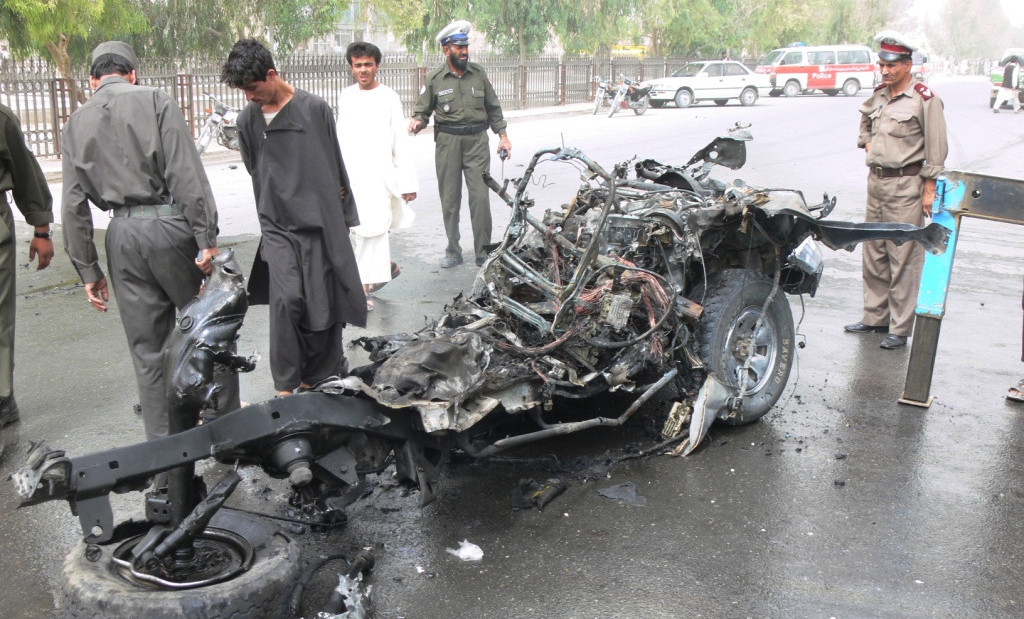
Wreckage left by an explosion, June 2006.
Photo: Canadian War Museum, Boomer’s Pics, 20070194-002.
Despite the Taliban threat, Afghanistan’s first presidential election was held on October 9, 2004. More than 10 million Afghans registered to vote, including millions of women. Eighteen candidates were on the ballot. The interim leader, Hamid Karzai, won decisively with 55 percent of the vote.
Almost a year later, on September 18, 2005, members of parliament were elected amid growing tensions in the provinces.
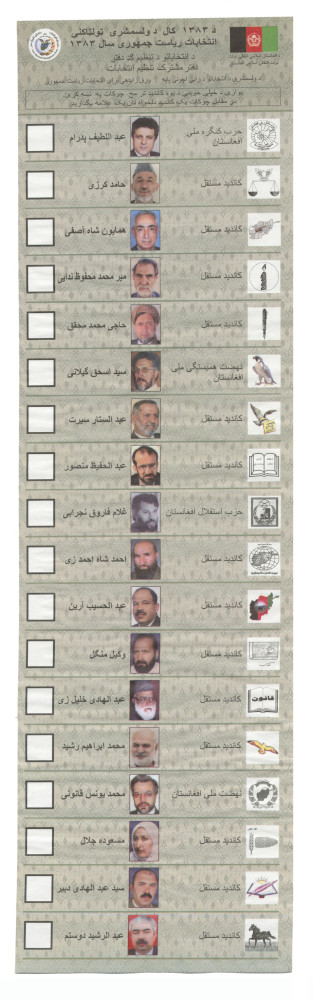
An election ballot from the 2004 Afghanistan presidential election.
Photo: Canadian War Museum, 20060136-001, https://www.warmuseum.ca/collections/archive/3130791
From Kabul to Kandahar
In 2005, the Canadian mission in Afghanistan changed dramatically. Canada was to take on the task of securing Kandahar province. This is a large and geographically diverse area in the south of Afghanistan.
Kandahar contains lush farmland, impassable mountain ranges, and even borders the Registan desert. It was where the Taliban emerged in the 1990s and where al-Qaeda operated prior to the 9/11 attacks. The presence and aggression of insurgents had slowly escalated between Canada’s first deployment to Afghanistan in 2002 and its return to Kandahar in 2005.
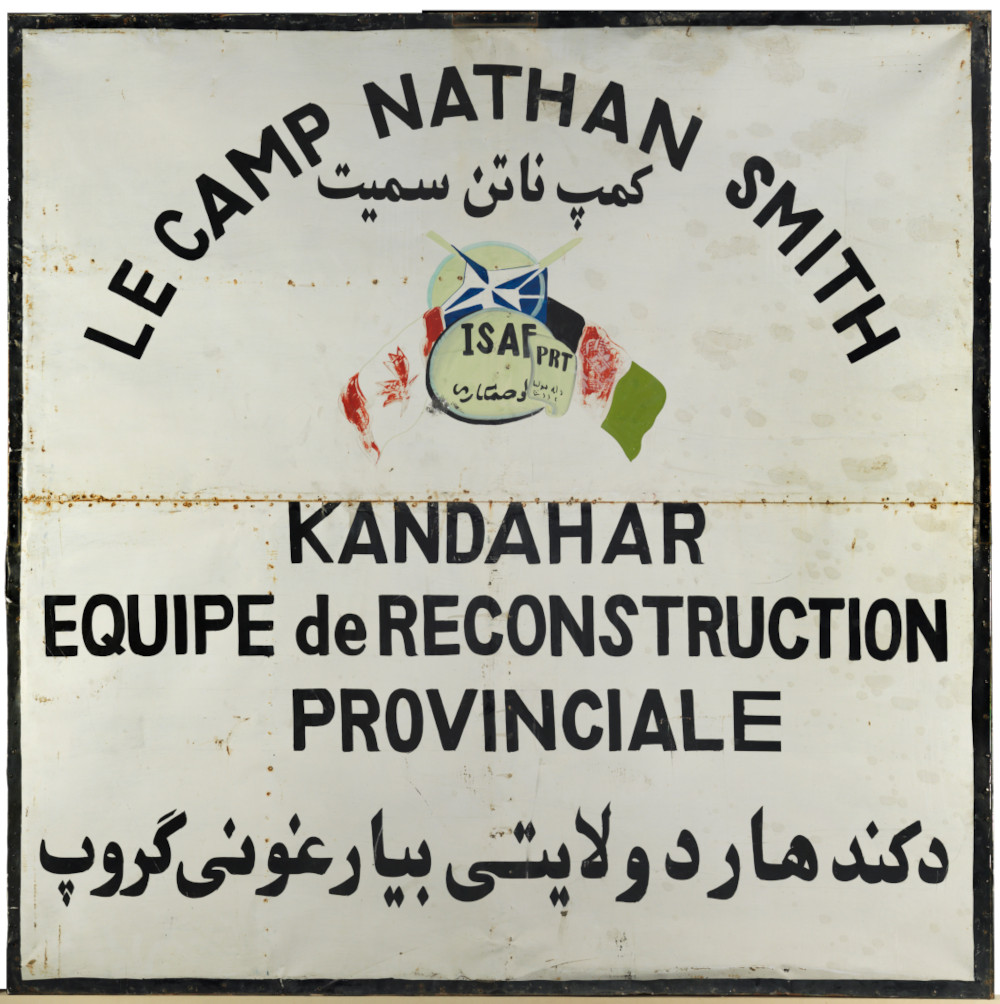
The Kandahar PRT operated out of Camp Nathan Smith. This former fruit factory had been repurposed as a military base by Americans in 2003. When Canada took over in 2005, they named it after one of the soldiers killed by U.S. friendly fire at Tarnak Farms.
Photo: Canadian War Museum, 20130265-040, https://www.warmuseum.ca/collections/artifact/2334657
Canada arrived in Kandahar to take responsibility for the local Provincial Reconstruction Team (PRT). The PRT model was an attempt to combine the “three Ds” of defense, diplomacy and development.
Decades of war had left Afghanistan with almost no functioning institutions. The PRT’s mission was to work alongside local authorities to build systems of governance and enhance infrastructure. They also had to provide security and create training programs for the Afghan National Police and Afghan National Army.
The PRT brought the military, diplomats, and civilian development workers together under one roof. Coalition forces had to navigate a deep, complex web of social relationships, loyalties, and very long memories.
Master Corporal Paul Franklin served in Kandahar as a medic with the PRT. He notes, “The day after you build that school, it’s burnt down. Now is it burnt down because the Taliban are in the area? Is it burnt down because the wrong person got the wrong contract for the mud, for the trucks, for the workers? Is it in the wrong neighbourhood?”
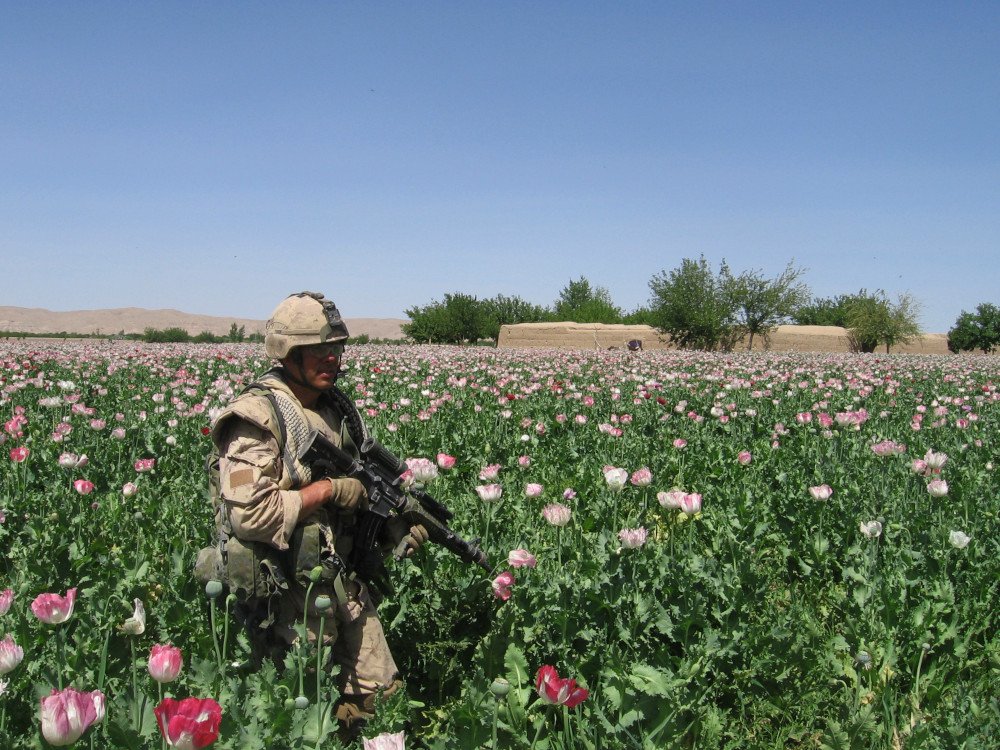
Canadian soldier in a poppy field, April 2006.
Photo: Canadian War Museum, Boomer’s Pics, 20070194-002.
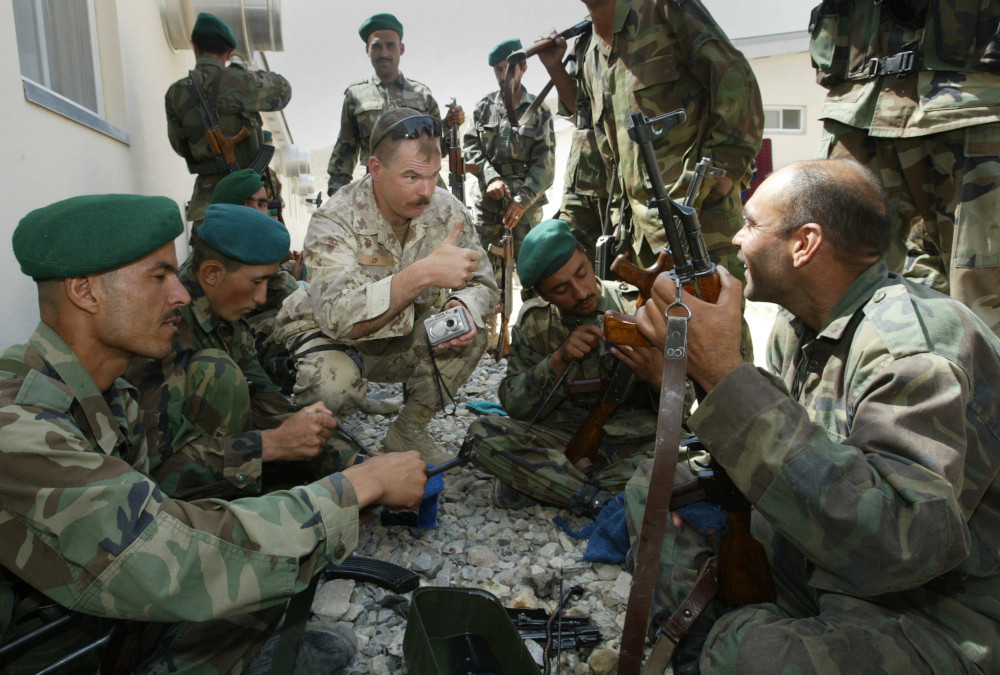
Soldiers with the Embedded Training Teams worked closely with the Afghan National Army on everything from weapons maintenance to tactics.
Photo: George Metcalf Archival Collection, Canadian War Museum, CWM 20080028-006_ F72G1728a. © Stephen Thorne (2004), The Canadian Press.
The assassination of Glyn Berry
On January 15, 2006, Franklin was driving a G-Wagon in a convoy returning from Kandahar Airfield to Camp Nathan Smith. Two soldiers and diplomat Glyn Berry, the political director of the PRT, were his passengers.
They were targeted by a suicide bomber driving a van filled with rockets. Berry was killed and the three soldiers grievously wounded. Franklin suffered extensive damage to his legs, which had to be amputated above the knee.
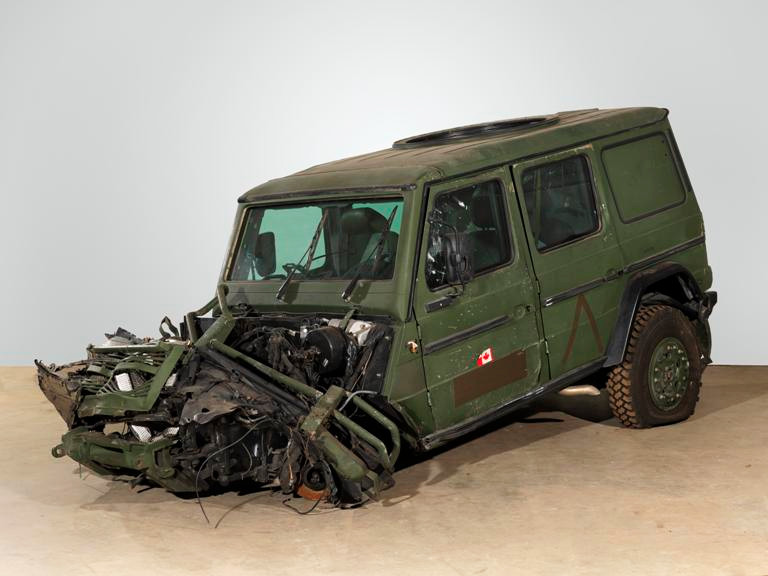
The remains of a G-wagon (short for Geländewagen) damaged by an IED in December 2005. G-wagons were better protected by armour plate than the Iltis. In this case, the driver and passengers all survived with only minor injuries.
Photo: Canadian War Museum, 20060101-001, https://www.warmuseum.ca/collections/artifact/1934768
With this targeted attack, Canadian diplomacy and development operations effectively ground to a halt. Civilian representatives were withdrawn from what was clearly a very dangerous environment. This led to a paralysis of the PRT effort for quite some time.
Later in 2006, the military aspect of Canada’s mission would only become more demanding. A Canadian battlegroup arrived to take on more responsibility for the security of Kandahar. Canada was soon to engage in its largest combat operation since the Korean War – Operation Medusa.
Listen to episode three of our podcast The Long War: Canada in Afghanistan to hear more about the varied missions, objectives and tactics that Canada faced as the war unfolded.
Subscribe to The Long War wherever you get your podcasts.
Steve McCullough
Dr. Steve McCullough is the Digital Content Strategist at the Canadian Museum of History and the Canadian War Museum. His work in digital storytelling involves compassionate and evidence-based efforts to address history, meaning and identity in our fragmented and polarizing, but also vibrant and interconnected, online environment.
Andrew Burtch
Dr. Andrew Burtch has been the Historian, Post-1945 at the Canadian War Museum since 2006. He is the curator of Gallery 4: From the Cold War to the Present, which examines Canada’s response to conflicts from the beginning of the Cold War to the present day. His main areas of research include Cold War history, nuclear civil defence, United Nations peacekeeping missions, the Korean War, war and memory, and oral history.
Read full bio of Andrew BurtchRelated articles
Politics and public opinion: Canada in Afghanistan, 2006–2008
The White School and Operation Medusa: Canada in Afghanistan, 2006