First combat and casualties: Canada in Afghanistan, 2001–2002
The 2001 invasion of Afghanistan had quickly toppled the Taliban government. Al-Qaeda was scattered. The Taliban had lost control. But the U.S.-led coalition was far from in charge of Afghanistan. In many ways, the war was just beginning.
Securing Kandahar
Canada’s initial contribution to the war had consisted of air and naval support. A small commitment of special forces operators was on the ground in December 2001. But by February 2002, larger deployments of combat soldiers began to arrive on the tarmac of Kandahar airfield.
A battle group led by the 3rd Battalion of Princess Patricia’s Canadian Light Infantry (3 PPCLI) was initially deployed to secure the perimeter of the airfield. Kandahar airfield was to become a vital transportation and operations hub for the international coalition.
Their initial deployment was for six months. However, their commander, Lieutenant-Colonel Pat Stogran, was under no illusions that the mission would be over quickly. He says, “I told the troops right from the get-go: ‘Don’t consider this a six-month tour. We could be here a year or, you know, who knows. But just get used to the lifestyle.’ So, it was open-ended, and it was open-ended for the longest time.”
Canadian troops were also called upon to support combat operations against remnants of the Taliban and al-Qaeda elsewhere in Afghanistan.
These Canadian troops were operating as part of a larger American grouping called Task Force Rakkasan. The various national armies had to share and integrate their communications and command structures to work together effectively.
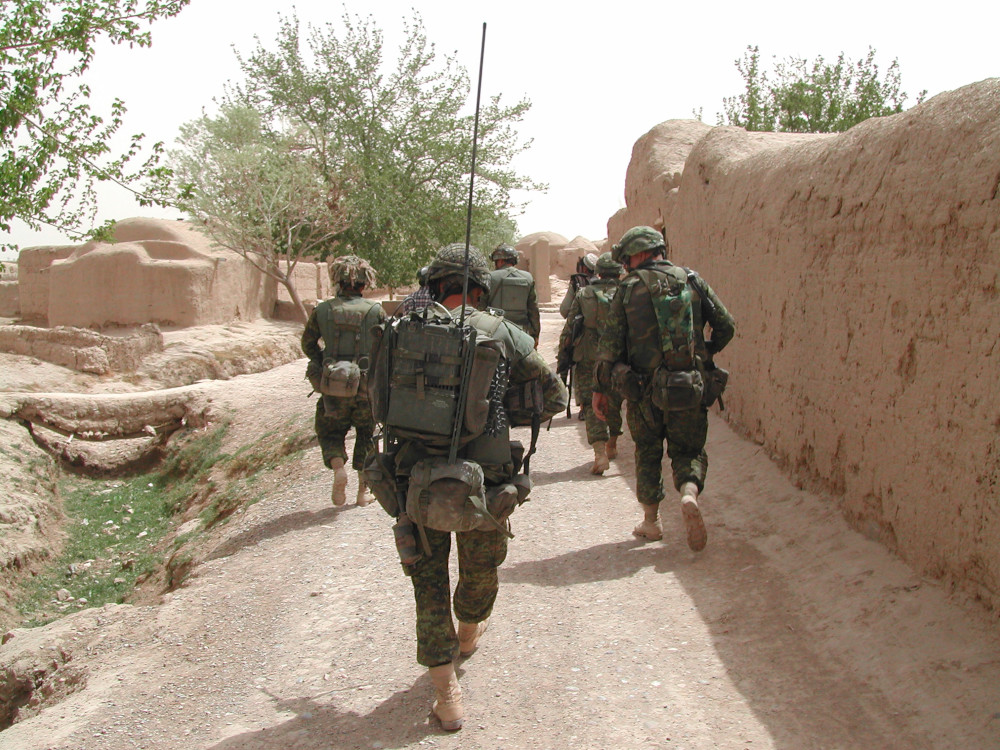
Soldiers from PPCLI on patrol in Kandahar, March 2002.
George Metcalf Archival Collection, Canadian War Museum, CWM 20080028-011_patrol2. © Stephen Thorne (2002), The Canadian Press
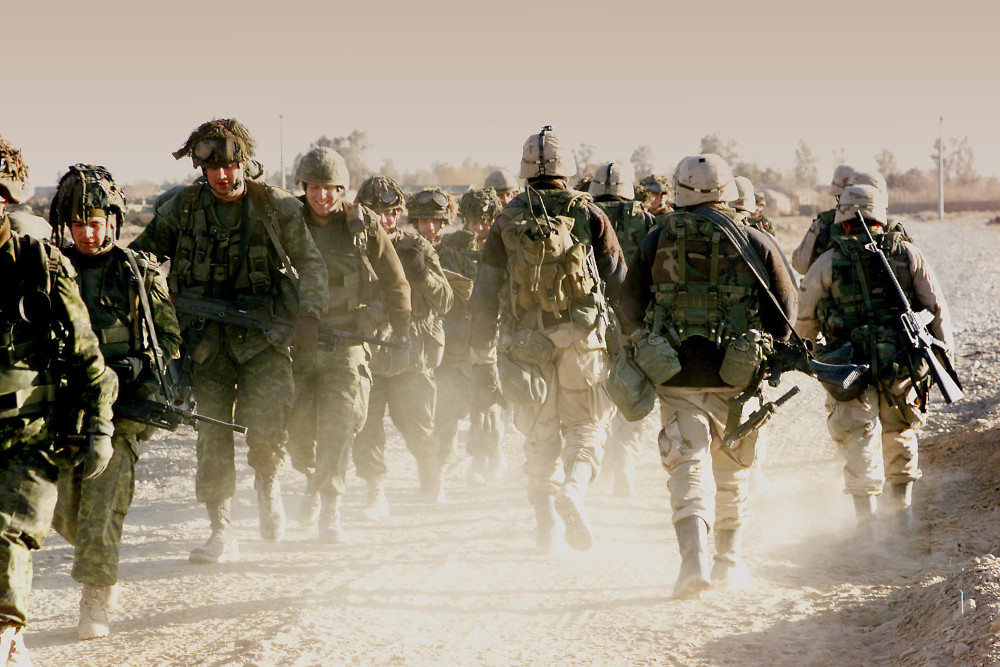
Soldiers from Bravo Company, 3 PPCLI, take over from Charlie Company, 101st Airborne Division, at Kandahar airport, February 12, 2002.
Photo: Sgt Gerry Pilote, DGPA/J5PA Combat Camera © All rights reserved. ISD02-3020 reproduced with the permission of DND/CAF (2026).
Operation Anaconda
In March 2002, five Canadian snipers left Kandahar airfield to participate in Operation Anaconda. This operation pitted American and Afghan allies against enemy forces reportedly holed up in the Shah-i-Kot Valley, northeast of Kandahar.
Stogran recalls that, “Anaconda was meant to break the back of the bad guys, and they were well prepared and dug in for a big fight with the Americans.”
The Canadians provided key tactical support to U.S. forces during the operation. One of them, Corporal Rob Furlong, made a record-breaking shot, hitting a target from 2,430 metres away. The snipers’ success was a promising example of the military forces working together effectively. The Americans later awarded the snipers the U.S. Bronze Star Medal for their contribution.
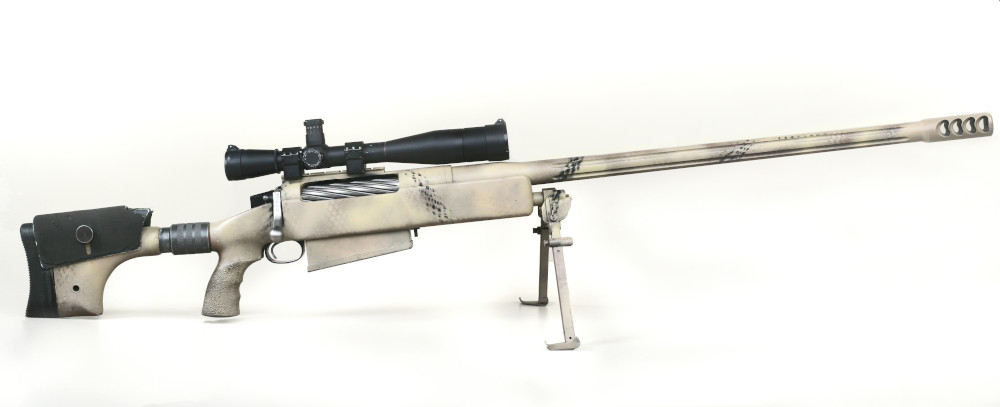
Rob Furlong’s MacMillan TAC 50 sniper rifle is on display at the Canadian War Museum.
Canadian War Museum, 20080103-001
In mid-March, Canada joined a helicopter-borne assault on a mountainous area known as The Whale’s Back, and 3 PPCLI joined the American 10th Mountain Division on the heights overlooking the Shah-i-Kot valley. The attack, which the Canadians called “Operation Harpoon,” was well planned, coordinated and executed.
But a demanding search of the mountainside found that all but a handful of the enemy had withdrawn. There was a brief firefight between these holdouts and the American forces. Operation Harpoon proved less dangerous than expected.
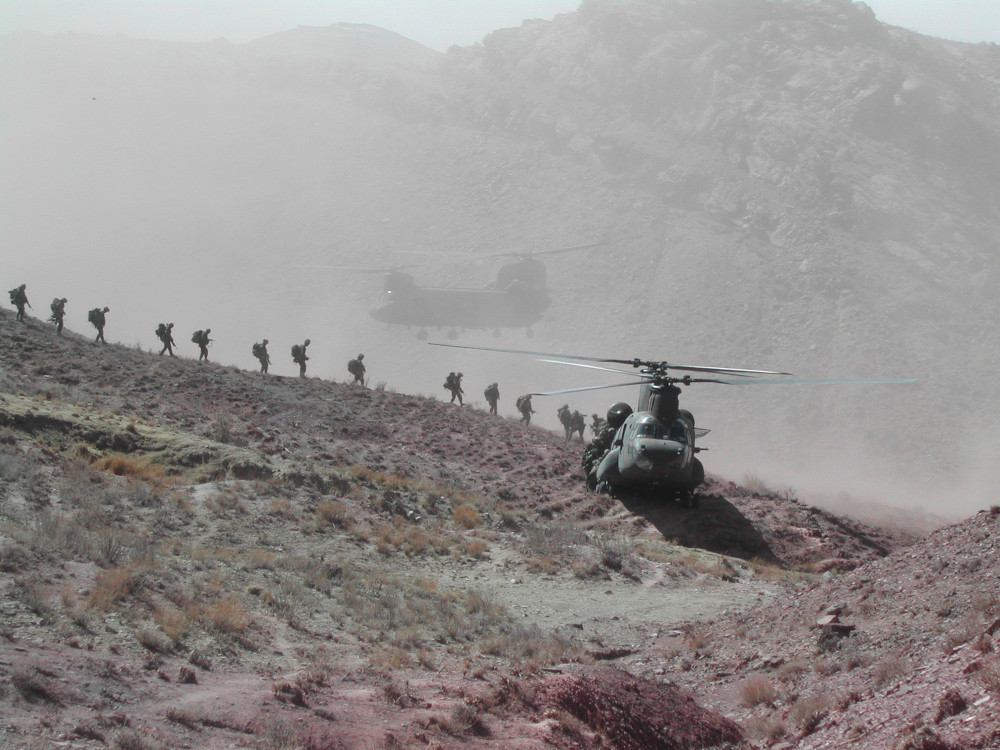
Canadian troops boarding a helicopter to depart The Whale’s Back, March 17, 2002.
George Metcalf Archival Collection, Canadian War Museum, CWM 20080028-011_leaving2a. © Stephen Thorne (2002), The Canadian Press.
Friendly fire at Tarnak Farms
The close cooperation seen in Anaconda and Harpoon would soon be overshadowed by a tragic friendly fire incident. Late on April 17, 2002, Canadian troops were conducting nighttime training at a facility called Tarnak Farms near Kabul. Formerly an al-Qaeda training site, it was now used for the same purpose by the U.S. and its allies.
U.S. Air National Guard Major Harry Schmidt, deployed as part of American air support to the Afghanistan war, was flying an F-16 over the training site when he saw shooting below. It was the Canadian troops training, but Schmidt decided his wingman was being fired on by the enemy. Despite being told to hold his fire, Schmidt rolled in and dropped a 500-pound bomb on the firing range.
Four Canadian soldiers were killed and eight were wounded. American and Canadian medical personnel worked together in Kandahar’s rudimentary field hospital to save those they could after the attack. The Canadians killed were Sergeant Marc Léger, Corporal Ainsworth Dyer, Private Richard Green, and Private Nathan Smith.
Given that Tarnak Farms was a well-known and well-used training area, the incident came as a shock. Friendly fire is an ever-present risk in the chaos of combat, but Tarnak Farms was far from the front lines. As Warrant Officer William “Billy” Bolen, who worked closely with Sergeant Marc Léger, said at the time, “I had a concern about friendly fire, but not with training. Maybe on The Whale, but . . . not here.”
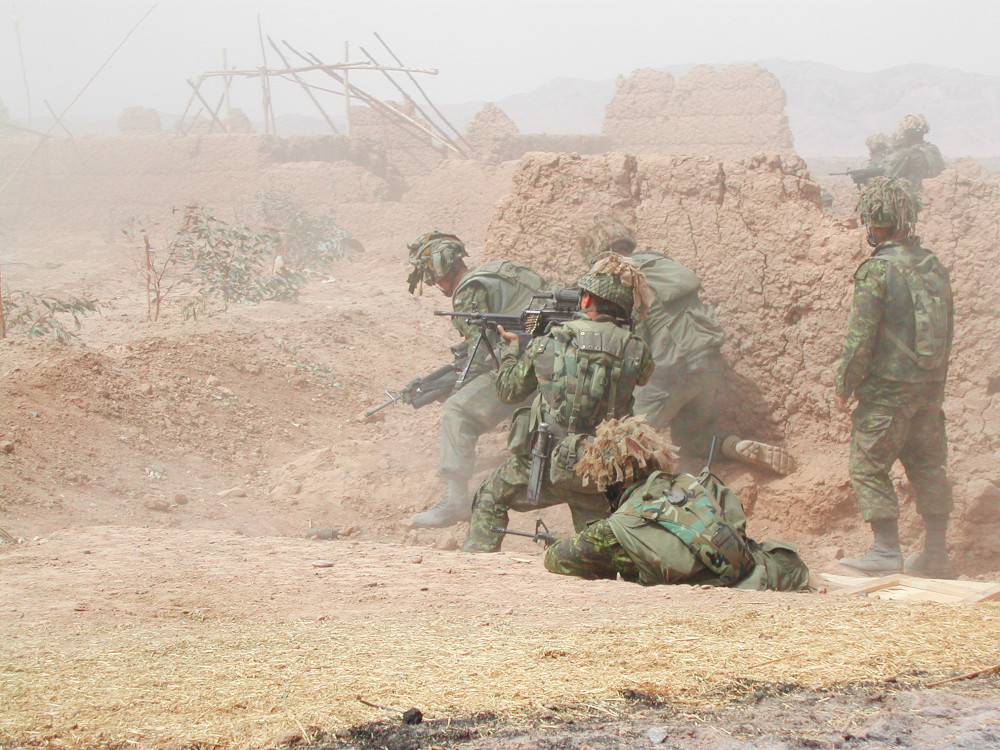
Canadian troops conducting a live-fire exercise at Tarnak Farms on April 2, 2002, less than two weeks before the friendly fire incident.
George Metcalf Archival Collection, Canadian War Museum, CWM 20080028-011_action5. © Stephen Thorne (2002), The Canadian Press.
To the frustration and anger of many in Canada, Schmidt showed little remorse. Stogran says, “The guy who called self-defence and then later didn’t accept his mistake, that annoyed the hell outta me. Shit happens in war. But I was really upset that he wouldn’t say, ‘Yeah, we made a mistake.’”
These casualties were Canada’s first deaths in the Afghanistan war. The incident dealt a major blow to Canadians’ morale, even as they continued to work closely with American forces.
The Canadians bade goodbye to their dead with a touching ramp ceremony in Kandahar. They gathered to send them off on their first leg home to be returned to their families across Canada. It was the first of many such ceremonies to come.
The casualties were also widely covered in the media. A nationally televised memorial ceremony was held before a crowd of 16,000 at Skyreach Centre in Edmonton where the dead were eulogized by Governor-General Adrienne Clarkson. It was a shocking reminder for Canadians about the risks of war.
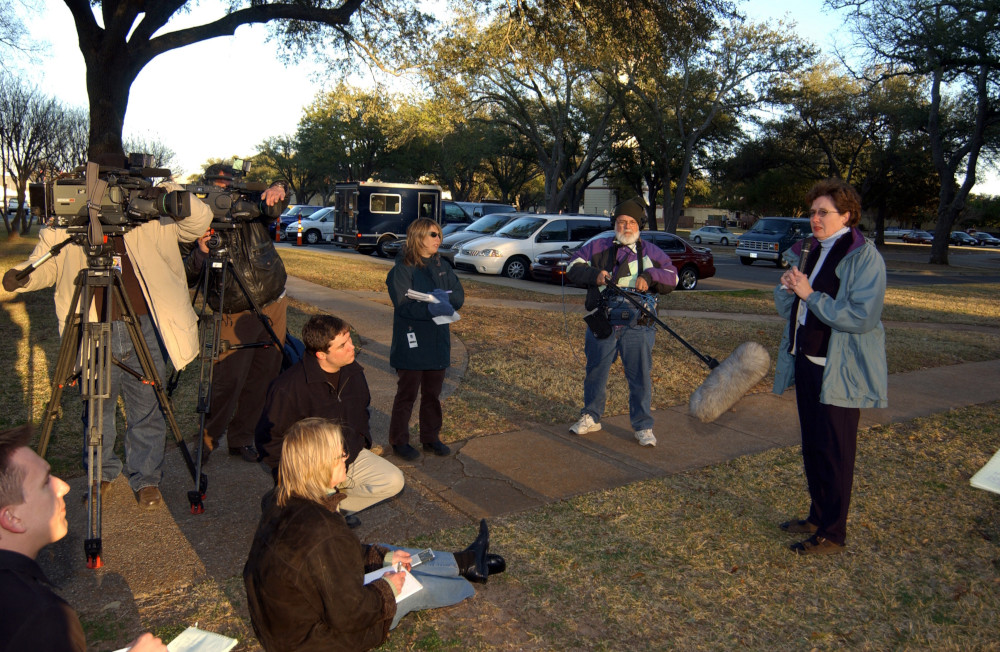
Claire Léger, mother of Sergeant Marc Léger, who was killed at Tarnak Farms. She is speaking to the media after a hearing into the incident at Barksdale Air Force Base in Louisiana, January 2003.
Photo: MSGT Michael A. Kaplan, USAF, https://catalog.archives.gov/id/6632867
The Battle of Tora Bora
Despite the rapid collapse of the Taliban government and the scattering of al-Qaeda in October and November 2001, Osama bin Laden had escaped capture. In the last weeks of 2001, a concerted effort to hunt him down in the mountainous region of Tora Bora began. Canada participated in the ongoing operation in May 2002.
The area was rugged, remote, and full of potential hiding places including bunkers and caves. The operation began with airstrikes and artillery attacks. Then ground troops arrived, including U.S. special forces, CIA operatives, and Afghan militias. They failed to find bin Laden, who had slipped over the border into Pakistan. He would remain there in hiding for another decade.
The Battle of Tora Bora illustrated aspects of the conflict that were to persist throughout the war in Afghanistan: uncertain intelligence, challenging terrain, and an evasive, adaptable enemy.
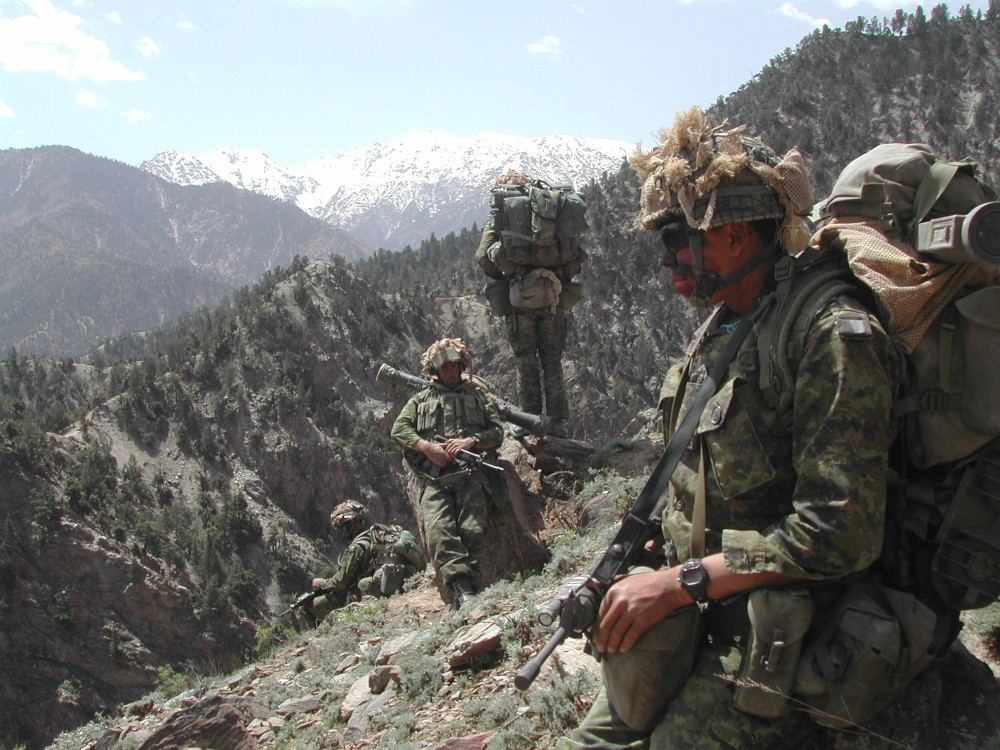
Soldiers with PPCLI, shortly after being airlifted into the mountainous Tora Bora region in May 2002.
Photo: George Metcalf Archival Collection, Canadian War Museum, CWM 20080028-009_DSCN0079. © Stephen Thorne (2002), The Canadian Press.
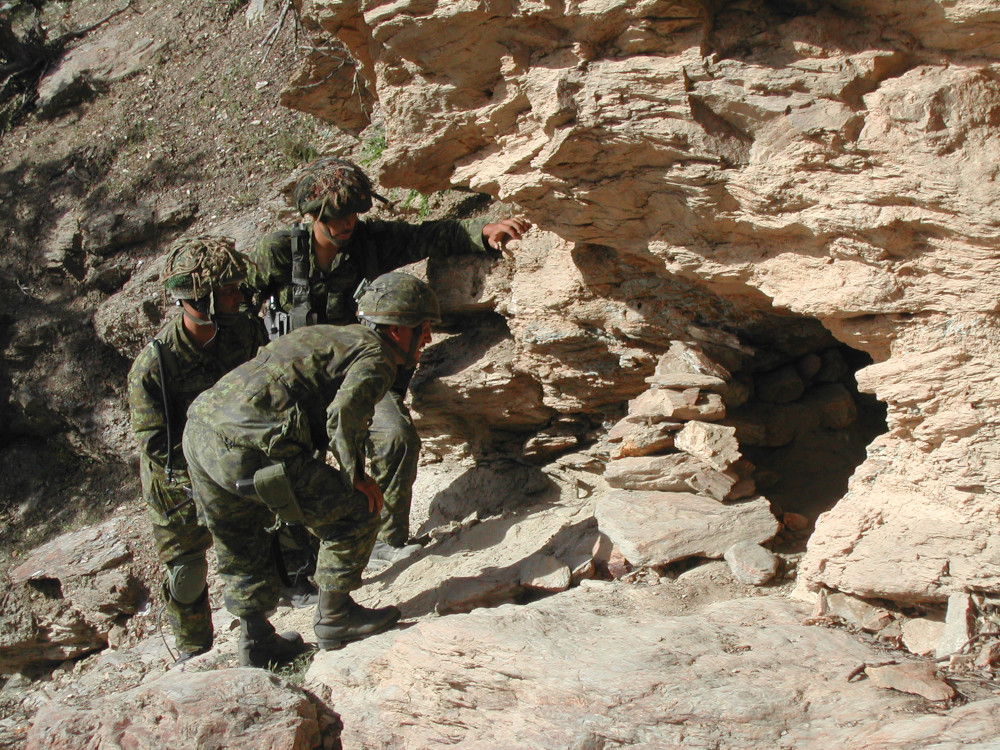
PPCLI soldiers investigating a cave in Tora Bora, May 2002.
Photo: George Metcalf Archival Collection, Canadian War Museum, CWM 20080028-009_DSCN0112. © Stephen Thorne (2002), The Canadian Press.
The return home
In June 2002, 3 PPCLI redeployed back to Canada, having served six months under trying conditions in Afghanistan. The news media widely covered their enthusiastic and emotional homecoming to Edmonton.
But back in Afghanistan, the coalition faced growing uncertainty about what lay ahead, and when long-term stability might be in reach.
The coalition’s initial invasion had succeeded in displacing the Taliban. A new government was slowly coming into being. But Canada and its allies would soon face new challenges and dangers. The mission was just setting out on a long road of escalating political, social and military complexity.
Listen to episode two of our podcast The Long War: Canada in Afghanistan to hear more about the early years of the war.
Subscribe to The Long War wherever you get your podcasts.

Steve McCullough
Dr. Steve McCullough is the Digital Content Strategist at the Canadian Museum of History and the Canadian War Museum. His work in digital storytelling involves compassionate and evidence-based efforts to address history, meaning and identity in our fragmented and polarizing, but also vibrant and interconnected, online environment.

Andrew Burtch
Dr. Andrew Burtch has been the Historian, Post-1945 at the Canadian War Museum since 2006. He is the curator of Gallery 4: From the Cold War to the Present, which examines Canada’s response to conflicts from the beginning of the Cold War to the present day. His main areas of research include Cold War history, nuclear civil defence, United Nations peacekeeping missions, the Korean War, war and memory, and oral history.
Read full bio of Andrew Burtch