The White School and Operation Medusa: Canada in Afghanistan, 2006
During the spring and summer of 2006, the Taliban gathered in force in the Panjwaii and Zhari districts just west of Kandahar City.
The Taliban originated in this area, which is often described as their spiritual homeland. It is strategically situated along the road connecting Kandahar City to Kabul and much of the south and west of the country.
The Panjwaii area is an agricultural greenbelt. The terrain is complicated to navigate and difficult to traverse. It is criss-crossed by chest-high irrigation ditches and wadis (seasonally dry riverbeds). There are many structures, walls and compounds made of thick, hardened mud capable of stopping all but a tank round.
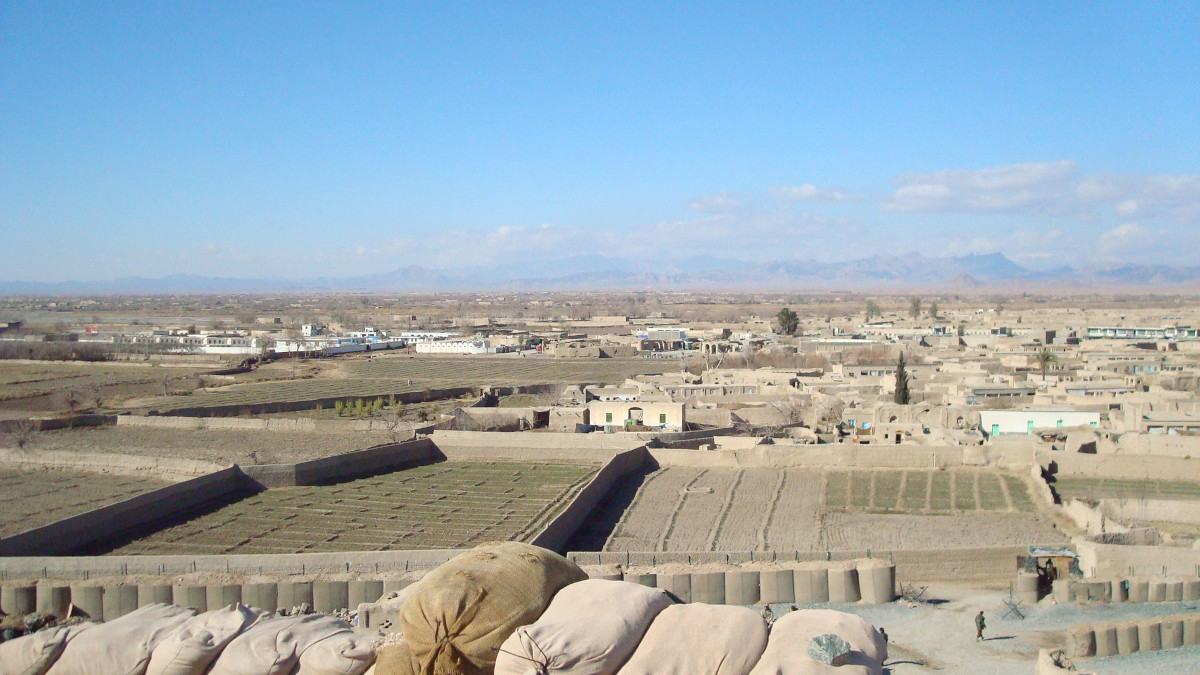
View over Panjwaii, January 2008.
Photo: Corporal David Strachan, Canadian War Museum, 20090037-009-DSC01093
This was an important moment for the coalition in Afghanistan. The NATO-led International Security Assistance Force (ISAF) was taking over from the US-led Operation Enduring Freedom force in southern and eastern Afghanistan.
It was an ideal time and place for the Taliban to test NATO’s resolve and try to reclaim territory it had lost early in the war.
The White School
A strategically important Taliban stronghold and staging area – the White School – was centrally located in Panjwaii. Villagers reported that it had been taken over by the Taliban during the summer.
On August 3, soldiers from the 1st Battalion, Princess Patricia’s Canadian Light Infantry (1 PPCLI), were sent with a contingent of Afghan troops to clear out the White School. By the time they arrived, some were suffering from heatstroke brought on by the unrelenting heat and the weight of their equipment.
They expected to face about 20 Taliban fighters. But seemingly many more attacked them in a complex ambush. They were forced into a complicated fighting withdrawal under heavy fire. Four Canadian soldiers were killed, and seven wounded.
Lieutenant-Colonel Omer Lavoie arrived that same day. He was assuming command of the incoming battlegroup. It was made up mainly of soldiers from 1st Battalion, The Royal Canadian Regiment. He recalls, “The first thing that the Sergeant-Major and I were told as we got off the airplane was that four members of the Princess Patricia’s battle group had just been killed, which immediately set the tone of what the 1st Battalion, the RCR battle group, was about to get into.”
Masum Ghar
Canadian forces were responsible for a number of Forward Observation Bases (FOBs) outside Kandahar City. FOB Masum Ghar was established on a mountain overlooking the Arghandab river valley.
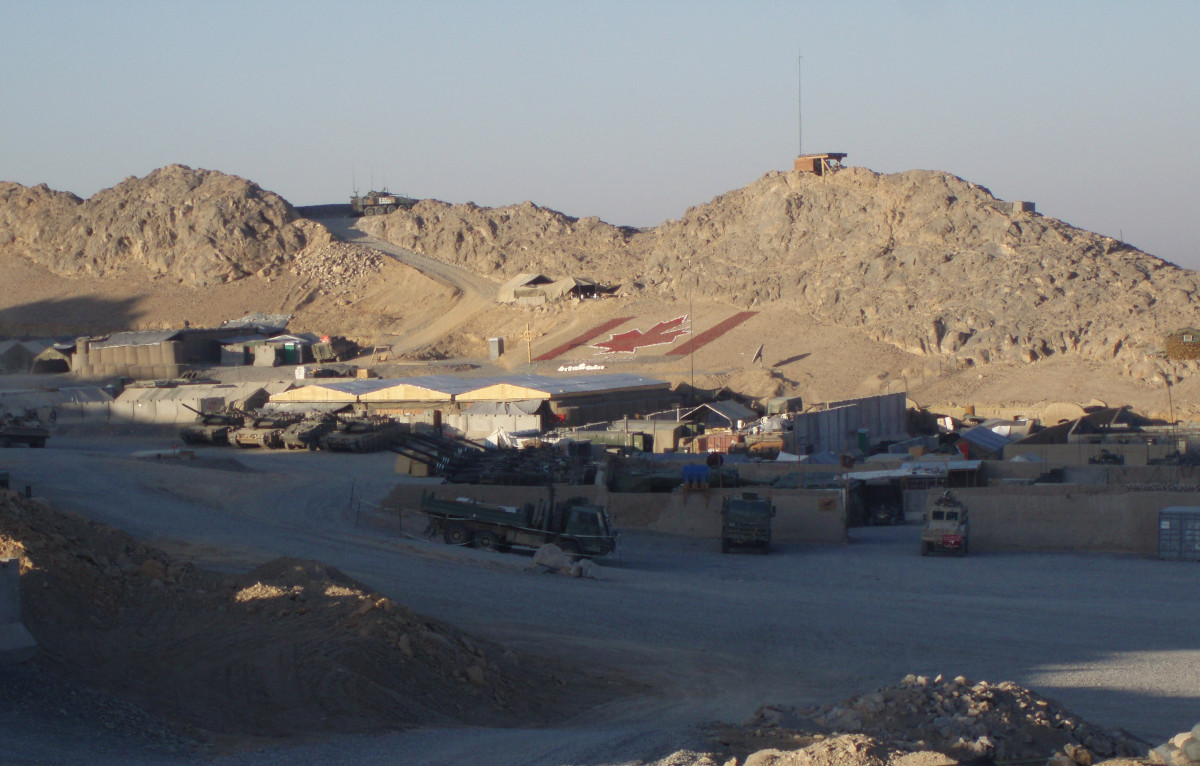
The Canadian base at Masum Ghar, December 2007.
Photo: Corporal David Strachan, Canadian War Museum, 20090037-009-PC170638
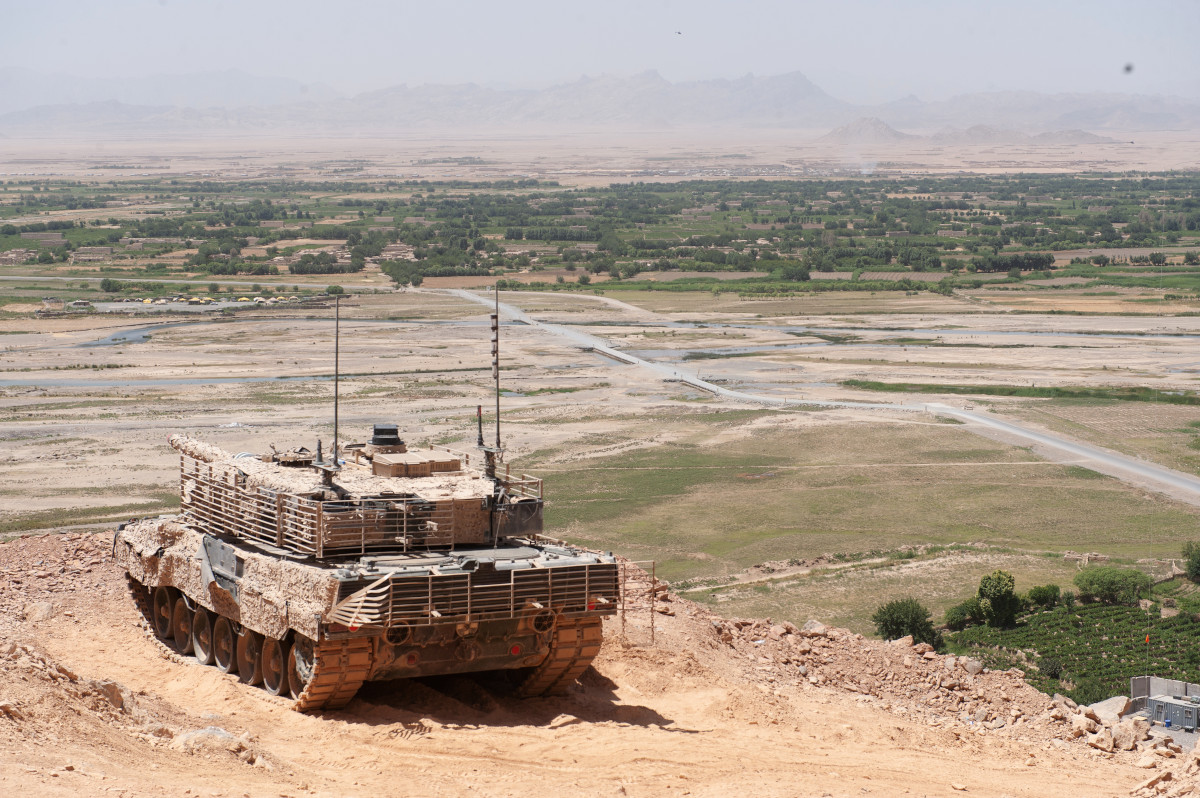
A Leopard 2A6M Main Battle Tank overlooks the Zhari District from an observation post at Masum Ghar, June 2010.
Photo: Cpl Keith Wazny. © All rights reserved. AR2010-0136-02 reproduced with the permission of DND/CAF (2026)
On August 19, Major (now Lieutenant-General) Michael Wright was positioning his troops on the heights at Masum Ghar when the Taliban attacked. He recalls, “I heard a pop from the west, and I looked up, and where there had previously been an Afghan National Police observation post, there was a figure who was obviously Taliban who had just fired a rocket-propelled grenade towards us. And the RPG landed probably within about 7 or 8 feet of me and luckily didn’t explode.”
The ensuing firefight lasted for hours. The Taliban continued to attack Wright’s convoy as it headed towards Kandahar City. It was later estimated that between 200 and 400 Taliban attacked that night. As many as 100 were killed.
Wright says, “We were expecting more insurgency-type actions by the Taliban. But to actually see them attack, in the numbers that they did, showed the strength of the forces of the Taliban that were in the area and how much capability they had.”
Operation Medusa
This attack proved that the Taliban were willing to challenge NATO forces directly. Brigadier-General David Fraser had assumed command of NATO’s new Regional Command South. He said, “We knew after Mike Wright’s attack that there was something big out there.”
Operation Medusa was planned to drive the Taliban out of the area. The Canadian-led force would attack from the north and south to break the main Taliban force. Then, they would sweep west to eliminate as much of the threat as possible.
This was new territory for Canada and for NATO. As Fraser says, “Medusa was the biggest fight that NATO has ever had.”
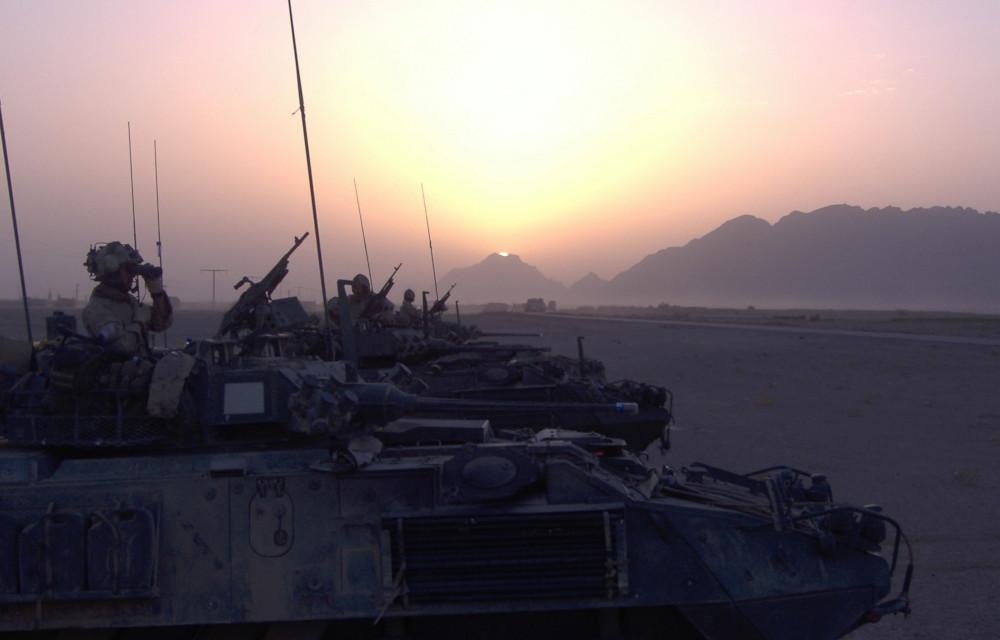
Armoured vehicles of the 1st Battalion, The Royal Canadian Regiment, staging for an attack on Pashmul and Panjwaii, August 30, 2006.
Photo: Queen’s Own Rifles of Canada Regimental Museum and Archives / Flickr, CC BY-NC 2.0, https://www.flickr.com/photos/qormuseum/27620726222/
The initial attack
Plans began to go awry on September 2, when a British Royal Air Force Nimrod surveillance plane crashed in the area. All 14 personnel were killed.
Meanwhile, Lavoie got his troops into position near Masum Ghar. The original plan was to conduct three days of bombardment and reconnaissance and then cross the Arghandab River to take the White School.
But later that night, Lavoie received orders from Fraser to begin the attack. Not in three days, but in three hours, in the early morning of September 3. Lavoie and Fraser continue to disagree over that decision, which remains a subject of historical debate. The two senior officers had very different perspectives on the situation.
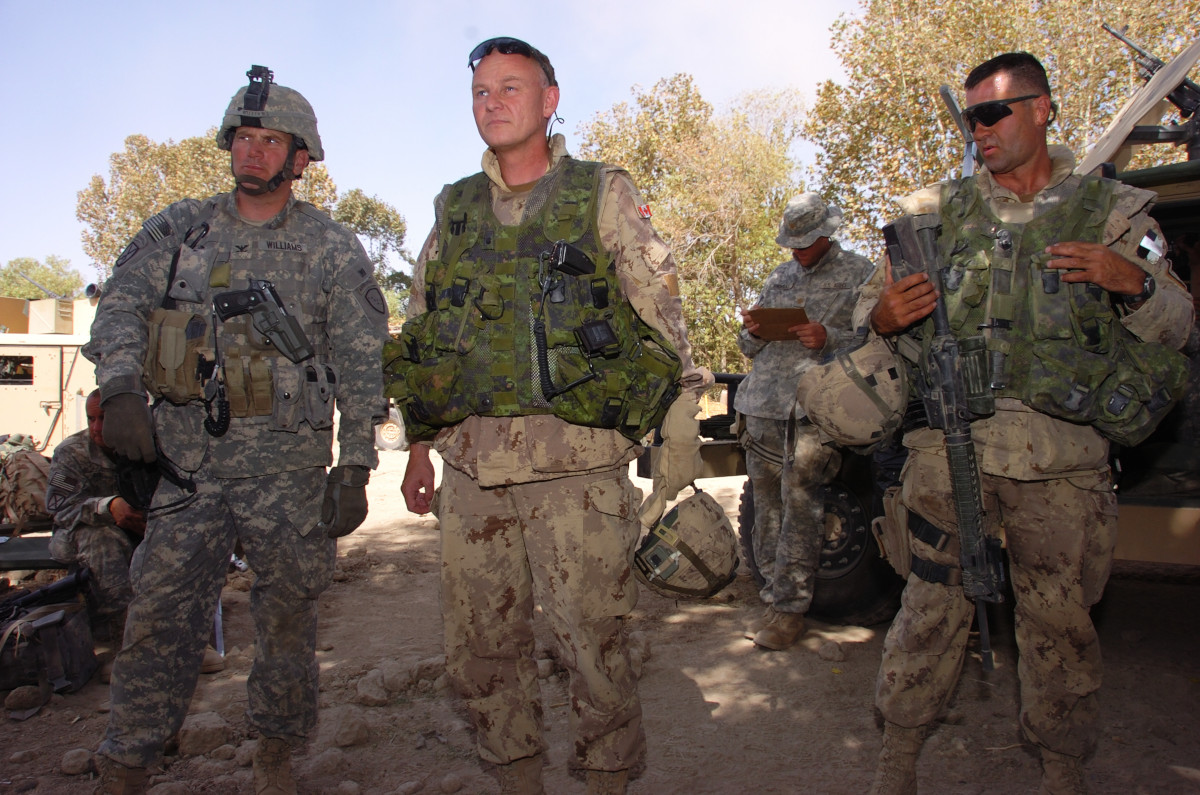
Brigadier-General David Fraser (centre) and Lieutenant-Colonel Omer Lavoie (right) tour an area taken by Canadian and coalition soldiers in the Panjwaii District west of Kandahar City, September 15, 2006.
Photo: Sgt Lou Penney, TFA OP ATHENA Imagery Technician. © All rights reserved. AR2006-P008 0013 reproduced with the permission of DND/CAF (2026).
Fraser was under pressure from the U.S. and other allies to move quickly. They had committed key resources to the operation and didn’t want them tied up for long, given pressing needs elsewhere. Fraser also believed intelligence that suggested a smaller force than anticipated was across the river and that sustained bombardment would not be effective.
Lavoie had tactical concerns, including worries about crossing blind into enemy-held territory that was likely riddled with improvised explosive devices (IEDs). He wanted more information before committing his troops. Soldiers awaiting orders heard their heated discussion over the radio. At the end of the day, the new orders held.
Charlie Company, 1 RCR, crossed the river in the early hours of September 3. They weren’t hit with IEDs as had been feared, but the attack didn’t go to plan. As Fraser says, “Everything starts off fine. Charles Company gets onto the objective, everything’s going all right. And then all hell breaks loose.”
An ambush rapidly unfolded, immobilizing the lead vehicles. In the intense fighting that followed, four Canadians were killed and 10 more were wounded.
Lavoie recalls, “I had to order a tactical withdrawal and then use some significant air power to cover that withdrawal and to, at least at that point, break the attack of the Taliban and get my troop back across the river and medevac back to base.”
The Canadians continued to direct air, artillery, and rocket barrages against Taliban locations throughout the night.
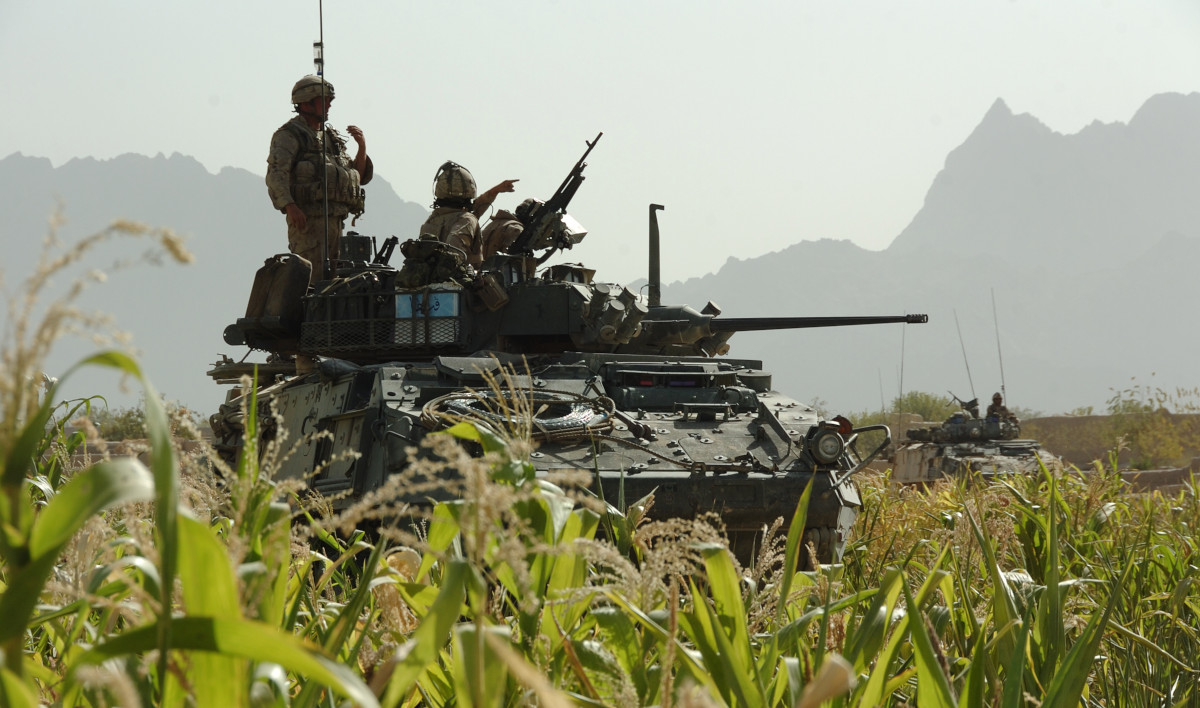
Light Armoured Vehicles (LAVs) partially hidden in fields of corn and marijuana near the village of Kolk in Panjwaii District during Operation Medusa.
Photo: Sgt Lou Penney, TFA OP ATHENA Imagery Technician. © All rights reserved. AR2006-P007 0005 reproduced with the permission of DND/CAF (2026).
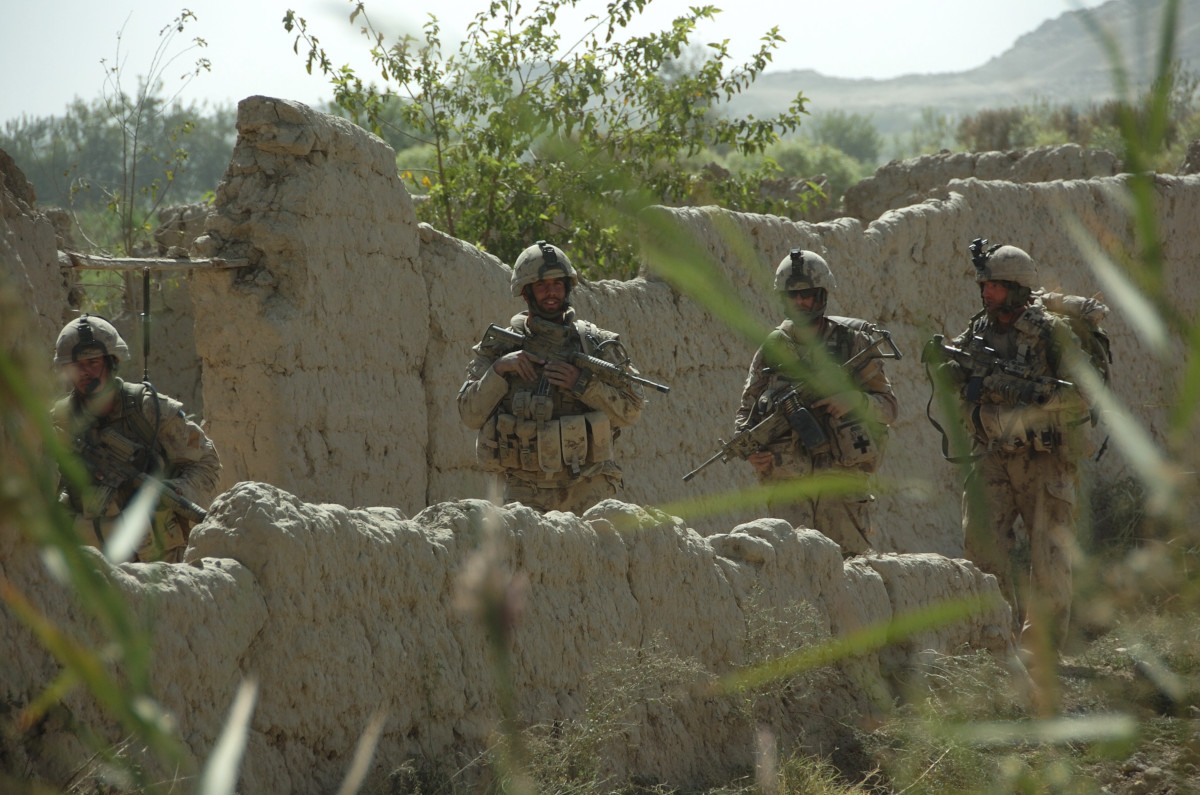
Soldiers from Alpha Company, 2 PPCLI, on a sweep through Panjwaii District, September 14, 2006.
Photo: Sgt Lou Penney, TFA OP ATHENA Imagery Technician. © All rights reserved. AR2006-P008-0013 reproduced with the permission of DND/CAF (2026).
The next day held yet more tragedy for Charlie Company. An American A-10 “Warthog” Thunderbolt aircraft mistook their garbage fire for enemy activity. It opened fire. More than 30 Canadian soldiers were wounded as high-explosive 30mm shells rained onto their position.
Charles Company was suddenly “combat ineffective,” or unable to carry on fighting. Lavoie flatly refused to send them back into the line of fire. Bravo and Alpha Company were sent to attack the objectives from the north. American and Afghan reinforcements focused on the southern approaches. A careful series of advances through IED-laden territory ensued over the following days.
The aftermath
Ten days after the initial attacks, surviving members of Charles Company were among the Canadians who secured the White School. On September 17, 2006, NATO declared Operation Medusa complete.
The Medusa battles had achieved their objective, but at significant cost. Considerable firepower had been brought to bear to break the Taliban’s momentum. But it also laid waste to part of the district.
Wright says, “I don’t think it felt like a victory. It felt like, okay, you know, the initial objective we had to push the Taliban out of that area of Pashmul was a success. But I think at that point, it was: ‘What are the next steps going to be?’”
It soon became clear what the next phase of the conflict was going to be like. A suicide bomber struck a Canadian patrol in Panjwaii the very next day, killing four Canadians and wounding 16 others.
Fraser says, “It was a shift. The Taliban after that didn’t attack us like they did before, which was in direct gunfire. They went to the insurgency: IEDs. That was the big change. It became more dangerous for all of us.”
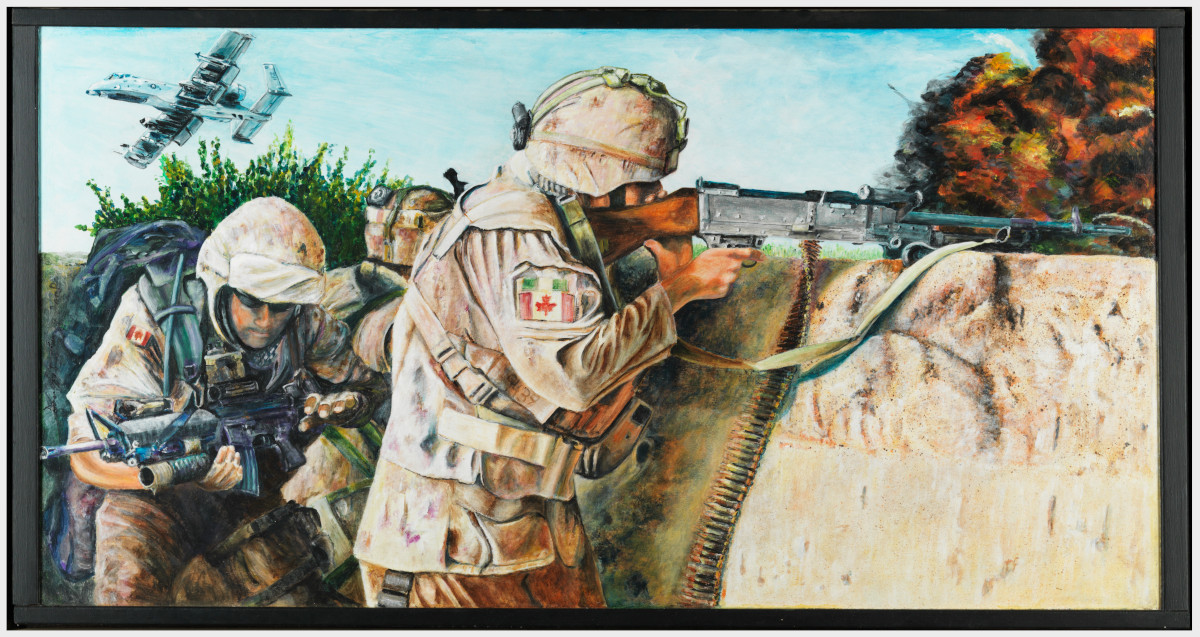
“War,” by Douglas Laing, 2008. This was one of three artworks by the artist who sought to capture elements of his son Sean Lamb’s deployments to Afghanistan. Lamb is shown in the centre of this painting. Laing based the works on photographs of Operation Medusa battles published in the Globe and Mail.
Photo: Canadian War Museum, 20110073-003c, https://www.warmuseum.ca/collections/artifact/2227823
Listen to episode 4 of our podcast The Long War: Canada in Afghanistan to hear more about Operation Medusa from the soldiers who were there.
Subscribe to The Long War wherever you get your podcasts.

Steve McCullough
Dr. Steve McCullough is the Digital Content Strategist at the Canadian Museum of History and the Canadian War Museum. His work in digital storytelling involves compassionate and evidence-based efforts to address history, meaning and identity in our fragmented and polarizing, but also vibrant and interconnected, online environment.
Andrew Burtch
Dr. Andrew Burtch has been the Historian, Post-1945 at the Canadian War Museum since 2006. He is the curator of Gallery 4: From the Cold War to the Present, which examines Canada’s response to conflicts from the beginning of the Cold War to the present day. His main areas of research include Cold War history, nuclear civil defence, United Nations peacekeeping missions, the Korean War, war and memory, and oral history.
Read full bio of Andrew Burtch