Legacies of war: Canada after Afghanistan
In August 2021, the world watched as Kabul fell to the Taliban.
It had been almost 20 years since the American-led Operation Enduring Freedom had scattered al-Qaeda and toppled the former Taliban government.
Canada had left Afghanistan seven years earlier. Its personnel had been there for 13 years, making the mission Canada’s longest war. More than 40,000 Canadians had served, more than a thousand were wounded, and 158 soldiers and a Canadian diplomat died.
The Taliban’s victory drew a tragic and complicated line under their years of effort and sacrifice.
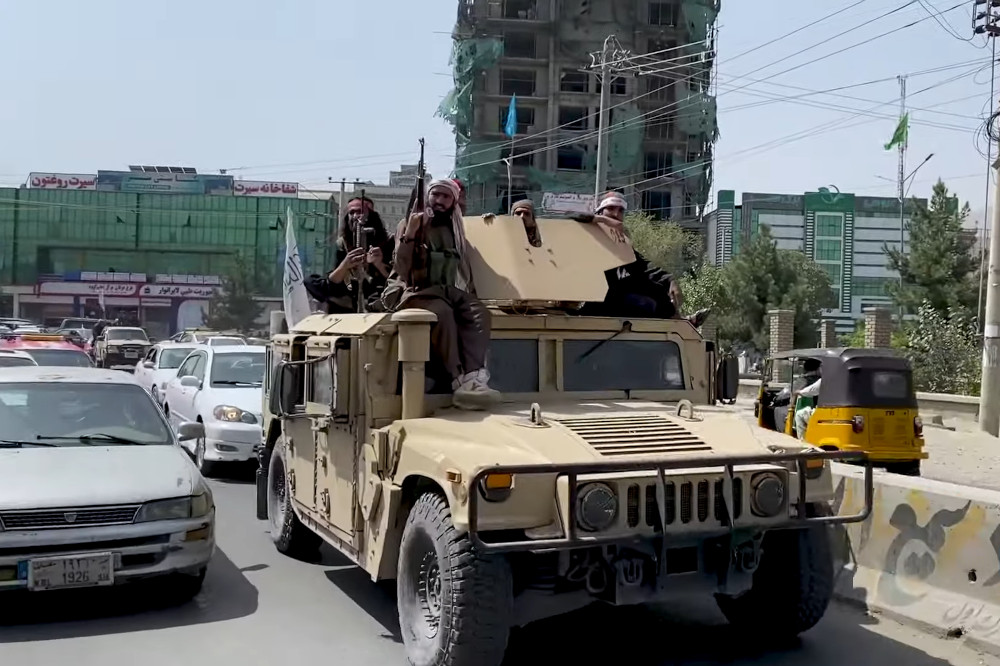
Taliban fighters drive through Kabul in August 2021.
Photo: screen capture from Voice of America
The world watches
Veterans, journalists, and others who had devoted care and effort to Afghanistan watched the fall of Kabul in horror. Afghans crowded to the airport, seeking escape. Desperate people rushed onto runways and clung to planes as they were taking off, almost certain to fall to their deaths.
Eleanor Taylor had served as an infantry officer with The Royal Canadian Regiment in Afghanistan in 2010. Eleven years later she was in Halifax watching the fall of Kabul from afar. “That was horrifying. Grief. It was grief,” she says. “Yep, I think that’s the only – the best way – to describe it, that this is what it had come to.”
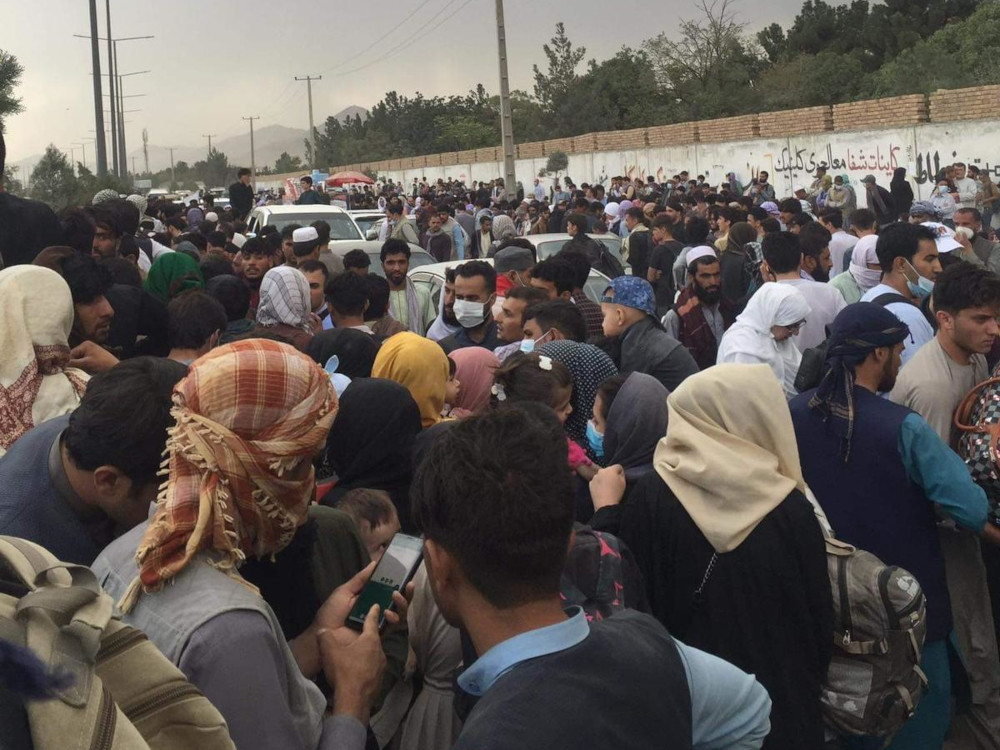
A crowd gathered at the Kabul International Airport in the hopes of fleeing the country, August 2021.
Photo: Tammie Moore, Fort George G. Meade Public Affairs
The Doha Agreement
When Canada withdrew from Afghanistan in 2014, the United States and several other NATO countries remained in the coalition. The American withdrawal from Afghanistan in 2021 followed the terms of an agreement signed in Doha between the administration of President Donald Trump and the Taliban in February 2020. The Afghan government was not a party to the months-long negotiations.
The Doha Agreement committed the U.S. and NATO to withdraw their troops by August 31, 2021. In return, the Taliban promised not to harbour al-Qaeda or to attack U.S. forces and its allies in the future.
General Wayne Eyre was appointed Canada’s Acting Chief of the Defence Staff in 2021. He says, “In essence, they [the Americans] ceded a lot to the Taliban without getting much in return. And the fact that the Afghan government was not at the table for that. You talked about trust, well, this was another significant breaking of that trust.”
In effect, the timetable for withdrawal created the conditions for the Taliban victory. The Taliban were arguably at their strongest since 2001. And post-Doha negotiations between the Taliban and the Islamic Republic of Afghanistan resulted in the release of thousands of Taliban prisoners, swelling their ranks.
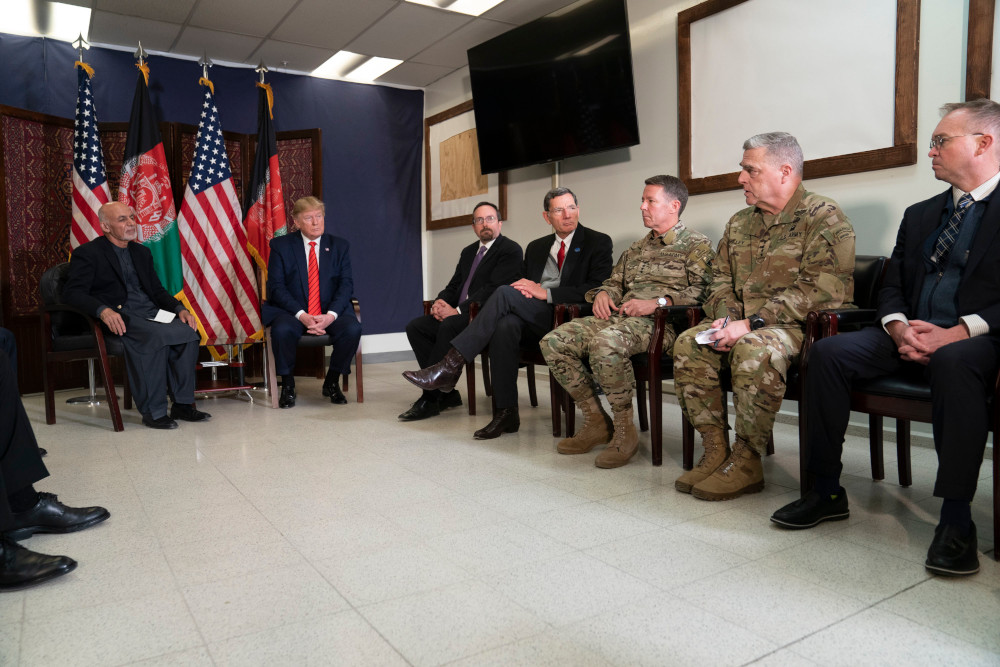
President Donald Trump, President Ashraf Ghani, Chairman of the Joint Chiefs of Staff Gen. Mark A. Milley, and others meet at Bagram Airfield in Afghanistan in late November 2019.
The road to Taliban victory
Canada and the NATO coalition had put a lot of effort into training and preparing the Afghan National Army’s (ANA) front-line troops. Unfortunately, the Afghan National Security Forces were not as well prepared for the administration and logistics essential to a modern military.
The U.S. had provided much of this specialized support in the form of technology and contractors, all of which evaporated when the Americans left. Years of rampant corruption and poor preparation left Afghanistan with an army that couldn’t function effectively in their absence.
Brigadier-General Ahmad Habibi commanded Afghan forces in Kandahar. He says, “The Afghan National Security Forces were trained very well by NATO. The leadership of the Afghan National Army remained committed till the last day. But it was the government, the government side that caused the fall.”
The Taliban swept across Afghanistan during the summer of 2021 in anticipation of the NATO and U.S. withdrawal. The ANA seemed to simply dissolve. Many units, weakened and isolated by a lack of support, simply laid down their arms and disbanded. Few put up a fight.
And when President Ashraf Ghani fled the country on August 15, the government of Afghanistan ceased to exist.
Attempts to rescue Afghan allies
Many Afghans had worked alongside Canadians for years as interpreters, fixers, drivers, and support staff. Their past efforts now put their lives at risk as the Taliban took over. Many expected to be persecuted or killed.
On July 30, 2021, Prime Minister Justin Trudeau approved a military evacuation to get as many people out as possible in the window when the Taliban would permit flights in and out of Kabul. This was Operation AEGIS.
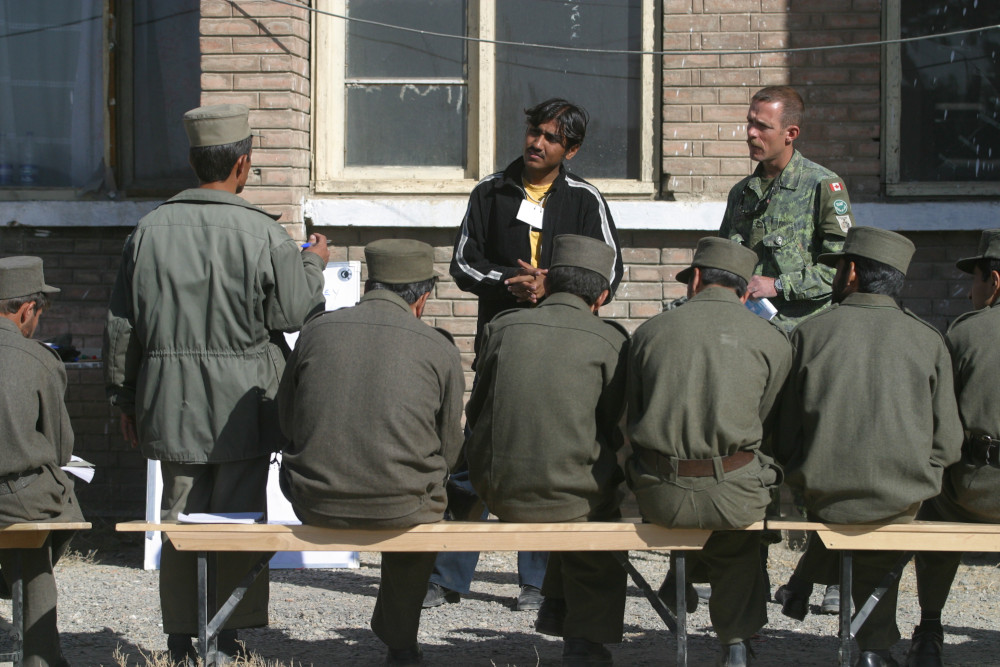
Interpreters and guides were essential to all aspects of Canada’s mission in Afghanistan. Here, an Afghan interpreter helps a member of 3RCR teach members of the Afghan National Police in 2003.
Photo: George Metcalf Archival Collection, Canadian War Museum, CWM 20080028-044_ IMG_5332a. © Stephen Thorne (2003), The Canadian Press.
Veterans and journalists had already been hard at work trying to help Afghan allies escape. Eleanor Taylor had joined an informal coalition of veterans to help get Afghans out. The group called itself the Afghan Strategic Evacuation Team.
She recalls they were all putting in long days trying to coordinate with Immigration, Refugees and Citizenship Canada; veterans’ and Afghan networks; and the Canadian Armed Forces. “It was clear to me that most of the people who were in that effort were trying to wring something positive out of a horrific outcome,” she says.
Journalist and historian Michael Petrou was in touch with his former guide Shuja Mamozai. They had worked together during his reporting in the Panjshir Valley in 2011. He recalls, “We were all exchanging texts and emails and information about the evacuation effort. You know, instructions to go to this street corner and, and wear something red. So, I’d be relaying all this to Shuja.”
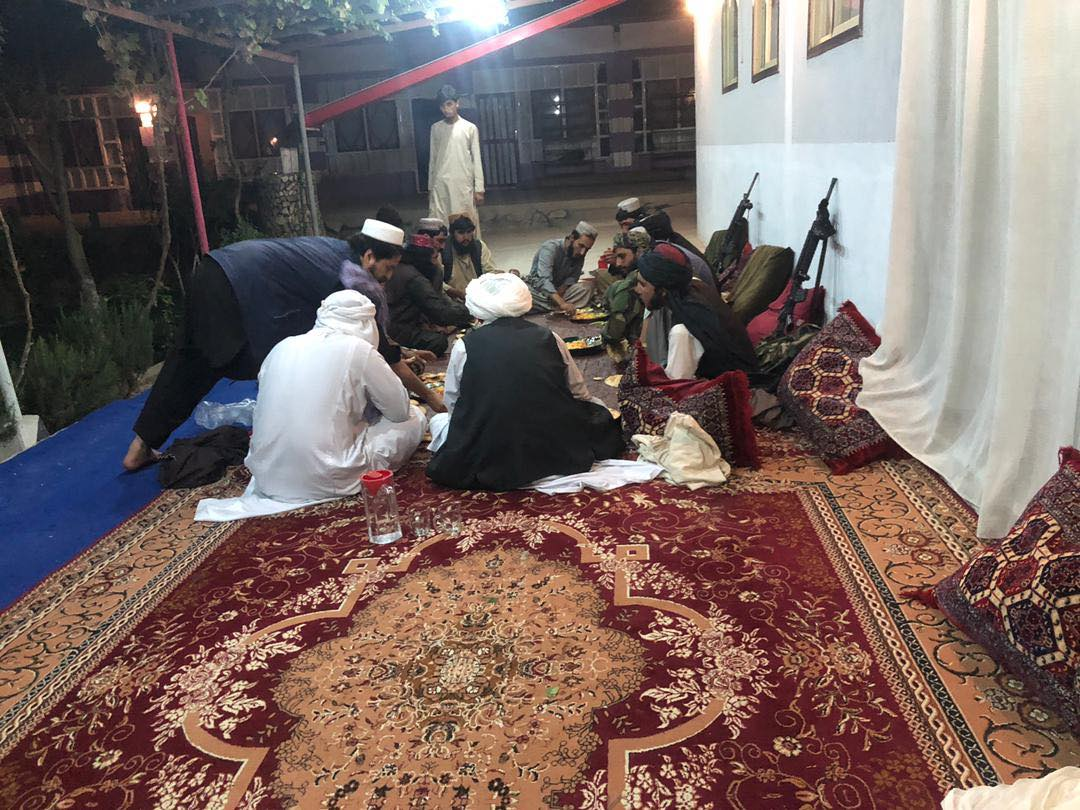
A neighbour took this photo of members of the Haqqani Network (a faction allied with the Taliban) occupying Mamozai’s home while he was on the run. Mamozai had worked as a translator and guide for Canadians.
Photo: Shuja Mamozai, supplied
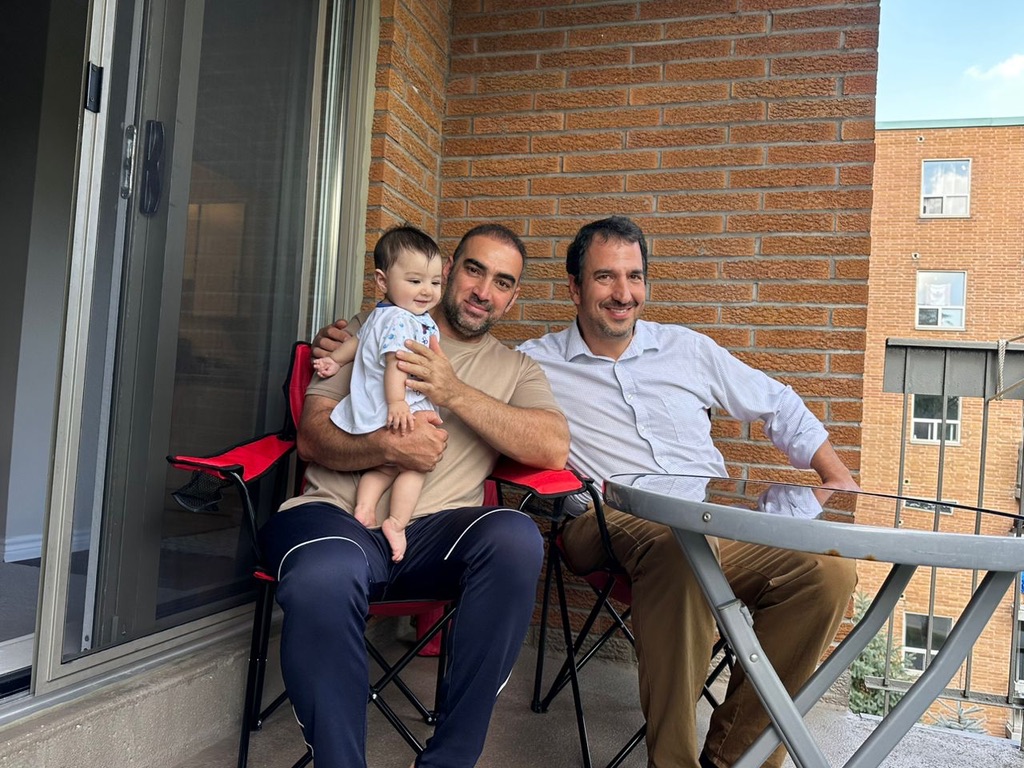
Mamozai with one of his children and Petrou in Canada in 2023.
Photo: Michael Petrou, supplied
Consequences for Afghanistan
The war was ultimately catastrophic for Afghans. Millions were displaced. More than 60,000 Afghan security forces died fighting alongside coalition troops. By some estimates, nearly 50,000 Afghan civilians were killed in the fighting. And hundreds of thousands died due to hunger, disease and injury.
Mamozai says, “Right now, there is no hope. People is starving for food. There is no jobs, no nothing. Twenty years we fought. People got lost, people got killed after 20 years.”
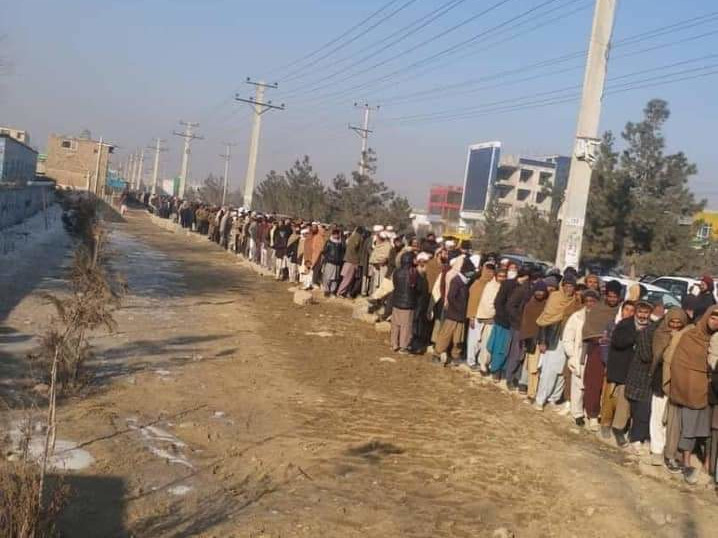
Afghan citizens wait in line for food in Kabul after the fall of the Afghan government to the Taliban in mid-August 2021.
Photo: Tammie Moore, Fort George G. Meade Public Affairs
Veterans’ search for meaning
Reflecting on the fall of Kabul in 2021, Lieutenant-General Michael Wright, appointed to lead the Canadian Army in 2025, recalls, “I thought about the soldiers who deployed to Afghanistan, who lost friends in Afghanistan, many of whom still suffer from post-traumatic stress disorder from Afghanistan, what it meant for them.”
Veterans had long been forced to reckon with the nature of the mission. They had returned home to a country that didn’t much know or care about Afghanistan. And many carried the invisible wounds of post-traumatic stress.
Corporal Benjamin Hertwig says, “I think there was a time where I felt shame about Afghanistan or didn’t want to tell people. And now I no longer feel that kind of shame because I think I’m doing things in the world that I’m proud of.” He recalls seeing Kabul fall with “just a sense of deep heartache and sadness for the people still living with the realities of war.”
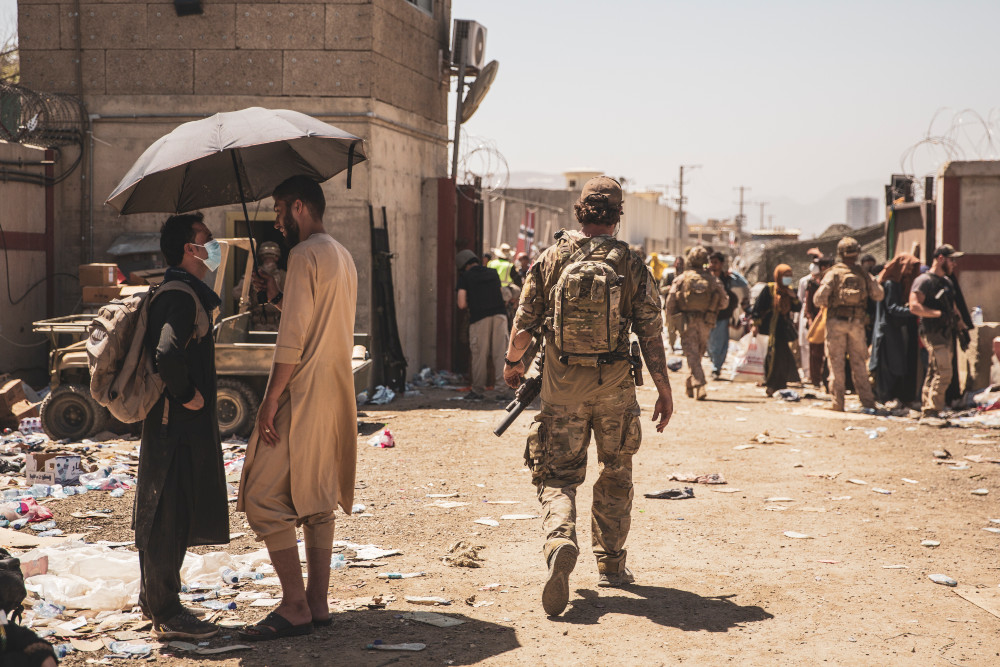
A Canadian soldier at an evacuation checkpoint at Hamid Karzai International Airport, August 2021.
Photo: Staff Sgt. Victor Mancilla, U.S. Marine Corps
Veterans often point to tangible aspects of their time in Afghanistan as offering them a sense of meaning and hope.
Lieutenant-General Omer Lavoie commanded The Royal Canadian Regiment battle group during Operation Medusa. He says, “At least for those 20 years, it demonstrated an optional way of life for a whole bunch of Afghans and a glimpse of, you know, what it might be like to have the very basic, most basic, of human rights. Those were fleeting, but I’d still like to think that there’s a generation of Afghans that they’ve seen that, they’ve seen the difference.”
Similarly, Major Tom Mykytiuk says, “Maybe we set the conditions, or we planted the seeds for a society that might emerge at some point or that the Taliban may have to compromise with to build, you know, a better future for Afghanistan. So I guess, you know, I retain that hope.”
Veteran sentiment, and that of the Canadian public, is likely divided over what the events of 2021 meant. Assessments of the time and sacrifice devoted to Afghanistan likely also vary widely.
But often, the question isn’t even raised. The world has changed since Canada left Afghanistan in 2014. That very year, Russia annexed Crimea and parts of eastern Ukraine, and the so-called Islamic State proclaimed its authority in Iraq and Syria. These new global security challenges put Afghanistan in the rear-view mirror for many in Canada and around the world.
Yet the mission’s long duration, its enduring personal and social consequences, and the many ways Canadians remember the long war in Afghanistan make it an undeniably important chapter in Canadian military history.
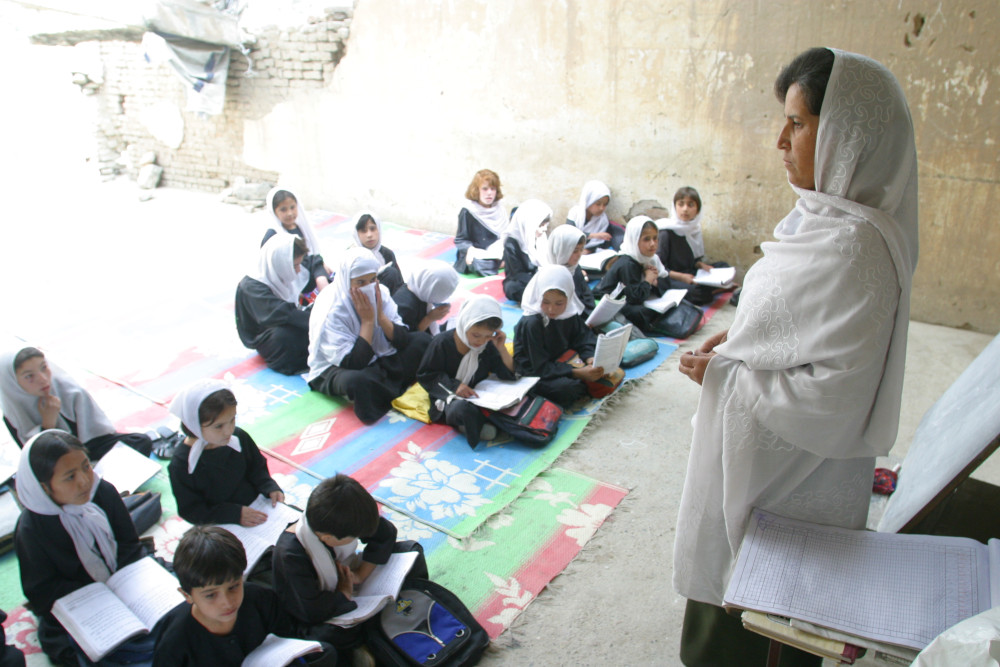
Girls and boys attending Dur Khanai school in Kabul, 2003.
Photo: George Metcalf Archival Collection, Canadian War Museum, CWM 20080028-042_ IMG_ IMG_0370. © Stephen Thorne (2003), The Canadian Press.
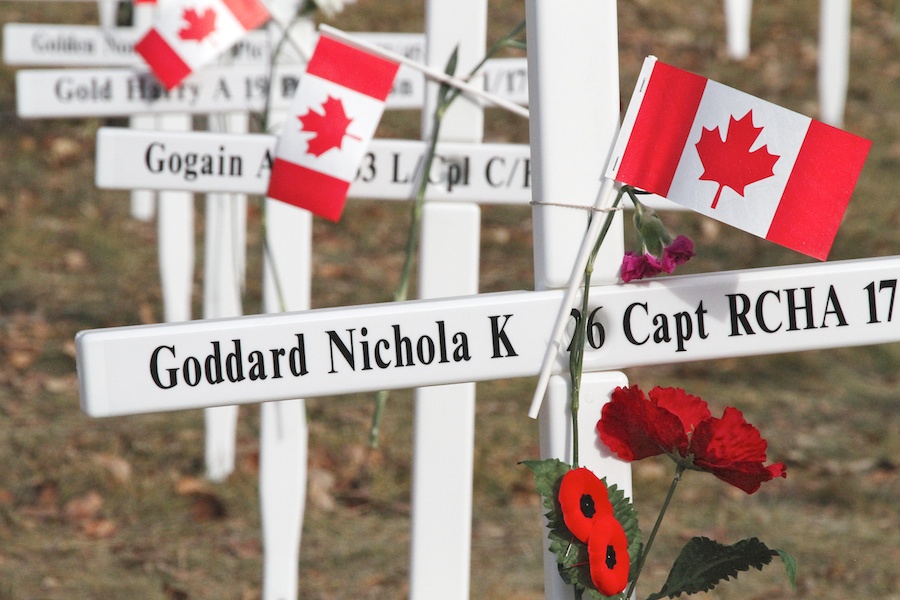
Crosses erected on Calgary’s Memorial Drive in November 2010.
Photo: Ricky Leong / Flickr, CC BY-NC-ND 2.0
Listen to the eighth and final episode of our podcast The Long War: Canada in Afghanistan to hear more about the legacy and consequences of the war in Afghanistan.
Subscribe to The Long War wherever you get your podcasts.
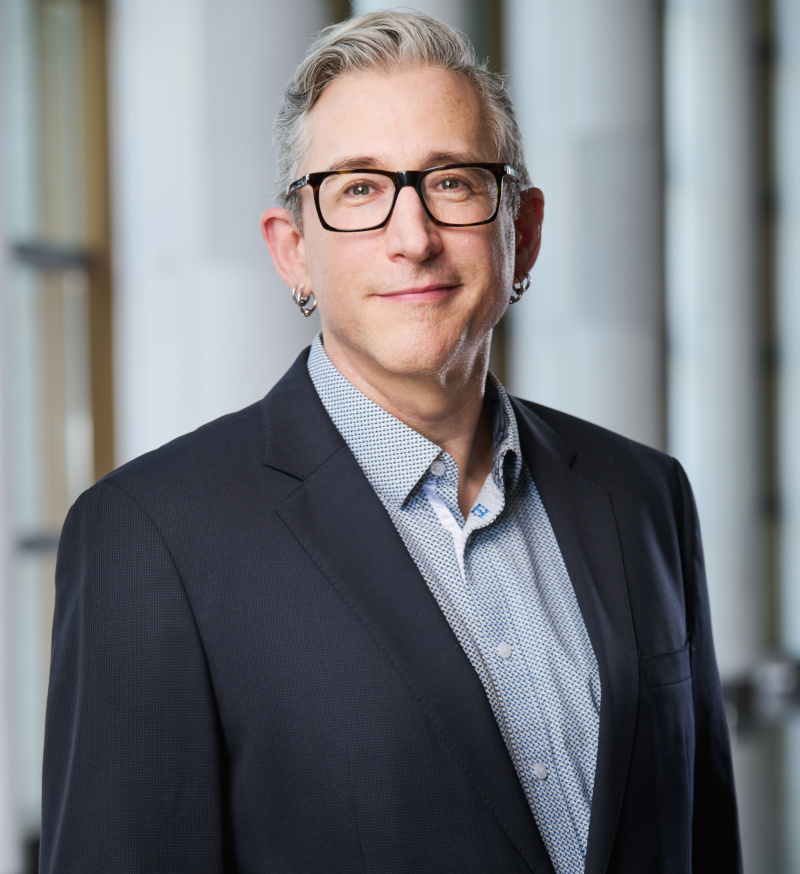
Steve McCullough
Dr. Steve McCullough is the Digital Content Strategist at the Canadian Museum of History and the Canadian War Museum. His work in digital storytelling involves compassionate and evidence-based efforts to address history, meaning and identity in our fragmented and polarizing, but also vibrant and interconnected, online environment.
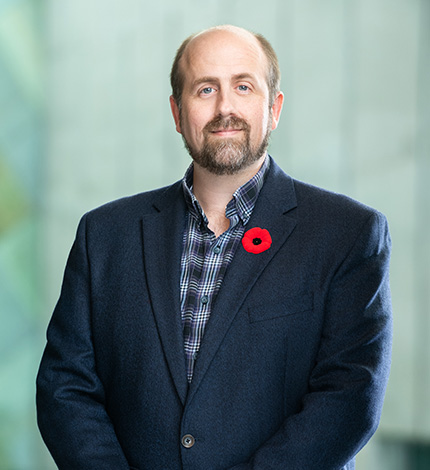
Andrew Burtch
Dr. Andrew Burtch has been the Historian, Post-1945 at the Canadian War Museum since 2006. He is the curator of Gallery 4: From the Cold War to the Present, which examines Canada’s response to conflicts from the beginning of the Cold War to the present day. His main areas of research include Cold War history, nuclear civil defence, United Nations peacekeeping missions, the Korean War, war and memory, and oral history.
Read full bio of Andrew Burtch