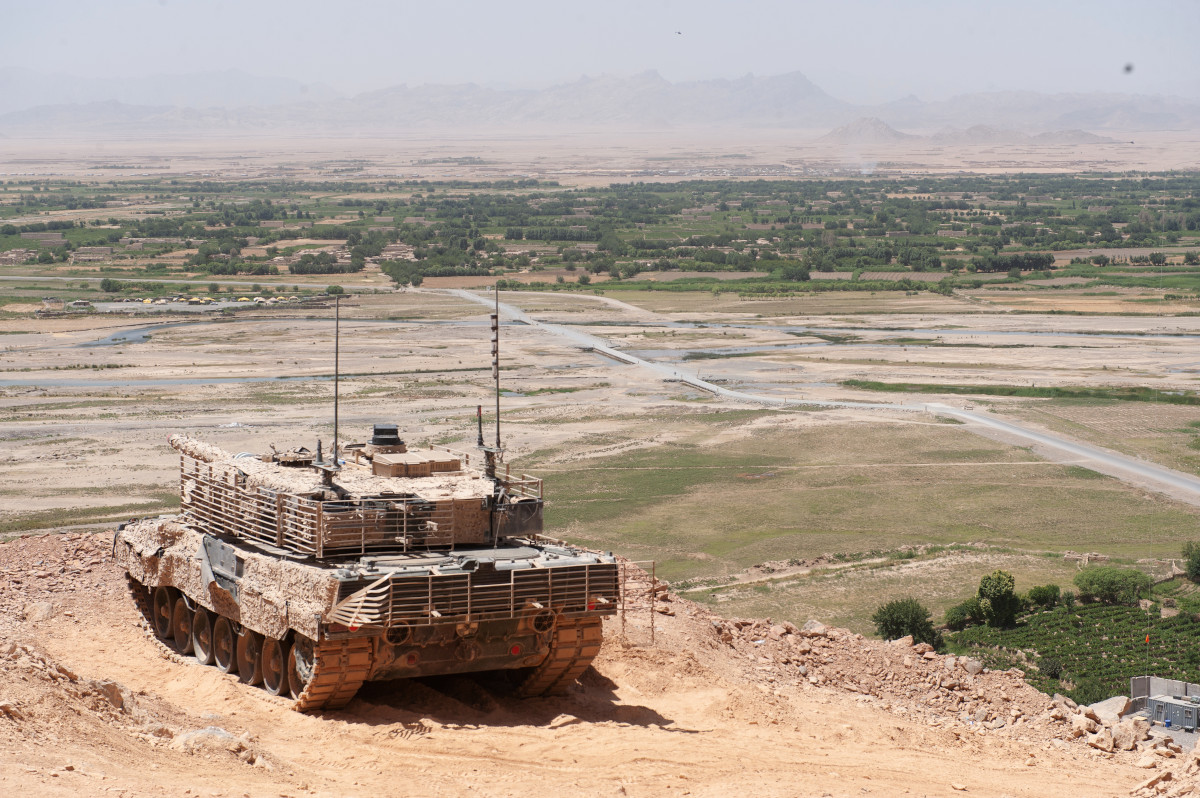
Stages of withdrawal: Canada in Afghanistan, 2010–2014
Canadian Brigadier-General Dean Milner took command of Joint Task Force Afghanistan in September 2010. A surge of 30,000 American troops had recently arrived in the country to check the Taliban’s momentum. Many of the new forces arrived in Kandahar where Canada had been holding the line. But now, Canada’s focus was increasingly fixed on preparing the Afghan government’s national security forces to take over the fight.
This effort involved extensive collaboration and training with the Afghan National Army (ANA) and Afghan National Police. Milner developed a close relationship with Afghan Brigadier-General Ahmad Habibi. Habibi was a long-serving veteran, having fought during the Soviet occupation and the ensuing civil war.
“One of my roles,” Milner says, “was to help mentor him and his brigade, because I knew eventually Canada would leave, eventually the Americans would leave.” He recalls, “So, him and I patrolled together, we ate together, we did everything together.”
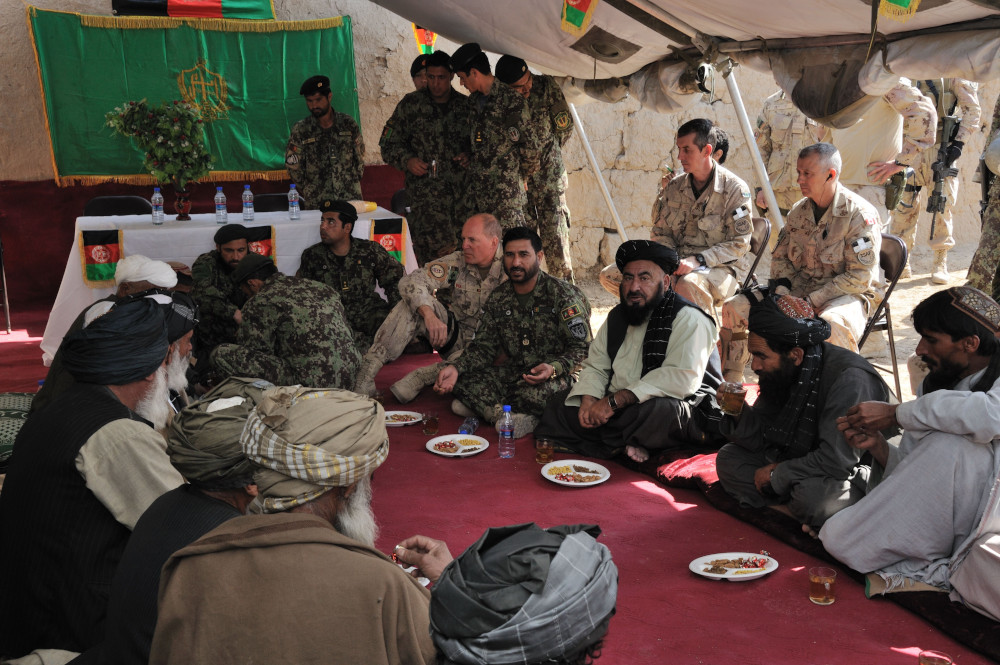
Ahmad Habibi (centre) speaks at a shura in March 2011. Dean Milner sits next to him.
Photo: Canada in Afghanistan / Flickr, CC BY-NC-ND 2.0
Development: Roads and the Dahla Dam
Milner and Habibi’s partnership helped them complete important development work. They had a paved asphalt road built through Panjwaii district. This road, called Route Hyena, was important to both local communities and NATO forces.
Habibi says, “Number one, the people of Kandahar needed a road because the farmers were not able to bring their crops to the city on time. If a family had an emergency or an ill family member, there were just fields. Number two was that this road was a significant strategic road for us”
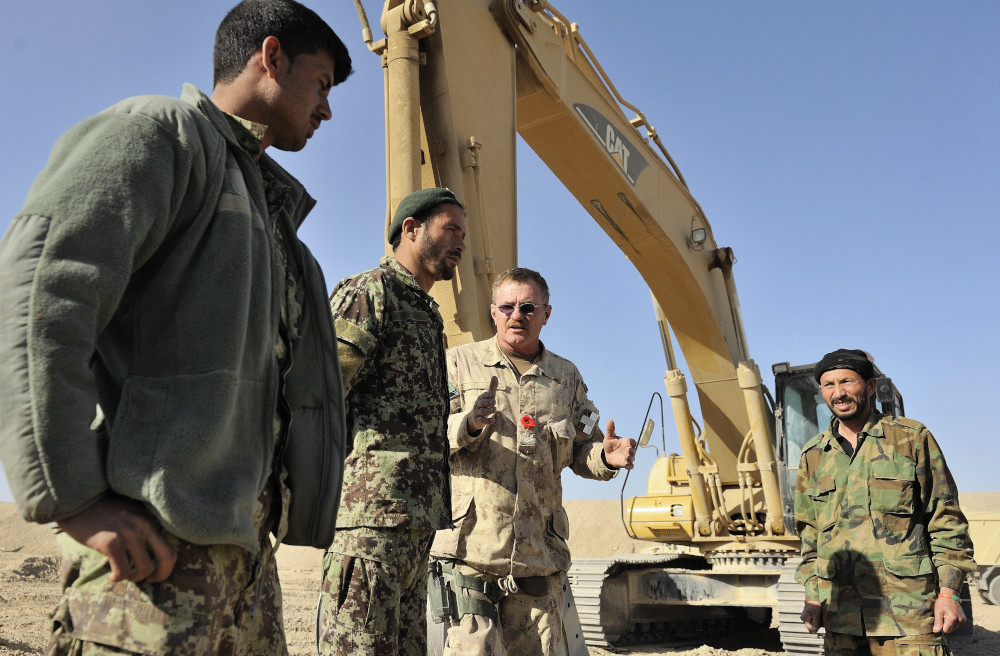
Master Corporal Gus Shave instructs a group of Afghan soldiers during a six-week heavy equipment course.
Photo: Cpl Shilo Adamson, Canada in Afghanistan / Flickr, CC BY-NC-ND 2.0
Development work was part of Canada’s strategy in Afghanistan. Decades of war had deprived Afghanistan of critical infrastructure and basic amenities. Building projects were an attempt to make improvements for local communities.
The Dahla Dam Project, involving the rehabilitation of an extensive irrigation system, was Canada’s signature project in Kandahar. It cost approximately $50 million over the project’s lifetime. Originally, the dam had allowed for 36,000 hectares of prime farmland to be irrigated. Decades of war and neglect had vastly reduced its capacity.
Lisa Vandehei is a former soldier who later joined the Canadian International Development Agency (CIDA). She managed the Dahla Dam project. She notes that repairing the dam required considerable effort on the local community level. The Afghans who took part often lived in areas under Taliban influence. She says, “It was dangerous for them if they were seen working with a foreigner. It was very, very dangerous for them. And I was repeatedly surprised at their willingness to risk their lives to work with us.”
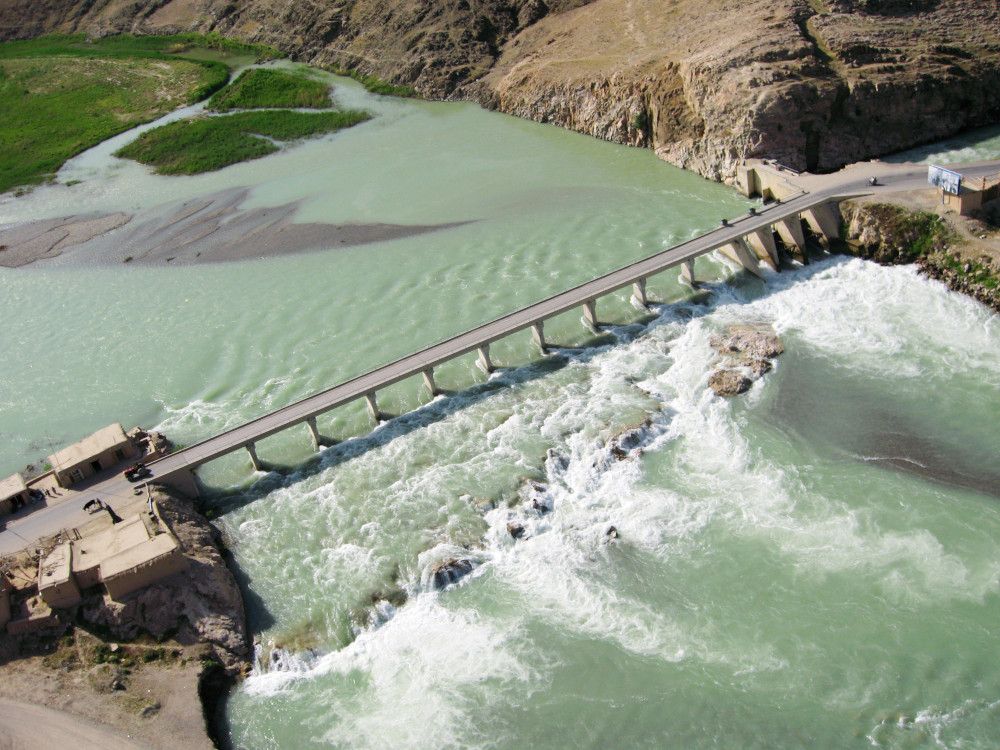
Aerial view of a weir that forms part of the extensive Dahla Dam irrigation system, April 2007.
Photo: Michel Huneault, CIDA. Canada in Afghanistan / Flickr, CC BY-NC-ND 2.0
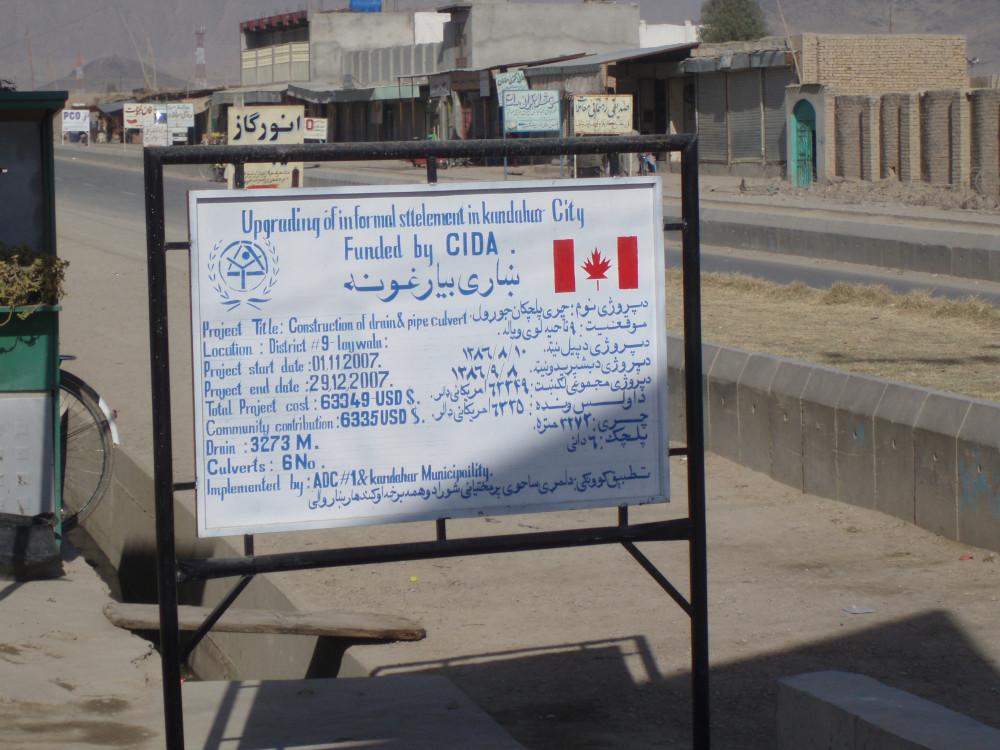
CIDA was involved in funding and managing a variety of infrastructure projects. Canada’s mission was intended to be a “whole of government” effort involving the Armed Forces, CIDA, and Foreign Affairs.
Photo: Corporal David Strachan, Canadian War Museum, 20090037-009-PC220661
Leaving Kandahar
The Canadian government had agreed to continue its combat mission in Kandahar until 2011. The arrival of the American “surge” of troops in Kandahar had freed up the Canadians to focus on training and development. But Milner also knew he had to get ready to hand over the area of operations to the Americans before Canada’s departure.
He thinks Canada left too hastily: “I would like Canadians to have stayed in Kandahar a few more years.” He felt that the Canadians had built relationships that were making counterinsurgency efforts more effective. “The Afghans were starting to tell us where the Taliban were,” Milner says. “Because there’d been that fear, the domination with the Taliban, the fear factor. We were starting to receive a bit more intelligence from the locals about where the Taliban were.”
Others felt that they were leaving Kandahar in good hands. Captain Braden Greaves served with the Royal 22e Regiment, who contributed most of the soldiers to Canada’s last battle group rotation in Kandahar. He says, “At the time, it didn’t seem like it was a huge deal for me because there was still that continuity, right? We were just changing to a training mission, and the Americans were taking over.”
General Habibi says the Canadians left the ANA well-prepared. “These trainings were so effective that [in] 2011 when the Canadian forces were withdrawing and leaving Afghanistan, our teams were able to successfully plan operations and execute them,” he says.
The Royal 22e Regiment handed off responsibility for the Kandahar Provincial Reconstruction Team to the U.S. 3rd Battalion, 21st Infantry Regiment in late May and early June 2011. Going forward, Canada would focus on training first as the mission returned to Kabul.
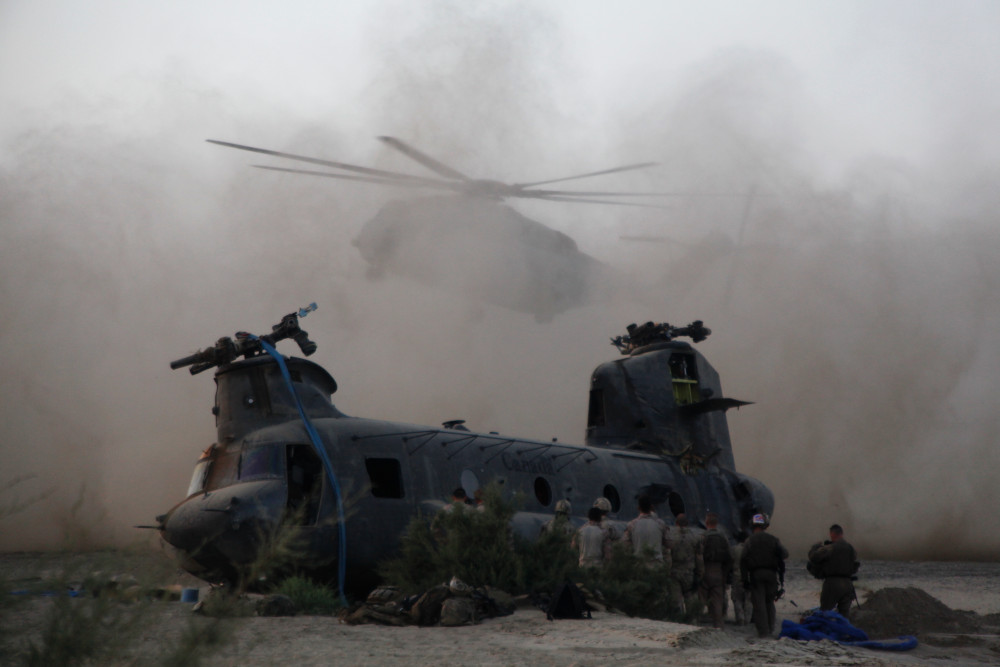
Canadians and Americans work to lift a damaged Canadian Chinook, May 18, 2011. The aircraft was successfully transported back to Kandahar Airfield. The helicopter’s fuselage artwork, “2 for Hooking,” now hangs in the Canadian War Museum’s Gallery 4.
Photo: Cpl. Rashaun X. James, II Marine Expeditionary Force
Training mission in Kabul
Canada had been involved in training the ANA and Afghan National Police for years as part of their efforts in Kabul and Kandahar. In 2011, this became the main focus of the mission.
Lieutenant-Colonel Wayne Eyre had commanded the Operational Mentoring and Liaison Team (OMLT, nicknamed the “omelette”) in 2007. Eyre returned to Afghanistan in 2014, this time as Commander of NATO Training Mission Afghanistan. This was a much-expanded coalition effort to prepare the Afghan government to take over once NATO departed.
Despite several years of effort, the ANA was not yet as well structured and prepared as Eyre would have liked. He says, “I had some doubts about the viability of Afghanistan and the Afghan National Army going forward. They could fight if they were well led at the lower tactical level, but they were lacking those elements that made a military professional.”
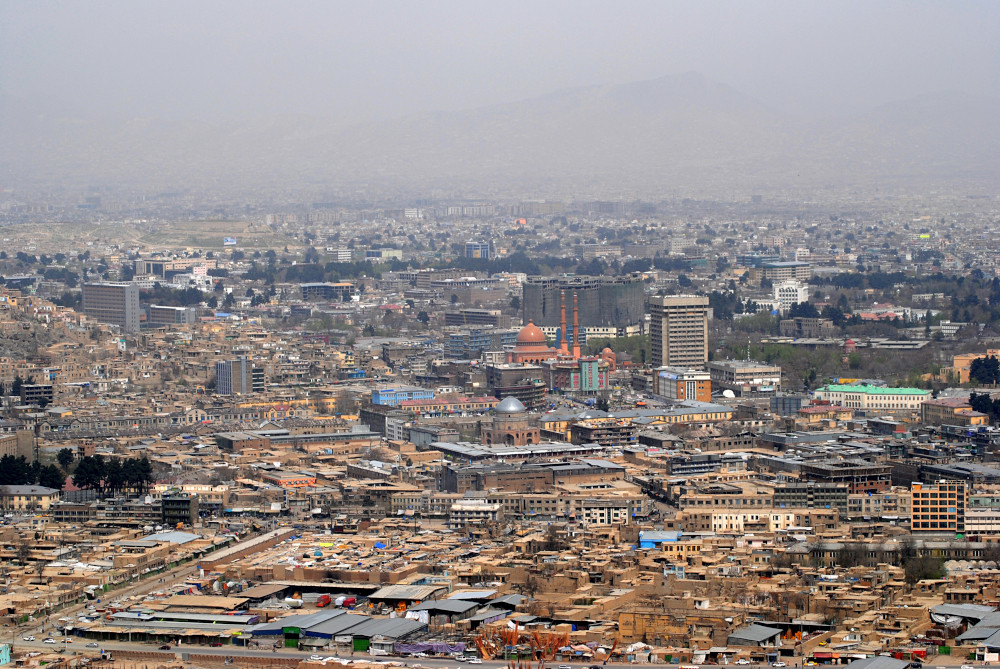
Kabul in 2008. The city grew dramatically between 2001 and 2014. It likely had a population of about 3.5 million people when Canada returned in 2011, although census data is scant.
Photo: Qais Musafer, ISAF / Flickr, CC BY-NC-ND 2.0
Planning and logistics are essential to a modern military. These were the source of Eyre’s concerns. He points to their lack of ability “to conceive and plan operations on their own. The ability to sustain themselves, to organize logistics to keep them fed, fueled, with the supply of ammunition in the field.”
Moreover, the ANA wasn’t a cohesive institution. Afghanistan’s social web of family, regional, and tribal identity had carried over into the ranks. This created competing loyalties and unstable hierarchies of command.
The ANA’s unpredictable complexity was seen most dramatically when ANA trainees killed their NATO trainers. By the end of 2012, more than one hundred coalition troops had been killed in so-called “green-on-blue” attacks. It was unclear if these were spontaneous outbursts of violence or a coordinated Taliban campaign.
Cultural differences and language barriers were known to cause friction between western trainers and Afghan trainees. Trainers had to manage the fact that outbursts of violence might result from insults or disrespect but might also be a deliberate tactic to disrupt the training mission. And of course, training often involved trusting trainees with live explosives and ammunition.
Fortunately, no Canadians were killed in these incidents.
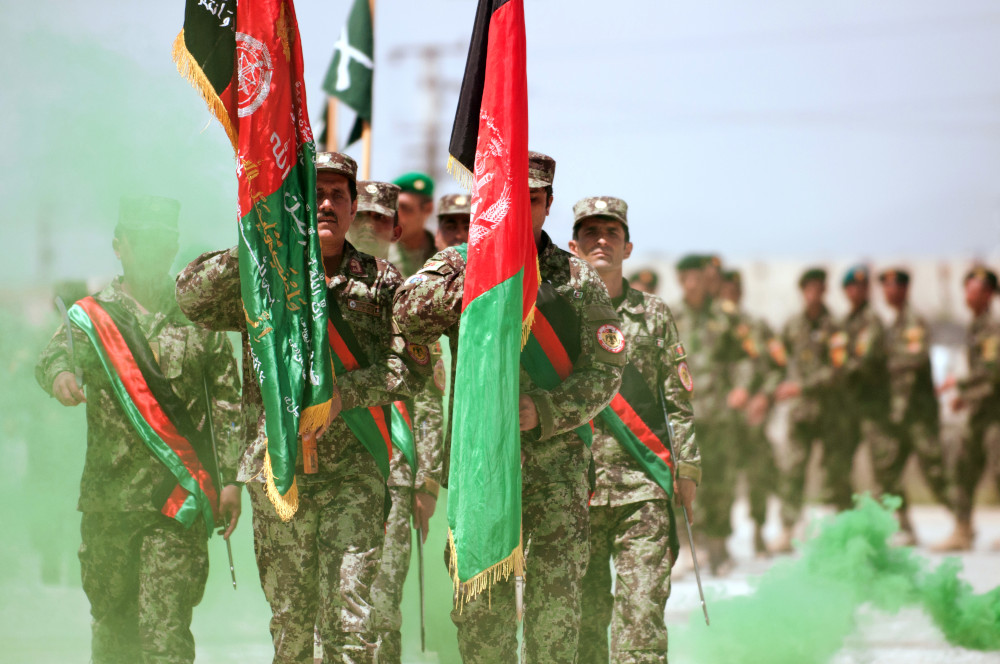
An ANA honour guard parade celebrating newly graduated non-commissioned officers in Kabul, May 17, 2012.
Photo: WO Frantisek Stein, ISAF / Flickr, CC BY 2.0
A quiet departure
The Canadian flag was lowered at the International Security Assistance Force (ISAF) headquarters in Kabul on March 12, 2014. Three days later, the few remaining Canadian soldiers left Afghanistan.
Milner was unhappy to be leaving. “I’ll be honest, I was not for it,” he says. “The Afghan National Police capabilities just weren’t as far along as we needed to be.” On a more personal level, he says, “Saying goodbye to the Afghans too for the last time was tough. Saying goodbye to General Habibi this — probably last — time. You know, you’re staying and fighting and Canadians were going home.”
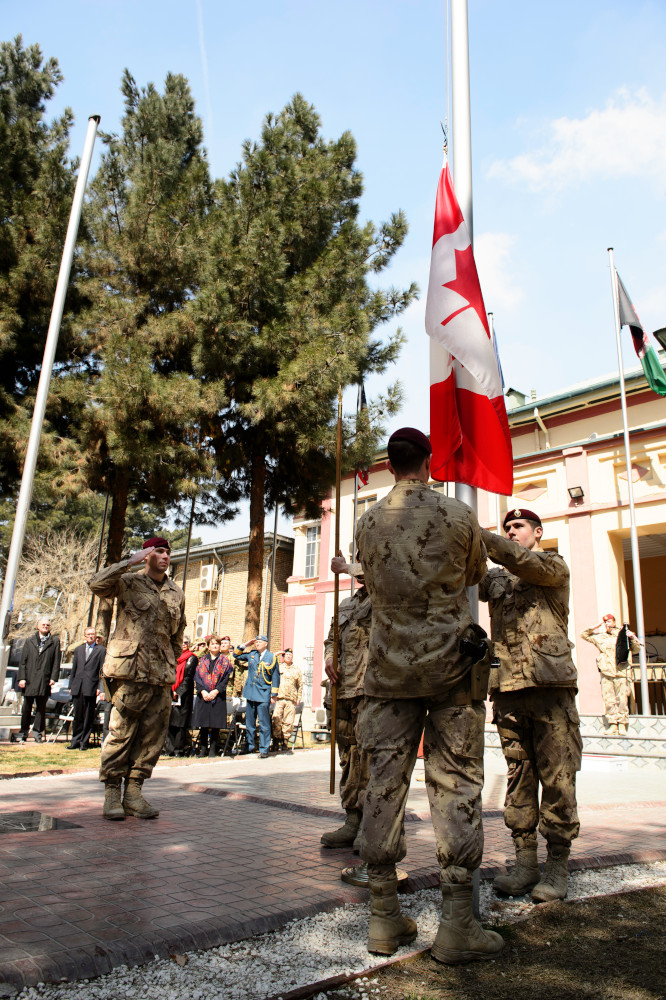
Master Corporal Jordan Taylor salutes as the Canadian flag is lowered at the ISAF headquarters in Kabul on March 12, 2014.
Photo: MCpl Patrick Blanchard, Canadian Forces Combat Camera. © All rights reserved. IS2014-3013-06 reproduced with the permission of DND/CAF (2026).
The month after Canada’s departure, Afghanistan held an election to replace outgoing President Hamid Karzai. Ashraf Ghani and Abdullah Abdullah were the top candidates, but neither won a definitive majority.
After a few months of negotiations, increased Taliban activity, and allegations of ballot stuffing, they agreed to share power. Ghani was named the new president and Abdullah took the newly created prime-ministerial position of Chief Executive. Despite these tensions, this was the first time Afghanistan had experienced a peaceful transfer of power between democratic governments.
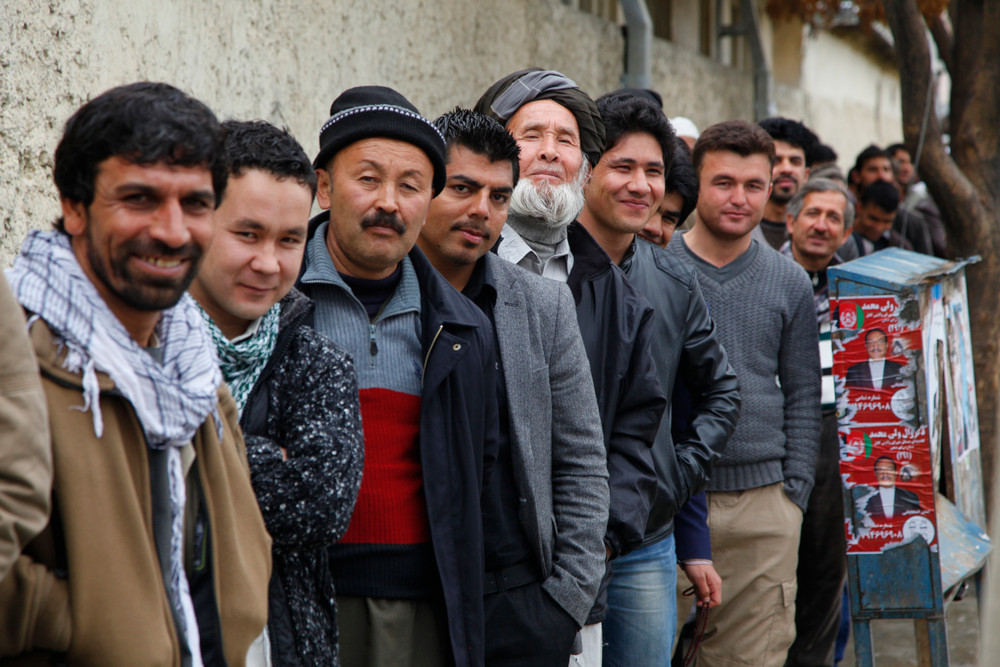
Afghan men wait in line in Kabul to vote in the 2014 presidential election.
Photo: Fardin Waezi, United Nations / Flickr, CC BY-NC-ND 2.0
Eyre points out that, “Sixty percent of the population showed up to vote, very comparable to Western democracies. So, this was actually a point of psychological hope, success in the spring of 2014.” However, he wishes that Canada had waited to leave until after this watershed moment. It could thereby have concluded its mission with a sense of achievement rather than departing out of simple political and budgetary necessity.
Canada’s time in Afghanistan was over. But the story of its war in Afghanistan is not. The legacy and consequences of Canada’s longest war live on, individually for those who served, and collectively for the country as a whole.
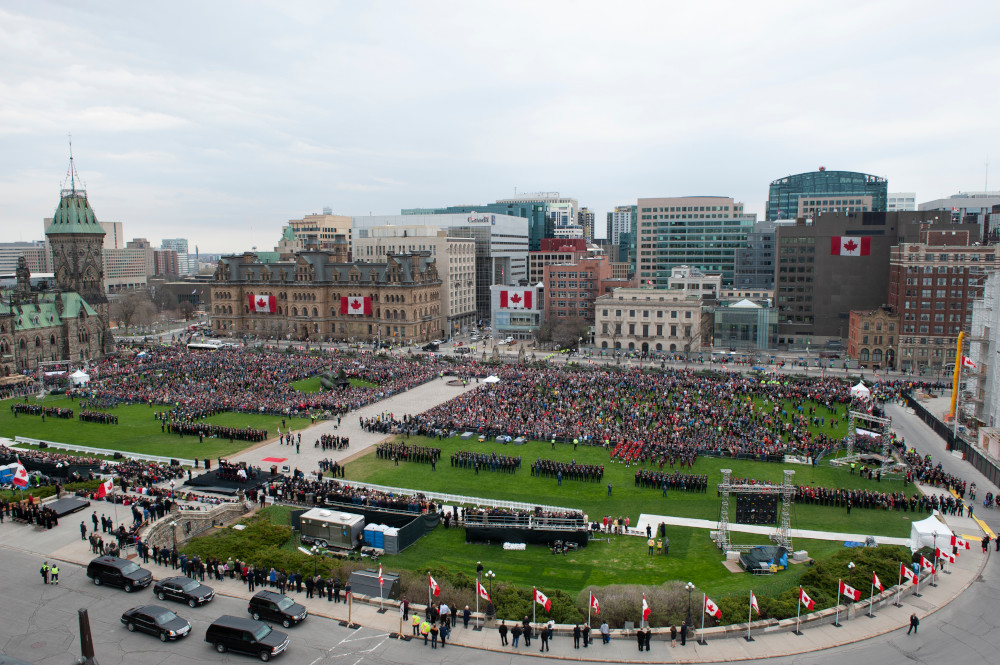
May 9, 2014, was declared a National Day of Honour for Canada’s 13-year mission in Afghanistan. Public events included a parade from the Canadian War Museum to Parliament Hill.
Photo: MCpl Matt Ufholz, Canadian Forces Support Unit (Ottawa). © All rights reserved. SU2014-0323-2 reproduced with the permission of DND/CAF (2026).
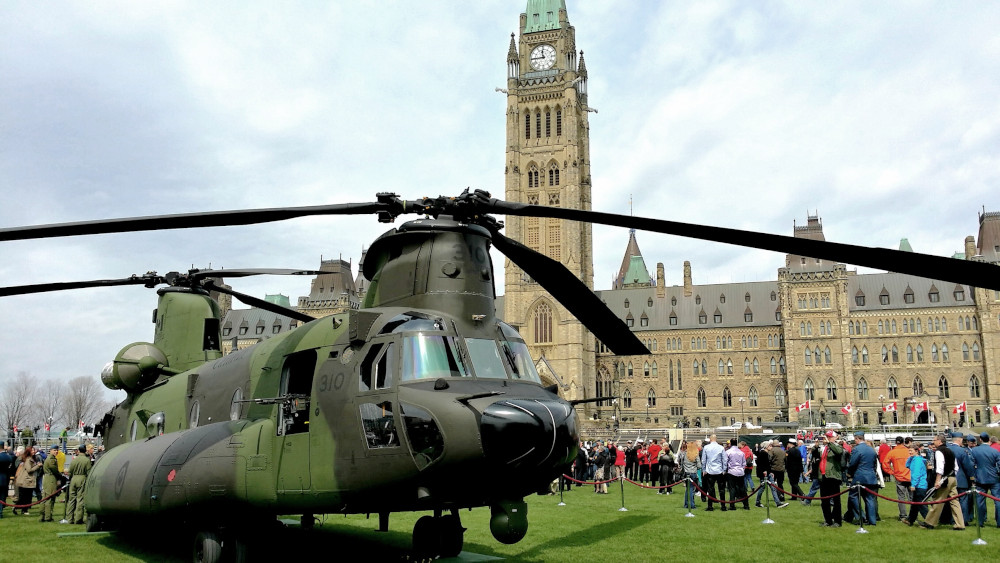
The Day of Honour included a display of vehicles, such as this Chinook helicopter, on Parliament Hill.
Photo: Jamie McCaffrey / Flickr, CC BY-NC 2.0
Listen to episode 7 of our podcast The Long War: Canada in Afghanistan to hear more about Canada’s final years in Afghanistan.
Subscribe to The Long War wherever you get your podcasts.

Steve McCullough
Dr. Steve McCullough is the Digital Content Strategist at the Canadian Museum of History and the Canadian War Museum. His work in digital storytelling involves compassionate and evidence-based efforts to address history, meaning and identity in our fragmented and polarizing, but also vibrant and interconnected, online environment.

Andrew Burtch
Dr. Andrew Burtch has been the Historian, Post-1945 at the Canadian War Museum since 2006. He is the curator of Gallery 4: From the Cold War to the Present, which examines Canada’s response to conflicts from the beginning of the Cold War to the present day. His main areas of research include Cold War history, nuclear civil defence, United Nations peacekeeping missions, the Korean War, war and memory, and oral history.
Read full bio of Andrew BurtchRelated articles
Counterinsurgency in Kandahar: Canada in Afghanistan, 2007–2010
Politics and public opinion: Canada in Afghanistan, 2006–2008